
What Is Sterling Silver? Everything You Need to Know Before You Buy
Sterling silver is a metal alloy made from 92.5% pure silver and 7.5% other metals, usually copper. It is real silver, it is valuable, and it is one of the best metals you can buy for everyday jewelry. Look for the 925 hallmark stamp when shopping. With the right care, it lasts for decades.
If you have ever picked up a silver necklace and wondered whether it is actually real silver, you are not alone. After spending years reviewing jewelry across every price point, I can tell you that sterling silver is one of the most misunderstood metals in the jewelry world.
Some people think it is cheap. Others assume it is the same as silver-plated. Neither is true.
This guide covers everything you need to know about sterling silver, from what it actually is to how it compares to other metals, how to spot fake pieces, and how to keep yours looking beautiful for years.
What Is Sterling Silver, Exactly?
Sterling silver is a metal alloy. That means it is a mixture of two or more metals combined together.
Specifically, it is made from 92.5% pure silver and 7.5% other metals, most commonly copper. That is where the name “925 silver” comes from. The number refers to the silver content measured in parts per thousand.
Pure silver on its own is far too soft for jewelry. It bends, scratches, and loses its shape easily. Adding copper makes it significantly stronger without taking away that beautiful bright shine silver is known for.
The result is a metal that is tough enough for daily wear, beautiful enough to be taken seriously, and affordable enough that most women can build a real collection without spending a fortune.
Why Is It Called Sterling Silver?
The word “sterling” dates back to medieval England. Historians believe it comes from the Old Norman French word “esterlin,” which referred to small coins made from silver.
By the 12th century, sterling silver had become a recognized standard for silver quality across Europe. In the UK, the sterling silver standard has been legally enforced since 1300.
Today, the term is used worldwide. Any item labeled as sterling silver must contain at least 92.5% pure silver. This is a legal standard in most countries, including the UK, USA, Canada, and Australia.
Sterling Silver vs Pure Silver: What Is the Difference?
A lot of women ask this question when they start shopping for silver jewelry. Here is the honest breakdown.
| Feature | Pure Silver (999) | Sterling Silver (925) |
|---|---|---|
| Silver Content | 99.9% | 92.5% |
| Hardness | Very soft | Much stronger |
| Good for Jewelry? | Not ideal | Yes, excellent |
| Tarnish Risk | Lower | Slightly higher |
| Price | Higher | More affordable |
| Common Use | Investment bars, coins | Jewelry, flatware |
Pure silver is mostly used for silver coins, bullion bars, and collector items. It is too fragile for rings, necklaces, and bracelets that get daily wear.
Sterling silver is the standard for quality jewelry. The small amount of copper added gives it the strength it needs to hold intricate designs and withstand everyday use.
Sterling Silver vs Silver Plated vs Gold Filled
This is the comparison that matters most for anyone shopping for jewelry. Getting this wrong can mean paying for quality you are not actually getting.
| Type | What It Is | How Long It Lasts | Best For |
|---|---|---|---|
| Sterling Silver | Solid 92.5% silver throughout | Decades with care | Everyday jewelry, investment pieces |
| Silver Plated | Thin silver coating over base metal | 1 to 3 years before wearing off | Budget fashion pieces |
| Gold Filled | Thick gold layer bonded over base metal | 10 to 30 years | Everyday gold-look pieces |
| Gold Vermeil | Gold plating over sterling silver base | 2 to 5 years | Special occasion jewelry |
Silver plated jewelry looks exactly like sterling silver when new. The problem is that the silver layer is extremely thin, often less than 0.5 microns thick. Once that layer wears off, you see the base metal underneath. This usually happens within one to two years of regular wear.
Sterling silver is solid silver all the way through. There is no coating to chip or wear away. When it looks dull, you polish it back to its original shine. That is a huge difference.
If you are buying jewelry to keep, always choose sterling silver over silver plated.
How to Spot Real Sterling Silver
Knowing what to look for protects you from overpaying for low-quality pieces. Here are the most reliable ways to check.
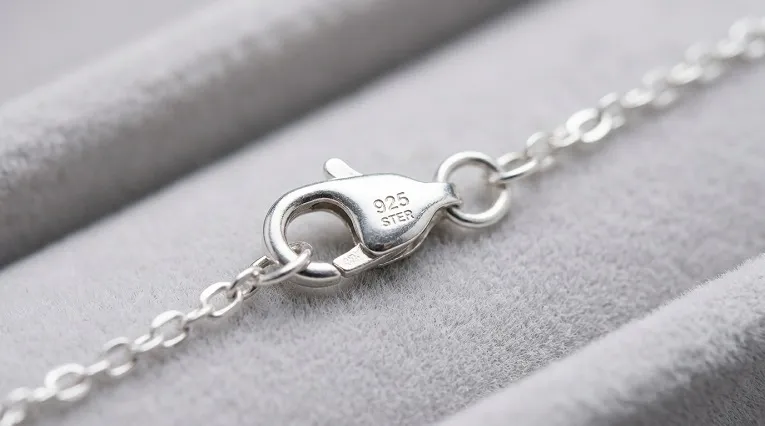
Look for the hallmark stamp. Genuine sterling silver is marked with one of the following:
- .925 or 925
- Sterling
- Ster
- SS
This stamp is usually found on the back of a pendant, the inside of a ring band, or on the clasp of a necklace or bracelet.
Try the magnet test. Silver is not magnetic. If a piece sticks to a strong magnet, it is not genuine sterling silver. It may be a base metal with a silver-coloured coating.
Look at the colour. Real sterling silver has a bright, cool white tone. If the piece looks too yellow or too grey, something may not be right.
Check for green marks on your skin. This does not mean the silver is fake. It usually means the copper in the alloy is reacting with your skin’s moisture and is more common in humid conditions or after exercise. It washes off easily and does not mean the piece is low quality.
Why Sterling Silver Is Perfect for Everyday Jewelry
Sterling silver is genuinely one of the best choices you can make for a jewelry collection you will actually wear. Here is why so many women across the UK, USA, and Canada reach for it first.
It is versatile
Sterling silver pairs with almost every outfit and skin tone. It works with casual jeans-and-a-white-shirt looks just as well as it works with a formal dress.
It is affordable without feeling cheap
You get real precious metal quality without the price tag of gold or platinum. That means you can buy more pieces and actually build the collection you want.
It is hypoallergenic for most people
Sterling silver is safe for sensitive skin in most cases. If you do have a nickel sensitivity, check that the 7.5% alloy is copper-based rather than nickel-based before buying.
It works with gemstones
Diamonds, turquoise, amethyst, pearl, and almost any other stone look stunning set in sterling silver. Many fine jewelry brands use it as their primary setting metal for exactly this reason.
It is sustainable
Silver can be melted down and reused indefinitely without losing any of its quality. If you care about making more sustainable choices, sterling silver is a strong option.
Does Sterling Silver Tarnish?
Yes, it does. This is the one honest answer every sterling silver buyer needs to hear upfront.
Tarnish happens when the copper in the alloy reacts with sulfur compounds in the air. It creates a dark film on the surface of the metal and is not a sign that your jewelry is fake or low quality. It is just chemistry.
The good news is that tarnish is completely reversible. A simple polish with a soft silver cloth brings it back to full shine in minutes.
What speeds up tarnishing:
- Exposure to humidity and moisture
- Chlorine in swimming pools and tap water
- Perfumes, lotions, and hairsprays
- Household cleaning chemicals
- Rubber and latex materials
- Salt air near the ocean
What slows it down:
- Wearing your jewelry regularly (your skin’s natural oils help)
- Storing pieces in airtight bags or boxes
- Keeping jewelry dry and away from chemicals
- Choosing pieces with rhodium plating for extra protection
Rhodium-plated sterling silver is a great option if you want lower maintenance. The rhodium coating adds extra shine and significantly reduces tarnishing. It does wear off over time, but it can be re-plated by a jeweler.
How to Care for Sterling Silver Jewelry
Good care habits make a huge difference. These tips will keep your pieces looking great for years.
Daily habits:
- Put your jewelry on last, after applying perfume, lotion, and hairspray
- Take it off first when you get home, before washing hands or cooking
- Remove it before swimming, showering, or exercising
- Wipe it down with a soft cloth after wearing
Cleaning at home:
- Use a dedicated silver polishing cloth for regular shine maintenance
- For a deeper clean, use mild dish soap and warm water with a soft toothbrush
- Rinse thoroughly and dry completely before storing
- Avoid toothpaste as it is too abrasive for silver
- Try a baking soda and water paste for stubborn tarnish on plain pieces
- Never use abrasive scrubbers or paper towels
Storage tips:
- Store each piece separately to prevent scratching
- Use anti-tarnish bags or a lined jewelry box
- Add a small silica gel packet to your storage to reduce moisture
- Keep jewelry away from direct sunlight and heat
When to see a professional:
- For pieces with gemstones, get professional cleaning once a year
- If your rhodium plating has worn off, ask a jeweler about re-plating
- For deep scratches or damaged clasps, professional repair is worth it
The Best Sterling Silver Jewelry Brands to Know
These brands are well-known for quality sterling silver pieces across the UK, USA, and Canada.
Pandora
Pandora is one of the most recognizable sterling silver brands worldwide. Their charm bracelets use 925 sterling silver and are widely available in-store and online across all three countries.
Missoma
Missoma is a London-based brand that has become a favourite for modern, everyday sterling silver jewelry. Their pieces have a contemporary feel and are popular for layering.
Monica Vinader
Monica Vinader offers beautifully crafted sterling silver pieces, often with engraving options. They have a strong presence in both the UK and North America.
Mejuri
Mejuri is a Canadian-born brand that has grown into a global name for fine-quality everyday jewelry. Their sterling silver range is clean, minimal, and well-priced.
Astrid and Miyu
Astrid and Miyu is a UK favourite for stackable rings, layered necklaces, and ear cuffs in sterling silver. Their pieces are great for building a curated look.
Ana Luisa
Ana Luisa offers sustainable sterling silver jewelry at accessible price points. Based in New York, they ship to the USA, Canada, and internationally.
When shopping from any brand, always look for the 925 stamp and check that the product listing specifically states sterling silver, not just “silver tone” or “silver coloured.”
Who Should Buy Sterling Silver?
Sterling silver is a smart choice for almost any woman, but it is particularly well-suited for you if:
- You want real precious metal jewelry without the high price of gold
- You have sensitive skin and need a hypoallergenic option
- You love a cool, bright, modern look in your jewelry
- You want pieces you can wear every day that will actually last
- You are building a jewelry collection and want versatile pieces that mix well
- You are looking for a gift that feels thoughtful and special without a huge budget
Sterling silver is not the best choice if you want something completely zero-maintenance. If tarnish would frustrate you and you do not want to do any polishing or careful storage, gold-filled or solid gold may suit your lifestyle better.
FAQ
Is sterling silver real silver?
Yes. Sterling silver is real silver. It contains 92.5% pure silver, which meets the international legal standard for silver jewelry. The remaining 7.5% is usually copper, added to make the metal stronger.
Will sterling silver turn my skin green?
It can in some cases. The copper content in the alloy can react with moisture and skin acids, leaving a temporary greenish mark. This washes off easily and does not mean the piece is fake or low quality. Rhodium-plated sterling silver reduces this risk significantly.
Can I shower with sterling silver jewelry?
It is better not to. Water, soap, and shampoo can speed up tarnishing. For everyday shower wear, look for solid gold or titanium pieces instead.
How long does sterling silver jewelry last?
With proper care, sterling silver lasts for decades. Many pieces are passed down through generations. The key is regular cleaning, proper storage, and keeping it away from harsh chemicals.
What is the difference between 925 silver and sterling silver?
They are the same thing. 925 refers to the silver content of 92.5%, which is the standard for sterling silver. You may see either term used depending on the brand or country.
Is sterling silver good for sensitive ears?
For most people, yes. Sterling silver is generally considered hypoallergenic. However, if you have a nickel allergy, check that the alloy uses copper rather than nickel. Some budget silver pieces do use nickel, which can cause reactions.
How do I clean tarnished sterling silver at home?
The quickest method is a silver polishing cloth. For deeper tarnish, use warm water with a drop of mild dish soap and a soft toothbrush. Rinse and dry thoroughly. You can also make a paste with baking soda and water for stubborn spots on plain pieces.