
Quick answer: Choosing the perfect diamond engagement ring comes down to balancing the four Cs, cut, colour, clarity and carat, against your budget, while also matching the style and metal to what your partner already wears. Cut has the biggest impact on sparkle, so prioritise an excellent or very good cut grade before stretching your budget on carat size. A GIA or IGI certificate confirms the grading is accurate and independently verified.
Buying a diamond engagement ring is one of the more daunting purchases most people make, largely because the terminology feels unfamiliar and the stakes feel high. The good news is that the diamond industry has used the same grading framework, the four Cs, since the Gemological Institute of America developed it in the 1940s. Once you understand what each C actually measures, choosing between diamonds becomes a matter of clear trade offs rather than guesswork.
This guide walks through the four Cs in practical detail, how to match a ring to your partner’s personal style, which metal options to consider, and how to set a realistic budget.
The Four Cs Explained
Cut
Cut refers to how well a diamond’s facets are proportioned and angled, not its shape. This is what actually produces sparkle, since a well cut diamond returns light back through the top of the stone rather than leaking it out the sides or bottom. Cut is graded from Excellent to Poor, and it is widely considered the most important of the four Cs because even a diamond with excellent colour and clarity will look flat and lifeless if the cut is poor. A smaller diamond with an excellent cut will often outshine a larger one that has been cut poorly.
Colour
Colour is graded on a scale from D to Z, where D is completely colourless and the grade decreases as a yellow or brown tint becomes more visible. Grades D to F are considered colourless and command the highest prices. Grades G to J are near colourless and offer strong value, since any tint is difficult to detect once the diamond is set. Grades K and below show a noticeably warmer tone, which some buyers prefer for a vintage look, particularly when set in yellow or rose gold.
Clarity
Clarity measures the presence of internal inclusions and external blemishes. The scale runs from Flawless, meaning no inclusions or blemishes are visible even under magnification, down through Included, where inclusions are visible to the naked eye. For most buyers, a clarity grade of VS1 or VS2 (Very Slightly Included) offers the best balance, since inclusions at this level are typically invisible without ten times magnification, allowing more of the budget to go toward cut and carat.
Carat
Carat measures a diamond’s weight, not its physical size, though the two are closely related. Diamond prices increase disproportionately at certain carat thresholds, such as 1.00 or 2.00 carats, so a stone at 0.90 or 1.90 carats can offer meaningfully better value while looking almost identical to the eye.
How the Four Cs Work Together
| Priority | Recommendation | Why |
|---|---|---|
| 1. Cut | Excellent or Very Good | Has the biggest visible impact on sparkle |
| 2. Clarity | VS1 to VS2 | Inclusions at this grade are invisible to the naked eye |
| 3. Colour | G to J | Near colourless, strong value versus D to F |
| 4. Carat | Just below a round number | Avoids the price premium at 1.00ct, 2.00ct thresholds |
Choosing a Style That Suits Your Partner
Before considering carat or clarity, look at what your partner already wears day to day. Someone who favours simple, minimal jewellery is more likely to gravitate toward a solitaire, a single diamond set alone on a plain band, than an elaborate halo design surrounded by smaller stones. A trilogy ring, featuring three stones traditionally representing the past, present and future of a relationship, suits someone who likes a bit more visual presence without going fully ornate. A cluster of smaller diamonds can offer more overall sparkle per pound spent than a single large stone, which is worth considering if visual impact matters more than carat weight on paper.
Choosing the Right Metal
| Metal | Look | Considerations |
|---|---|---|
| Platinum | Bright white, naturally hypoallergenic | Most durable option, higher price point |
| White gold | Bright white finish | Rhodium plated, needs re-plating every one to two years |
| Yellow gold | Warm, classic | Complements warmer skin tones and vintage style diamonds |
| Rose gold | Warm, romantic pink hue | Increasingly popular, pairs well with vintage cut diamonds |
If you are unsure which your partner prefers, check the metal of rings, bracelets or necklaces they already wear regularly, since jewellery metal preferences tend to stay consistent across a person’s whole collection.
Setting a Realistic Budget
There is no fixed rule for how much to spend on an engagement ring, despite the old convention of two months’ salary, which originated from a De Beers marketing campaign in the twentieth century rather than any financial logic. A more practical approach is to decide on a total budget first, then prioritise cut and clarity within that figure before increasing carat size. Buying a diamond that is 0.90 carats instead of 1.00 carat, for example, can meaningfully reduce the price while looking virtually identical once set.
Why Certification Matters
Always ask for a grading report from the Gemological Institute of America (GIA) or the International Gemological Institute (IGI) before buying a diamond above a modest budget. These reports are produced by independent laboratories rather than the seller, which means the cut, colour, clarity and carat figures quoted have been verified rather than simply claimed. A diamond sold without any certification should be treated with caution, regardless of how convincing the seller’s own description sounds.
Frequently Asked Questions
Which of the four Cs matters most?
Cut is generally considered the most important, since it has the greatest visible impact on a diamond’s brilliance and sparkle, regardless of colour, clarity or carat weight.
Is a bigger diamond always better?
Not necessarily. A smaller diamond with an excellent cut, strong clarity and good colour will often look more impressive than a larger stone that has been poorly cut or has visible inclusions.
How much should I spend on an engagement ring?
There is no fixed rule. The traditional two months’ salary guideline originated from a twentieth century marketing campaign rather than financial advice, so it is better to set a comfortable personal budget and prioritise cut and clarity within it.
Do I need a certificate for the diamond?
Yes, for any diamond above a modest budget. A GIA or IGI certificate independently verifies the four Cs rather than relying on the seller’s own description.
What is the difference between a solitaire and a halo setting?
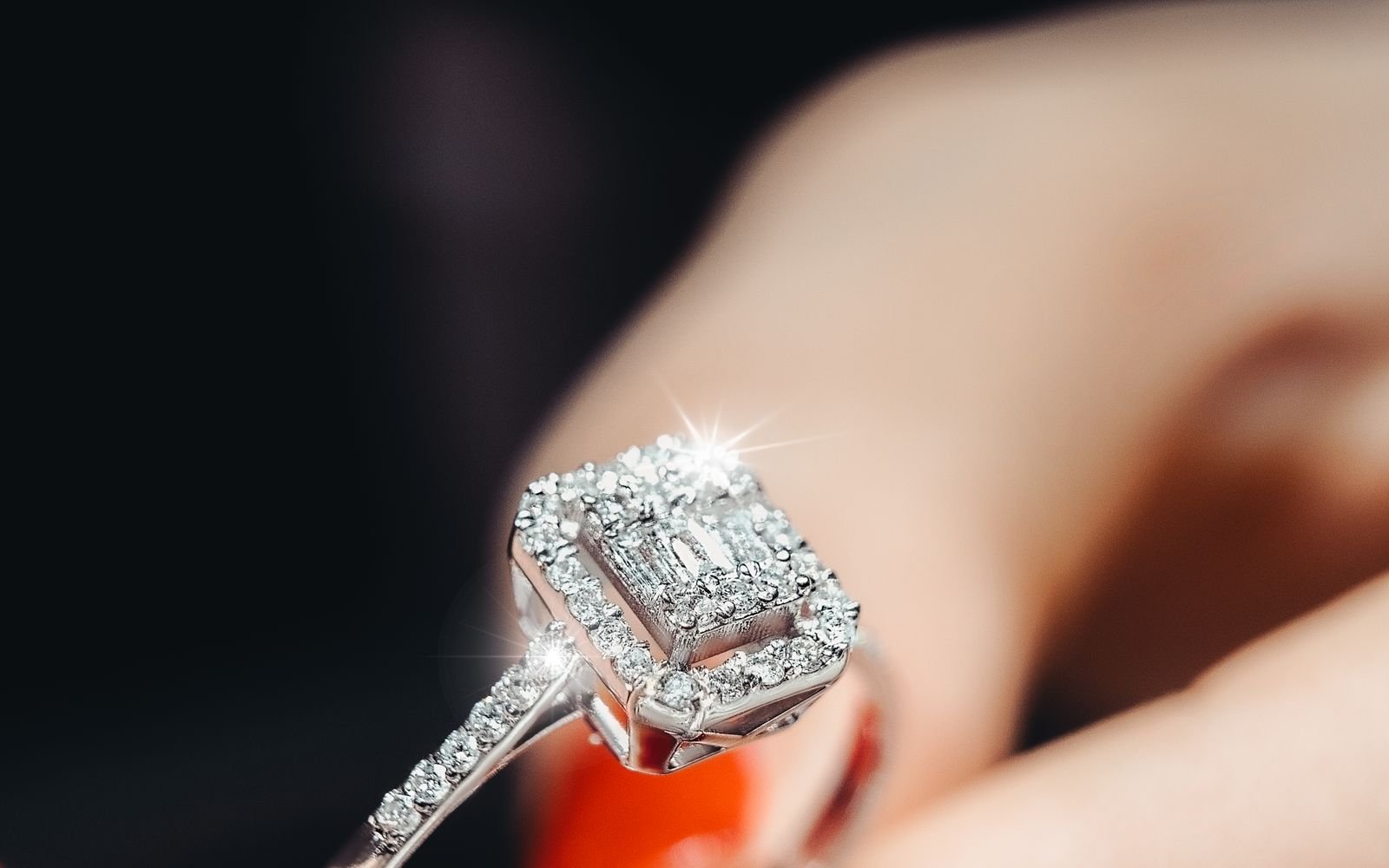
A solitaire features a single diamond on a plain band, offering a classic, understated look. A halo setting surrounds the central diamond with smaller stones, increasing overall sparkle and making the centre stone appear larger.
Final Thoughts
Choosing the perfect diamond engagement ring is a matter of understanding the four Cs well enough to make informed trade offs, rather than chasing the highest possible grade in every category. Prioritise cut, look closely at your partner’s existing style, and always ask for independent certification. Once you have chosen the ring, our guide on cleaning a diamond ring at home will help you keep it looking its best, and our ring size guide covers how to get the fit right before the big day.