
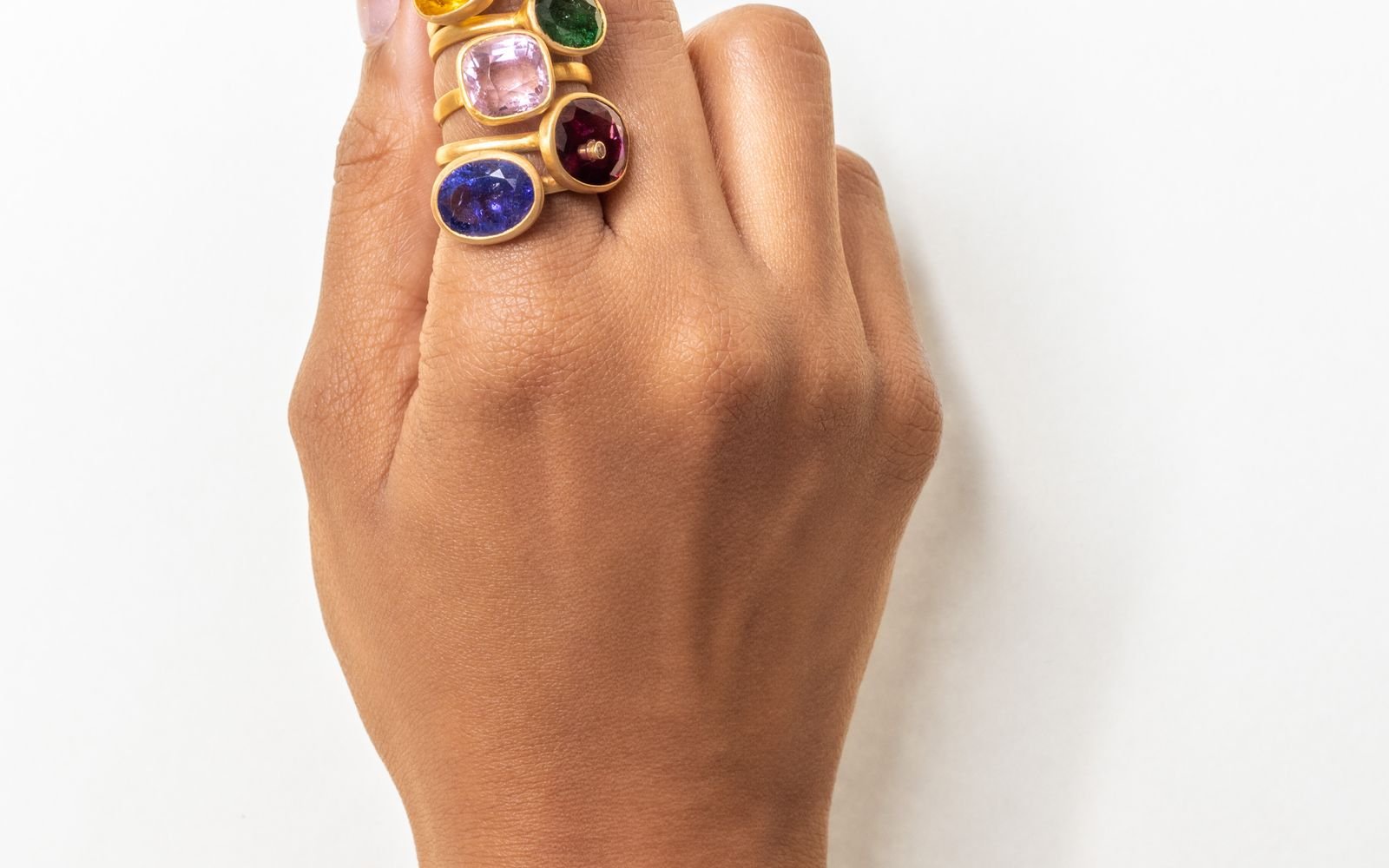
Quick answer: Coloured diamonds, also called fancy colour diamonds, are natural diamonds that fall outside the standard colourless D to Z scale. They are graded by the Gemological Institute of America (GIA) on hue, tone and saturation rather than by absence of colour. Yellow and brown are the most common and most affordable, while red, blue, green and vivid pink are the rarest and command the highest prices. When buying, look for a GIA or IGI grading report, check the intensity of the colour face up, and confirm whether the colour is natural or treated.
Most people are taught to judge a diamond by how colourless it is. Fancy colour diamonds turn that logic on its head. Here, colour is the entire point, and the more vivid and rare the hue, the more valuable the stone becomes. A saturated pink or blue diamond can sell for many times the price of a colourless diamond of the same size.
This guide explains how fancy colour diamonds are graded, which colours are the rarest, what actually causes the colour, and what to check before buying a piece for yourself or as a gift.
How Coloured Diamonds Are Graded
Standard white diamonds are graded on the four Cs of cut, colour, clarity and carat, with colour running from D (completely colourless) to Z (a noticeable yellow or brown tint). Fancy colour diamonds use a different system entirely. The GIA assesses three separate qualities:
- Hue — the actual colour of the diamond, such as pink, blue or yellow.
- Tone — how light or dark the colour appears.
- Saturation — the strength or intensity of the colour.
A GIA Fancy Colour Diamond Grading Report will describe a stone using terms such as Fancy Light, Fancy, Fancy Intense, Fancy Vivid, Fancy Dark or Fancy Deep. Fancy Vivid sits at the top of this scale and represents the most intense, most valuable expression of any given colour.
What Causes Colour in a Diamond?
Colour develops in a diamond through trace elements, structural distortion, or natural radiation exposure deep within the earth, depending on the hue.
| Colour | What Causes It | Rarity |
|---|---|---|
| Yellow | Nitrogen atoms absorbing blue light | Most common fancy colour |
| Brown | Structural lattice distortion | Common, affordable |
| Pink | Lattice deformation from pressure deep in the earth’s mantle | Very rare, high value |
| Blue | Trace boron in the crystal structure | Extremely rare |
| Green | Natural radiation exposure over millions of years | Among the rarest colours |
| Red | Extreme lattice distortion, cause not fully understood | Rarest of all fancy colours |
Rarity and Value, Colour by Colour
Rarity, rather than depth of colour alone, is the single biggest driver of price in the fancy colour diamond market.
Yellow diamonds are the most accessible entry point into coloured diamonds. A pure, intensely saturated yellow with no secondary hue is often called a canary diamond and remains far more affordable than pink or blue stones of comparable size.
Pink diamonds are among the most sought after fancy colours, prized for their romantic association and genuine scarcity. Historically, a large share of the world’s pink diamond supply came from the Argyle mine in Australia, which closed in 2020, adding further scarcity to stones already on the market.
Blue diamonds owe their colour to trace amounts of boron and are found in a small number of locations worldwide, including South Africa and India. Their limited colour range and rarity keep prices consistently high.
Green and red diamonds are the rarest of all. Very few enter the market each year, and both routinely achieve record prices at auction when they do.
Natural vs Treated Coloured Diamonds
Not every coloured diamond on the market formed its colour naturally. Some diamonds are treated in a laboratory through high pressure high temperature processing or irradiation to intensify or create colour artificially. Treated stones are not fake, but they are significantly less valuable than natural fancy colour diamonds and should always be sold with full disclosure of the treatment.
A grading report from the GIA or the International Gemological Institute (IGI) will state clearly whether a diamond’s colour is natural or the result of treatment. Always ask for this documentation before buying, particularly for pink, blue and green stones, since these colours are the most commonly treated.
What to Check Before Buying
- Ask for a grading report. A GIA or IGI report confirms hue, tone, saturation and whether the colour is natural.
- View the stone face up. Colour intensity can look different from certain angles, so always assess the diamond as it will actually be worn.
- Consider the setting metal. Yellow and pink diamonds are often set in yellow or rose gold to complement the hue, while blue and green diamonds are commonly set in white gold or platinum for contrast.
- Check secondary hues. Many fancy colour diamonds have a secondary tone, such as a brownish yellow or a purplish pink, which affects both appearance and value.
- Set a realistic budget. Even light or fancy grade stones in rarer colours can cost considerably more than a colourless diamond of the same carat weight.
Caring for Coloured Diamond Jewellery
Coloured diamonds share the same hardness as colourless diamonds, rated 10 on the Mohs scale, so they can generally be cleaned with warm water, a drop of mild soap and a soft toothbrush. Avoid ultrasonic cleaners on treated stones, since heat and vibration can affect certain colour treatments over time. Store coloured diamond pieces separately from other jewellery to prevent surface scratching, and keep them away from direct sunlight for long periods, as UV exposure can very gradually affect some colour treatments.
Frequently Asked Questions
What is the rarest colour of diamond?
Red diamonds are considered the rarest natural diamond colour, followed closely by green and vivid blue. Very few genuine red diamonds exist in the world.
Are coloured diamonds more valuable than white diamonds?
Not always. Common fancy light yellow or brown diamonds can be priced similarly to colourless diamonds. However, intensely saturated pink, blue, green and red diamonds are typically worth far more than a colourless diamond of the same size.
How can I tell if a coloured diamond is natural?
A GIA or IGI grading report will state whether the colour is natural or the result of treatment. Always request this documentation before buying, particularly for pink, blue and green stones.
What metal looks best with a coloured diamond?
Warm hues such as yellow and pink diamonds are often set in yellow or rose gold to complement the colour, while cooler hues such as blue and green diamonds are typically set in white gold or platinum for contrast.
Can I clean a coloured diamond the same way as a white diamond?
In most cases, yes. Warm water, mild soap and a soft toothbrush are safe for both. Avoid ultrasonic cleaners on any coloured diamond that has been treated, since heat and vibration can affect the treatment over time.
Final Thoughts
Coloured diamonds offer something a colourless stone never can: genuine individuality. Whether you are drawn to the warmth of a yellow diamond, the romance of pink, or the rarity of blue, understanding the GIA grading system and always requesting a proper grading report will help you buy with confidence. If you are choosing a setting for a coloured stone, our guide on choosing the perfect diamond engagement ring covers cut, clarity and carat in more depth, and our jewellery hallmarks guide explains how to verify the precious metal in any setting you choose.