
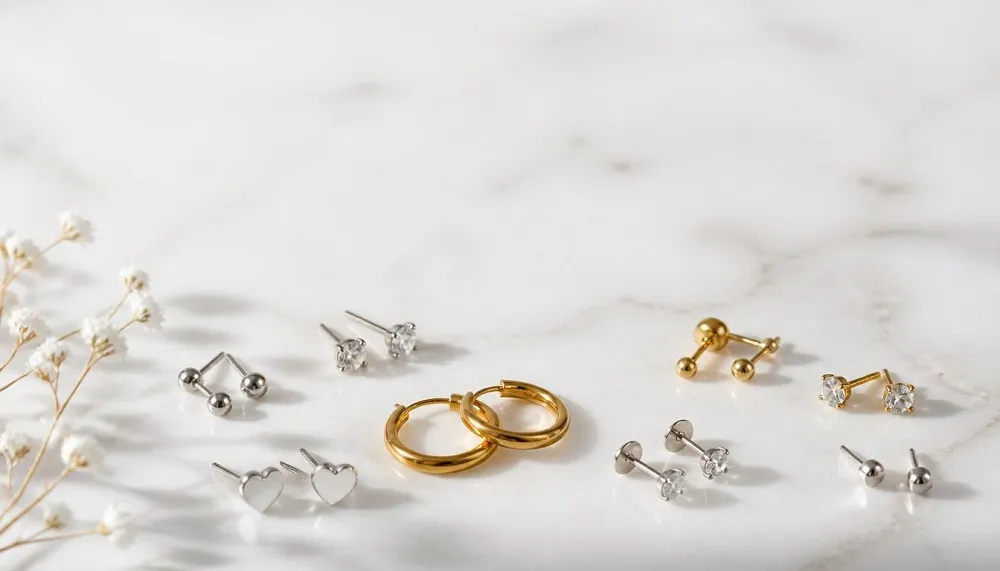
Quick answer: The best earrings for sensitive ears are made from medical grade titanium, solid gold (14k or above), sterling silver 925, or implant grade 316L stainless steel (ASTM F136). These metals are stable, contain little to no free nickel, and are unlikely to trigger the itching, redness and swelling that cheaper alloys and gold plated earrings often cause. Avoid anything simply labelled “hypoallergenic” without a stated material, and steer clear of costume jewellery, gold plating over brass, and low grade stainless steel.
If your ears have ever turned red, itchy or sore after a night out in a new pair of hoops, you are not imagining it, and you are far from alone. Sensitive ears are one of the most common jewellery complaints in the UK, and the cause almost always comes down to one thing: the metal touching your skin. This guide walks through exactly which materials are safe, which to avoid, and how to choose the right earrings whether you are buying for yourself, a child, a fresh piercing, or ears you plan to sleep in.
Why Do My Ears Suddenly React to Earrings?
The most common reason ears suddenly react to earrings is nickel allergy, a form of allergic contact dermatitis. Nickel is one of the most frequent contact allergens in the UK and Europe, and it hides inside a huge number of everyday fashion earrings, particularly cheaper alloys and some gold plated pieces where the base metal beneath the plating contains nickel.
Reactions can appear even in ears that have never had a problem before. Sensitivity to nickel tends to build up with repeated exposure, so a pair of earrings you wore comfortably last year could suddenly cause redness, itching, dry patches or small blisters this year. Sweat, humidity and prolonged skin contact all speed this up, which is why symptoms are often worse in summer or after a long day wearing the same pair.
A second, separate cause is mechanical irritation rather than allergy. Heavy earrings that drag on the lobe, sharp or rough earring posts, and backs that pinch or trap skin can all cause soreness that has nothing to do with metal sensitivity. It is worth telling the two apart: an allergic reaction usually involves itching and a rash around the piercing, while mechanical irritation tends to feel more like tenderness, stretching or a pinching sensation.
What Material Earrings Are Best for Sensitive Ears?
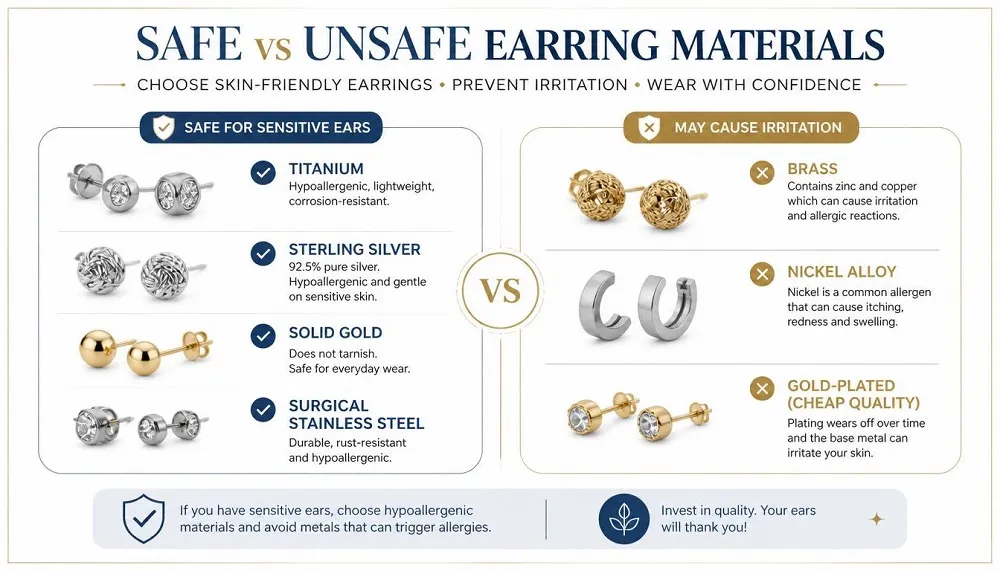
The best material earrings for sensitive ears share three qualities: minimal or no free nickel, a stable surface that will not wear away with use, and a track record of dermatological testing. Four materials consistently meet this standard.
1. Medical Grade Titanium
Titanium is widely regarded as the gold standard for sensitive and reactive ears. It is biocompatible, meaning it is the same material used in medical implants, and it contains no nickel at all in its pure form. Titanium is also lightweight, which reduces the mechanical drag that can irritate stretched or healing lobes. It is a strong choice for fresh piercings, cartilage jewellery and anyone with a confirmed metal allergy.
Look for “implant grade” or “ASTM F136” titanium specifically. Some cheaper titanium coated pieces are actually another metal with a thin titanium finish, which will not offer the same protection once the coating wears through.
2. Solid Gold, 14k or Above
Pure gold does not cause allergic reactions, but pure 24k gold is too soft for everyday jewellery, so earrings are made from gold alloys instead. The higher the karat, the less other metal (including potential nickel) is mixed in. For sensitive ears, aim for 14k or higher, and check that the listing confirms a nickel free alloy, since some lower cost gold blends still use nickel as a hardening agent, particularly in white gold. For a deeper look at how solid gold compares with gold filled and gold plated jewellery, see our solid gold vs gold filled vs gold plated guide.
3. Sterling Silver 925
Sterling silver is 92.5 percent pure silver, with the remaining 7.5 percent typically made up of copper and other trace metals. Reputable sterling silver earrings are formulated without nickel, making them a comfortable and affordable option for most sensitive ears. The exception is silver that has been coated or plated over a base metal core, so always check that the piece is solid sterling silver rather than silver plated.
4. Implant Grade Stainless Steel (316L / ASTM F136)
Surgical or implant grade stainless steel is another dependable choice. While standard stainless steel alloys can contain a small percentage of nickel, in 316L grade steel that nickel is tightly bound within the alloy structure rather than sitting freely on the surface, so very little transfers to the skin. We cover the science behind this in detail, including the EU REACH nickel release limit, in our stainless steel vs sterling silver jewellery comparison.
Is Sterling Silver or Stainless Steel Better for Sensitive Ears?
Both sterling silver 925 and implant grade 316L stainless steel are considered safe for the majority of people with sensitive ears, and the right choice usually comes down to lifestyle rather than allergy risk. Sterling silver has a softer shine and pairs well with dressier pieces, but it can tarnish with exposure to moisture, perfume and everyday wear, so it needs more regular cleaning. Implant grade stainless steel is more scratch resistant, does not tarnish, and copes well with sweat, swimming and showering, which makes it a practical choice for daily wear, active lifestyles, or earrings you rarely take out.
If you have a confirmed, severe nickel allergy rather than general sensitivity, titanium remains the safer of the two, since it removes nickel from the equation entirely rather than simply minimising its release.
Materials to Avoid
Some materials are a near guaranteed source of irritation for sensitive ears.
- Costume or fashion metal alloys with no stated composition, often described only as “gold tone” or “silver tone”
- Gold plated earrings over a brass or nickel base, where the plating wears thin with use and exposes the reactive metal underneath (our gold plated jewellery care guide explains how to spot and maintain quality plating)
- Low grade or unspecified stainless steel, since not all stainless steel is implant grade
- White gold with a rhodium coating, unless the underlying gold alloy is also confirmed nickel free, as the rhodium layer will eventually wear away
A listing that simply says “hypoallergenic” without naming the metal or grade should be treated with caution. The word itself is not regulated, and a 2017 review of top selling hypoallergenic cosmetic and personal care products found a meaningful share still contained known allergens, so the label alone is not proof of safety. Always check for a named, verifiable material.
Best Earrings for Sensitive Ears by Situation
Different situations call for slightly different priorities, even within the safe material list above.
Best Earrings for Sensitive Ears for Kids
Children’s ears are typically more delicate and prone to reaction than adult ears, and first piercings need extra care while they heal. For girls and boys with sensitive ears, look for:
- Flat back or screw back studs in implant grade titanium or surgical steel, which sit securely and reduce the risk of snagging
- Lightweight designs that will not pull on a small, still developing earlobe
- Simple stud shapes rather than dangles, which are easier to keep clean and less likely to catch on hair or clothing
Parents dealing with a child’s persistent irritation after piercing should also review how the initial piercing studs were made, since many piercing studios use standard surgical steel starter earrings that are perfectly adequate, but budget piercing kits sold for home use sometimes are not.
Best Earrings for Sensitive Ears for New Piercings
A brand new piercing is essentially an open wound, so material choice matters even more than usual. Implant grade titanium is generally the top recommendation for healing piercings because it is the least likely material to interact with irritated tissue, and it is also non-porous, so it does not harbour bacteria the way some coated metals can. Avoid changing earrings too early, keep the area clean with a saline solution, and only switch to a wider range of materials once the piercing has fully healed, which typically takes six to eight weeks for lobes and considerably longer for cartilage.
Best Earrings for Sensitive Ears to Sleep In
If you want to sleep in your earrings, choose a flat, low profile design with no sharp edges, in titanium or implant grade steel. Flat back posts sit closer to the ear than traditional butterfly backs, reducing the chance of the earring catching on a pillow and pulling at the piercing during the night. Dangles, heavy hoops and anything with an open or hinged back are best removed before bed, both for comfort and to avoid snagging.
Best Cartilage Earrings for Sensitive Ears
Cartilage has a slower blood supply than the earlobe, which means cartilage piercings take longer to heal and are generally more prone to irritation. For cartilage jewellery, implant grade titanium is the safest and most commonly recommended material by piercers, since it minimises the risk of complications during the longer healing period. Flat back styles with a smooth, snug fit are also preferable to studs designed for lobes, which are often too long for cartilage and can cause pressure irritation. If you are building out multiple piercings, our ear stacking guide covers how to combine pieces safely across healing and healed piercings.
Best Flat Back and Stud Earrings for Sensitive Ears
Flat back earrings have grown in popularity for sensitive ears because the back sits flush against the skin rather than protruding, reducing the mechanical rubbing that traditional butterfly backs can cause, particularly for those who sleep on their side or wear headphones regularly. Combined with a titanium or surgical steel post, flat back studs are one of the most consistently comfortable options across age groups and piercing types.
Best Hoop Earrings for Sensitive Ears
Hoops can be more prone to causing reactions purely through their weight and the amount of surface area in contact with the ear. When shopping for hoops, prioritise lightweight designs in solid gold, sterling silver or titanium over heavier statement pieces, and check that any decorative elements, such as clasps or hinges, are made from the same safe metal rather than a mixed alloy. Our huggie vs hoop earrings comparison covers the size and fit differences that also affect how comfortable a pair feels.
Best Earrings for Sensitive Ears: UK, Canada and Australia
Buyers across the UK, Canada and Australia are largely looking for the same thing, safe, verified metal composition, but labelling standards differ slightly by region. In the UK and EU, the REACH regulation sets a legal limit on how much nickel can be released from items in prolonged skin contact, including earring posts, which gives shoppers a regulatory baseline to rely on. Canadian and Australian buyers should still check for the same named materials (titanium, 14k plus gold, sterling silver 925, or 316L stainless steel) since general “hypoallergenic” marketing claims are not consistently regulated across all three markets.
How to Read an Earring Listing Before You Buy
A quick checklist to run through before adding earrings to your basket:
- Is the material named specifically? Look for “925 sterling silver,” “14k gold,” “implant grade titanium” or “316L stainless steel” rather than vague terms like “silver tone” or “gold tone”
- Is the grade stated for steel or titanium? Not all steel and titanium are implant grade, and the difference matters for reactive skin
- Is the post the same material as the decorative front? Some earrings use a safe post attached to a mixed metal setting, which can still cause a reaction where the setting touches skin
- Does the seller mention nickel free explicitly? This is a good secondary confirmation alongside the named material
- What is the back type? Flat back or screw back options tend to suit sensitive and healing ears better than standard butterfly backs
Aftercare Tips for Sensitive Ears
Even with the right materials, good habits make a difference. Clean earring posts regularly with a mild, fragrance free solution rather than perfume or alcohol based cleaners, which can dry out and irritate the skin around the piercing. Remove earrings before applying lotion, perfume or hairspray directly to the ear area, and give your ears an occasional rest day if you wear the same pair continuously. If irritation persists despite switching to titanium or 316L steel, it is worth speaking to a pharmacist or dermatologist, since a small number of people react to metals beyond nickel, or the irritation may be mechanical rather than allergic.
Frequently Asked Questions
What are the best earrings for sensitive ears?
The best earrings for sensitive ears are made from implant grade titanium, solid gold of 14k or higher, sterling silver 925, or implant grade 316L stainless steel. These materials contain little to no free nickel, which is the most common cause of ear irritation.
Why are my ears suddenly reacting to earrings?
Ears often start reacting to earrings due to a build up of nickel sensitivity over repeated exposure, meaning a pair worn comfortably in the past can begin to cause irritation later. Reactions can also result from mechanical causes such as heavy earrings or rough posts rather than an allergy.
Is sterling silver or stainless steel better for sensitive ears?
Both are generally safe for sensitive ears. Sterling silver suits dressier occasions but tarnishes over time, while implant grade stainless steel is more durable, does not tarnish, and holds up better to daily wear, sweat and swimming.
What is the best type of earrings for sensitive ears?
Flat back studs made from titanium or implant grade stainless steel are usually the most comfortable choice, since the flush back reduces rubbing and the metal minimises the risk of an allergic reaction.
Are gold plated earrings safe for sensitive ears?
Gold plated earrings can be risky for sensitive ears if the base metal beneath the plating contains nickel, since the plating wears thin with use and exposes the reactive metal underneath. Solid gold or gold with a nickel free base is a safer option for regular wear.
What earrings can I sleep in?
Flat, low profile earrings in titanium or implant grade steel with a flat back post are generally the safest to sleep in, since they sit close to the ear and are less likely to snag on bedding.
What are the best earrings for a new piercing?
Implant grade titanium is widely recommended by piercers for new piercings because it is non-porous and unlikely to react with healing tissue, reducing the risk of prolonged irritation during the healing period.
In Summary
If your ears have ever reacted to a pair of earrings, the fix is rarely about avoiding jewellery altogether, it is about being specific with the metal you choose. Implant grade titanium, solid gold of 14k or above, sterling silver 925 and 316L stainless steel cover the vast majority of sensitive ear needs, from first piercings and children’s ears to hoops you want to wear every day. Check the listing carefully, favour flat back designs where comfort is a concern, and treat vague “hypoallergenic” labelling as a starting point for further checking rather than a guarantee.