
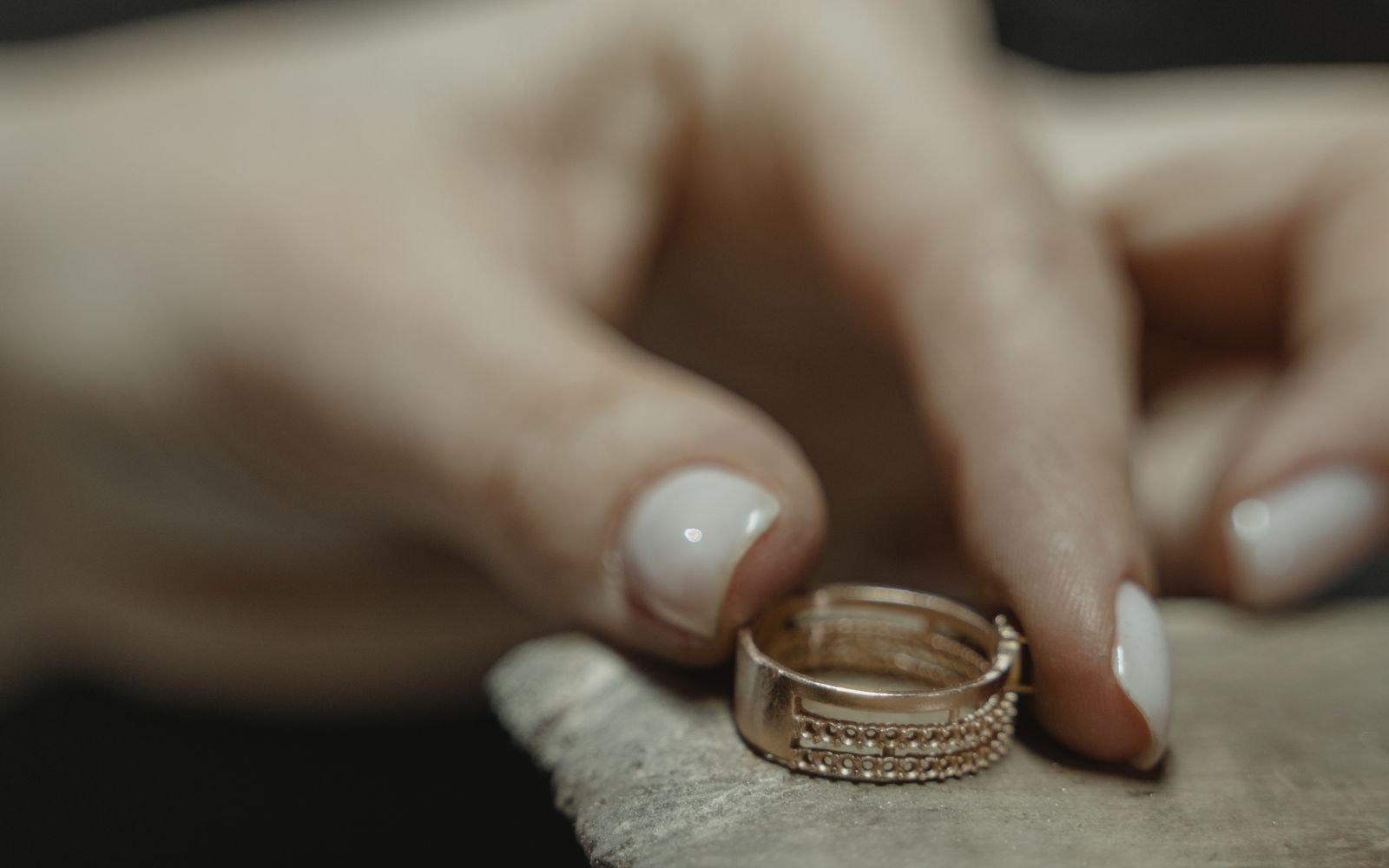
Quick answer: Each finger carries a traditional symbolic meaning in Western ring-wearing custom. The thumb represents willpower and confidence. The index finger signals leadership and ambition, historically favoured for signet rings. The middle finger stands for balance and responsibility. The ring finger, particularly the left, is reserved for engagement and wedding rings and symbolises commitment. The little finger is linked to communication and, in some traditions, signet rings and social status. These meanings come from folklore and palmistry rather than fixed rules, so wear rings wherever feels right for you.
People have attached meaning to finger placement for centuries, long before modern fashion turned rings into an everyday accessory. Much of this symbolism comes from palmistry and Roman mythology, where each finger was linked to a different god and a different set of qualities.
This guide breaks down what each finger traditionally represents, where the ideas come from, and how the symbolism actually plays out in how people wear rings today.
Where This Symbolism Comes From
Roman mythology assigned each finger to a god, and those associations still shape ring symbolism today. The index finger was linked to Jupiter, ruler of the gods, giving it connotations of leadership and authority. The ring finger belonged to Apollo, god of love and beauty, which is part of why it became the traditional home for engagement and wedding rings. The little finger was associated with Mercury, the messenger god, tying it to communication and quick thinking.
Palmistry, the practice of reading meaning into the hand’s shape and lines, layered further symbolism onto each finger over the centuries. None of this is scientifically verified. It is folklore, passed down and adapted, which is exactly why interpretations vary so much between sources today.
What Each Finger Traditionally Means
| Finger | Associated God | Traditional Meaning |
|---|---|---|
| Thumb | None (unique among the five) | Willpower, confidence, self-assertion |
| Index finger | Jupiter | Leadership, ambition, authority |
| Middle finger | Saturn | Balance, responsibility, self-reflection |
| Ring finger | Apollo | Love, commitment, creativity |
| Little finger | Mercury | Communication, intuition, persuasion |
The Thumb
A thumb ring signals individuality more than any other placement, largely because it sits outside the traditional four-finger symbolism entirely. Historically linked to willpower and self-assertion, thumb rings have a documented history stretching back to ancient archers, who wore a thumb ring for protection while drawing a bow. Today, it reads as a confident, distinctive styling choice, and suits chunkier, wider bands better than delicate designs.
The Index Finger
The index finger has long been associated with leadership, authority and social status. Historically, signet rings, engraved with a family crest or initials, were worn here specifically because the position was visible and prominent. In some European monarchies, ordinary citizens were once barred from wearing rings on this finger at all, reserving the signal of influence for nobility. It remains a strong choice for signet rings, class rings and other pieces meant to project confidence.
The Middle Finger
As the longest and most central finger, the middle finger draws attention naturally, which is why bold statement rings and cocktail rings are traditionally worn here. Symbolically, it represents balance, responsibility and self-reflection. Because it sits front and centre on the hand, simpler designs often work better here than heavily detailed pieces, which can look overwhelming in such a prominent position.
The Ring Finger
This is the one placement most people already understand intuitively. In Western tradition, the left ring finger holds engagement and wedding rings, based on an old belief that a vein ran directly from this finger to the heart, sometimes called the vena amoris, or vein of love. While anatomically this vein does not exist, the symbolism has persisted for centuries and remains the standard for marital jewellery across most of the UK and Europe. Wedding ring convention does vary by country. In Germany, Russia and India, for example, the right hand is more common for wedding rings.
The Little Finger
The little finger, or pinky, carries associations with communication, intuition and quick thinking, drawn from its link to Mercury. It is also the traditional home of the signet ring in the UK, worn on the non-dominant hand, a custom with particular ties to British aristocracy. Historically, a signet ring here also signalled family lineage, since only certain families held the right to a registered crest.
Does Hand Choice Matter Too?
Beyond individual fingers, some traditions also assign meaning to left versus right hand. The left hand is generally associated with receiving and the emotional, intuitive side of symbolism, which lines up with its role for engagement and wedding rings. The right hand leans toward action and outward expression, making it a common choice for statement pieces and signet rings in some traditions. As with finger meanings themselves, this varies by culture and is best treated as a loose guide rather than a fixed rule.
Does Any of This Actually Matter Today?
Modern ring-wearing has moved well beyond strict adherence to any of these traditions. Plenty of people wear a ring on whichever finger fits comfortably or suits the design best, with no symbolic intention at all. That said, knowing the traditional meanings adds a layer of personal significance for anyone who wants it, whether that means placing a signet ring on the little finger out of genuine tradition, or simply choosing a placement because the story behind it resonates.
Frequently Asked Questions
Why is the ring finger used for engagement rings?
This comes from an old belief that a vein, sometimes called the vena amoris, ran directly from the left ring finger to the heart. The vein does not exist anatomically, but the tradition has persisted across Western culture for centuries.
What does a ring on the middle finger mean?
Traditionally, the middle finger represents balance and responsibility. Its central, prominent position also makes it a popular choice for statement and cocktail rings.
Which finger is traditional for a signet ring?
In the UK, the little finger of the non-dominant hand is the most traditional placement, though the index finger has also historically carried signet ring associations tied to authority and status.
Does wearing a ring on a specific finger have real meaning?
The meanings come from folklore, mythology and palmistry rather than any verified science. Many people today choose finger placement purely based on comfort or style rather than symbolism.
Why do some countries wear wedding rings on the right hand?
This varies by cultural tradition rather than any universal rule. Countries including Germany, Russia and India commonly use the right hand for wedding rings, while the UK and much of Western Europe use the left.
Final Thoughts
Ring finger symbolism draws on centuries of mythology and folklore, but none of it is a fixed rule. The stories behind each placement add meaning for anyone who wants it, while plenty of people simply wear rings wherever feels comfortable. If you are considering a signet ring, our signet ring meaning guide covers the tradition in full, and our engagement ring buying guide is worth reading before choosing a piece for the ring finger itself.