
Quick answer: The most common necklace chain types are cable, curb, figaro, rope, box, cuban link, snake, herringbone and wheat, each named for its link shape. Box, curb and cuban link are among the strongest for holding a pendant. Rope and herringbone are more delicate and prone to kinking. Snake chains resist tangling well and suit daily wear. Choosing the right chain comes down to how it looks, how it holds up, and whether it needs to carry a pendant.
Ask for a “gold chain” at a jeweller and the first question back will almost always be which type. With so many link styles available, each with its own look and strength, the choice matters more than most people expect, especially if the chain needs to carry a pendant every day.
This guide breaks down the most common chain types, which ones suit a pendant, which resist tangling, and how to choose based on how you plan to wear it.
The Main Chain Types Explained
| Chain Type | Look | Strength | Pendant Suitable |
|---|---|---|---|
| Cable | Classic, uniform oval links | Good | Yes |
| Curb | Flattened, interlocking links lying flush | Very strong | Yes |
| Figaro | Pattern of short links plus one longer link | Good | Yes |
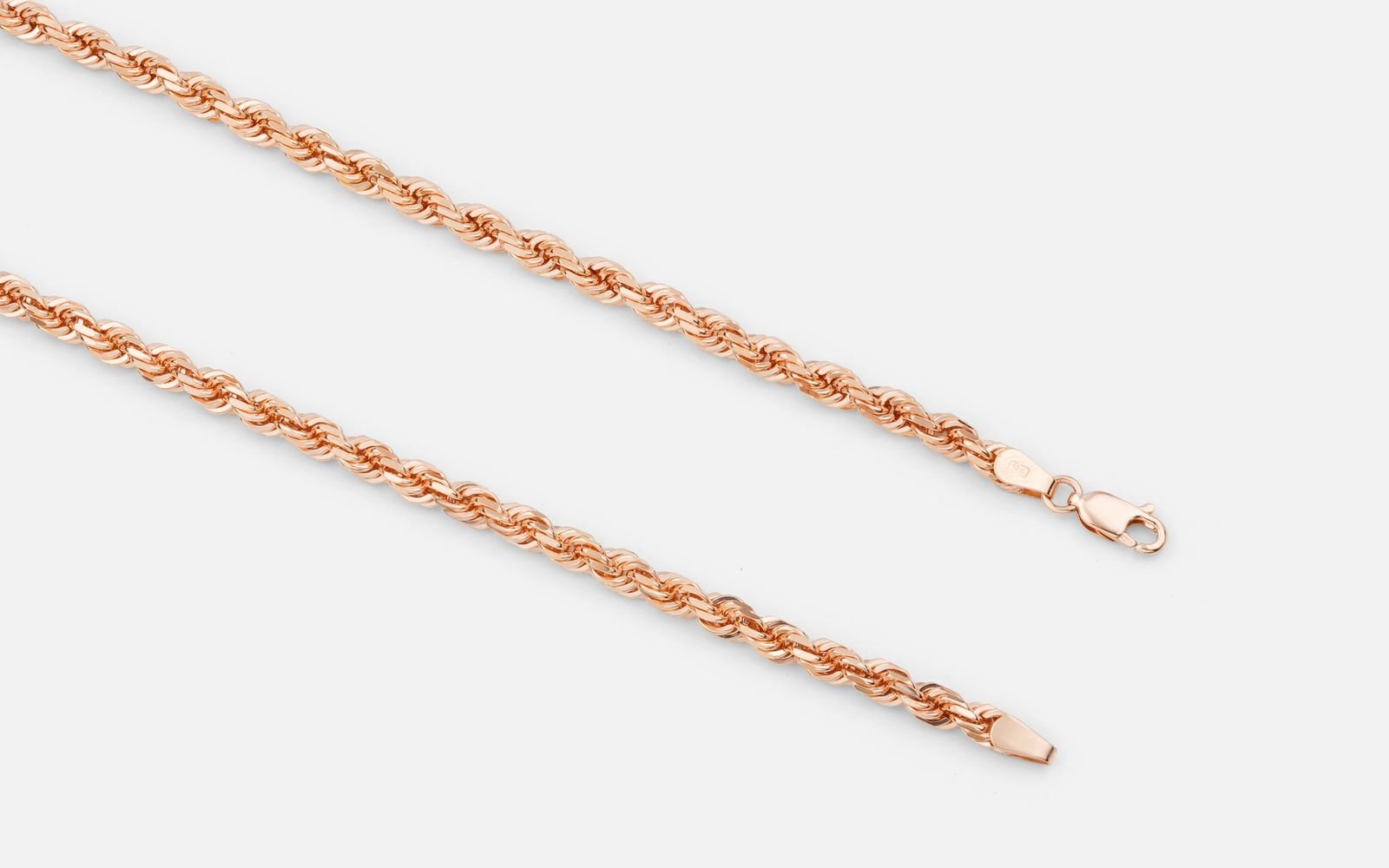
| Rope | Twisted, textured, catches the light | Moderate, prone to kinking | Sometimes |
| Box | Square links, smooth and geometric | Very strong | Yes, one of the best |
| Cuban link | Bold, thick, flattened interlocking links | Very strong | Yes, or worn alone |
| Snake | Smooth, plate-linked, no visible individual links | Good, tangle-resistant | Rarely |
| Herringbone | Flat, ribbon-like, densely woven | Delicate, kinks easily | No |
| Wheat | Braided, textured, matte-like shine | Good | Yes |
The Strongest Chains for Everyday Wear
Box, curb and cuban link chains consistently come out on top for durability. Their interlocking or flattened link construction resists twisting and holds its shape under daily wear far better than more delicate designs. If you want a chain that can genuinely be worn every day without much thought, one of these three is the safest choice.
The Most Delicate Chains
Herringbone and snake chains have a distinctive, sleek appearance that comes from very fine, densely packed links or plates, but that same construction makes them more fragile. A sharp kink in a herringbone chain can become a permanent crease, and both styles generally need a specialist for repair rather than a straightforward re-solder. Rope chains sit in the middle. They kink more easily than curb or box chains but are still reasonably durable for occasional wear.
Choosing a Chain for a Pendant
Not every chain type is built to carry weight. Box, cable, curb and figaro chains all have smooth, evenly distributed links that support a pendant’s weight without distorting. Herringbone chains are a poor match for pendants, since their flat, ribbon-like structure is not designed to bear extra weight and can twist or kink under the strain. If you already own a pendant and are choosing a chain to match it, check the pendant’s bail size against the chain’s link width to make sure it will sit and move naturally rather than sliding awkwardly to one side.
Chain Thickness and Durability
Within any given chain type, thickness matters as much as the link style itself. A 2mm chain is roughly twice as strong as a 1mm chain of the same design, and solid links consistently outlast hollow ones by a wide margin. Most chain breaks happen at the solder joint rather than along the chain itself, so a well-made clasp and joint matter just as much as the link pattern when it comes to long-term durability.
Matching Chain Style to Occasion
- Everyday wear: cable, box or figaro chains, since they balance durability with a classic, versatile look.
- Active lifestyle: curb or wheat chains, which hold their shape well under movement and daily knocks.
- Statement or going out: cuban link, snake or herringbone, which lean more decorative than practical.
- Layering: thinner cable or box chains in varying lengths work well stacked together without overwhelming each other.
Caring for Chain Necklaces
Store chains flat or hanging separately to prevent tangling, particularly with fine cable or snake chains, which knot easily if left loose in a jewellery box. Clean solid gold or silver chains with warm water and a soft toothbrush, paying attention to the gaps between links where residue collects. For delicate herringbone or snake chains, a soft, dry cloth is safer than soaking, since prolonged water exposure can work its way into fine joints over time.
Frequently Asked Questions
What is the strongest necklace chain type?
Box, curb and cuban link chains are generally considered the strongest, thanks to their interlocking or flattened link construction that resists twisting and holds up well under daily wear.
Which chain is best for a pendant?
Box, cable, curb and figaro chains all suit pendants well, since their smooth, evenly spaced links support extra weight without distorting.
Why does my chain keep kinking?
Delicate designs such as herringbone and snake chains are more prone to kinking due to their fine, closely packed construction. A sharp kink in these styles can become permanent, so handle them gently and store them flat.
Is a curb chain the same as a cuban link chain?
They are closely related and sometimes sold under either name, both featuring flattened, interlocking links, though cuban link chains are typically thicker and more pronounced.
Can any chain be repaired if it breaks?
Most breaks in sturdier chains like curb, box or cable can be repaired straightforwardly by a jeweller. Deep kinks in delicate styles like herringbone or snake are considerably harder to fix and sometimes not repairable at all.
Final Thoughts
The right chain comes down to balancing look, strength and whether it needs to carry a pendant. Box, curb and cuban link chains offer the most everyday durability, while rope, snake and herringbone lean more decorative. If you are layering multiple chains, our necklace length guide is worth reading, and our gold jewellery buying guide covers karat purity before you choose which metal to buy your chain in.