
Why Does Jewellery Turn Your Skin Green? The Complete Guide
Have you ever taken off a ring and noticed a green mark on your finger? Or perhaps you’ve removed a necklace and found a faint green stain on your neck. If so, you’re not alone.
One of the most common questions jewellery owners ask is: Why does jewellery turn your skin green?
The good news is that green skin caused by jewellery is usually harmless. In most cases, it doesn’t mean your jewellery is fake, dangerous, or poor quality. Instead, it is often the result of a natural chemical reaction between the metal in your jewellery and substances on your skin.
This reaction can happen with rings, necklaces, bracelets, earrings, and other fashion jewellery. Certain metals are more likely to cause green stains than others, and factors such as sweat, humidity, skincare products, and even your body’s chemistry can make the effect more noticeable.
Understanding why this happens can help you prevent it, protect your jewellery, and choose materials that are less likely to stain your skin in the future.
In this guide, we’ll explore the science behind green skin stains, the metals most commonly responsible, whether the reaction is harmful, and practical ways to stop it from happening.
What Causes Jewellery to Turn Skin Green?
The main reason jewellery turns skin green is a chemical reaction between the metal and your skin.
Many jewellery pieces, especially fashion jewellery and costume jewellery, contain metals such as copper, brass, or bronze. When these metals come into contact with moisture, oxygen, sweat, or skincare products, they begin to oxidise.
During oxidation, tiny amounts of metal compounds form on the surface of the jewellery. These compounds can transfer onto your skin, leaving a green stain.
The Role of Copper
Copper is the biggest culprit behind green skin stains.
Many jewellery alloys contain copper because it is durable, affordable, and easy to work with. Even some gold and silver jewellery contains small amounts of copper.
When copper reacts with air and moisture, it forms compounds such as copper carbonate and copper chloride. These compounds have a green colour, similar to the famous green appearance of the Statue of Liberty.
When these compounds come into contact with your skin, they can leave temporary green marks.
This doesn’t necessarily mean the jewellery is low quality. Even expensive jewellery can contain copper as part of its metal mixture.
Oxidation Explained
Oxidation is a natural process that affects many metals.
You can think of oxidation as the metal reacting with its environment.
Common triggers include:
- Oxygen
- Water
- Humidity
- Sweat
- Lotions
- Perfume
- Sunscreen
Over time, these factors cause metal surfaces to change chemically.
In jewellery, oxidation often appears as:
- Tarnish
- Dark spots
- Loss of shine
- Green skin stains
The faster oxidation occurs, the more likely you are to notice discolouration on your skin.
How Sweat Affects Metals
Sweat plays a major role in jewellery reactions.
Human sweat contains:
- Salt
- Minerals
- Natural oils
- Acids
These substances can accelerate chemical reactions between jewellery and your skin.
People who sweat heavily often notice green stains more frequently, especially during:
- Exercise
- Summer weather
- Humid conditions
- Physical activity
This is why a ring that never causes problems during winter may suddenly leave green marks during a hot summer holiday.
Is Green Skin From Jewellery Dangerous?
For most people, green skin caused by jewellery is completely harmless.
The green colour is simply a stain created by metal compounds reacting with the surface of your skin.
- It is not an infection.
- It is not mould.
- It is not a sign of poisoning.
In most cases, the stain can be washed away with soap and water.
When It’s Usually Harmless
If you experience:
- Mild green discolouration
- No itching
- No swelling
- No pain
- No then the reaction is generally cosmetic rather than medical.
The stain may look unusual, but it typically poses no health risk.
When It Could Be an Allergy
While green stains are usually harmless, some people experience metal allergies.
Symptoms of a metal allergy can include:
- Redness
- Itching
- Swelling
- Blisters
- Skin irritation
This is different from ordinary green staining.
Nickel allergies are particularly common and affect many jewellery wearers.
If you experience irritation rather than simple discolouration, it may be worth consulting a healthcare professional and choosing hypoallergenic jewellery materials.
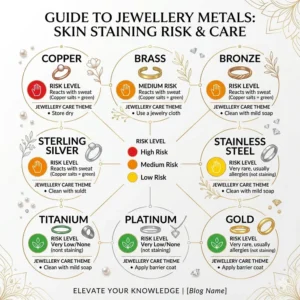
Which Jewellery Metals Cause Green Stains?
Not all jewellery metals react the same way.
Some metals are much more likely to leave green marks on the skin.
Copper
Copper is the most common cause of green skin.
Because copper oxidises easily, it frequently produces green compounds that transfer onto the skin.
Jewellery containing high levels of copper often causes:
- Green fingers
- Green wrists
- Green neck stains
Brass
Brass is made from copper and zinc.
Since brass contains copper, it can also produce green stains under certain conditions.
Brass jewellery is popular because it resembles gold while remaining affordable.
However, it generally requires more maintenance than precious metals.
Bronze
Bronze is another copper-based alloy.
Like brass, it can oxidise and leave green marks on the skin.
Humidity and sweat often increase the likelihood of staining.
Sterling Silver
Many people are surprised to learn that sterling silver can sometimes turn skin green.
Pure silver is relatively stable.
However, sterling silver contains additional metals, often including copper.
If oxidation occurs, the copper component may contribute to skin staining.
Rose Gold
Rose gold gets its warm colour from copper.
The higher the copper content, the greater the possibility of green staining under certain conditions.
However, higher-quality rose gold jewellery generally causes fewer problems than inexpensive fashion jewellery.
Why Some People Experience Green Stains More Than Others
One of the most confusing things about jewellery-related skin stains is that the same piece of jewellery can affect different people in completely different ways.
For example, one person may wear a ring every day without any issues, while another person notices green marks after only a few hours.
The difference often comes down to body chemistry.
Skin pH and Body Chemistry
Your skin has a natural pH level that varies from person to person.
Some people have more acidic skin than others. When metal comes into contact with acidic skin, chemical reactions can occur more quickly.
This increased reactivity can lead to:
- Faster tarnishing
- More noticeable oxidation
- Greater likelihood of green skin stains
Factors that can influence skin chemistry include:
- Genetics
- Diet
- Hydration levels
- Medications
- Hormonal changes
- Overall health
This explains why a ring that never stained your skin in the past may suddenly start causing problems.
Sweat and Moisture Levels
People who sweat more frequently often experience green stains more often.
Sweat contains:
- Salt
- Minerals
- Natural oils
- Organic compounds
These substances can accelerate the breakdown of certain metals and increase oxidation.
Common situations where this occurs include:
- Summer weather
- Gym workouts
- Outdoor activities
- Humid climates
If your jewellery tends to turn your skin green during warm months but not during winter, sweat is likely a major factor.
Hormonal Changes
Hormones can affect the chemistry of your skin.
Changes in hormone levels may alter:
- Skin acidity
- Sweat production
- Oil production
This can make some people more prone to jewellery reactions during certain stages of life.
Pregnancy
Pregnancy is often mentioned by jewellery wearers who suddenly notice skin discolouration
Many women find that jewellery behaves differently during pregnancy because hormonal fluctuations can affect body chemistry.
Although scientific research on this specific issue is limited, anecdotal reports suggest that changes in sweat composition and skin pH may increase the likelihood of metal reactions.
Can Real Gold Turn Skin Green?
One of the biggest myths in the jewellery industry is that only fake jewellery turns skin green.
The truth is more complicated.
Pure gold does not usually react with skin.
However, most gold jewellery is not pure gold.
Understanding Gold Purity
Gold jewellery is typically mixed with other metals to improve strength and durability.
For example:
- 24K gold = nearly pure gold
- 18K gold = 75% gold
- 14K gold = 58.3% gold
- 9K gold = 37.5% gold
The remaining percentage consists of other metals such as:
- Copper
- Silver
- Zinc
- Nickel
If those metals react with moisture and skin chemistry, green stains may occur.
Why Lower-Karat Gold Causes More Issues
Generally speaking:
- Higher-karat gold contains more gold and fewer reactive metals.
- Lower-karat gold contains more alloy metals and may be more likely to cause discolouration
This does not mean lower-karat gold is poor quality.
It simply means it contains a higher proportion of metals that can react with environmental factors.
Why Gold-Plated Jewellery Turns Skin Green
Gold-plated jewellery is one of the most common causes of green skin stains.
Many fashion jewellery pieces use a thin layer of gold over a base metal.
The base metal often contains:
- Copper
- Brass
- Zinc alloys
When the gold plating begins to wear away, the underlying metal becomes exposed.
Once this happens, oxidation can occur more easily.
Signs Your Gold-Plated Jewellery Is Wearing Out
Look for:
- Fading colour
- Dark patches
- Uneven shine
- Green skin stains
- Visible base metal
If you notice these signs, the plating may be thinning.
How Long Does Gold Plating Last?
The lifespan depends on:
- Wear frequency
- Skin chemistry
- Storage habits
- Cleaning methods
Some pieces may last several years.
Others may show wear within months if worn daily.
Proper care can dramatically extend the lifespan of gold-plated jewellery.
How to Stop Jewellery Turning Your Skin Green
If you’re tired of green fingers, green wrists, or stained necklines, several practical solutions can help.
Apply a Protective Barrier
One of the easiest methods is creating a barrier between your skin and the metal.
Some jewellery wearers apply:
- Jewellery shield coatings
- Protective sealants
- Clear jewellery protectors
These products help prevent direct metal-to-skin contact.
Keep Jewellery Dry
Moisture accelerates metal reactions.
Always remove jewellery before:
- Swimming
- Showering
- Exercising
- Washing dishes
If jewellery becomes wet, dry it thoroughly before storing it.
Avoid Perfume and Cosmetics
Beauty products often contain chemicals that react with metal surfaces.
Apply:
- Perfume
- Lotion
- Sunscreen
- Hair products
Before putting on jewellery.
Allow products to absorb completely before wearing accessories.
Clean Jewellery Regularly
Regular cleaning removes:
- Sweat residue
- Skin oils
- Dirt
- Cosmetic buildup
This reduces oxidation and helps maintain the protective finish of your jewellery.
Store Jewellery Properly
Good storage slows tarnishing and oxidation.
Best practices include:
- Separate compartments
- Soft pouches
- Anti-tarnish bags
- Silica gel packets
- Cool, dry locations
Avoid storing jewellery in bathrooms where humidity levels tend to be high.
Rotate Frequently Worn Pieces
Wearing the same jewellery every day increases exposure to sweat, friction, and environmental contaminants.
Rotating pieces allows them to rest between uses and can extend their lifespan significantly.
How to Remove Green Stains From Skin
Fortunately, green jewellery stains are usually temporary.
In most cases, removal is simple.
Soap and Warm Water
For light stains:
- Wash the area with warm water.
- Use gentle soap.
- Rub carefully with a soft cloth.
- Rinse thoroughly.
This often removes fresh stains completely.
Makeup Remover
Some people find that makeup remover works well for stubborn discolouration.
Use a gentle product and avoid excessive rubbing.
Baking Soda Paste
For more persistent stains:
- Mix baking soda with a small amount of water.
- Create a paste.
- Gently rub onto the stained area.
- Rinse thoroughly.
Avoid aggressive scrubbing, especially if the skin is sensitive.
Time
Many green stains fade naturally within a day or two, particularly if the source of the reaction is removed.
The stain itself is generally harmless and temporary.
Best Jewellery Materials That Won’t Turn Your Skin Green
If you’ve experienced green skin stains in the past, choosing the right jewellery materials can make a huge difference.
While no material is completely immune to wear and environmental exposure, some metals are far less likely to react with your skin.
Titanium
Titanium is one of the best choices for sensitive skin.
Benefits include:
- Highly resistant to corrosion
- Extremely durable
- Lightweight
- Hypoallergenic
- Resistant to tarnish
Titanium jewellery rarely causes skin discolouration, making it popular for rings and everyday wear.
Platinum
Platinum is considered one of the most premium jewellery metals available.
Unlike copper-based alloys, platinum is highly stable and resistant to oxidation.
Advantages include:
- Excellent durability
- Natural white colour
- Minimal maintenance
- Low risk of skin reactions
Although platinum is more expensive than most alternatives, it offers exceptional longevity.
Stainless Steel
Stainless steel has become increasingly popular in fashion jewellery.
High-quality stainless steel, particularly 316L stainless steel, offers:
- Excellent corrosion resistance
- Affordable pricing
- Modern appearance
- Low maintenance
Many people switch to stainless steel after experiencing issues with plated jewellery.
High-Karat Gold
The higher the gold content, the less likely the jewellery is to react with your skin.
For example:
| Gold Type | Gold Content |
|---|---|
| 24K Gold | 99.9% |
| 18K Gold | 75% |
| 14K Gold | 58.3% |
| 9K Gold | 37.5% |
Because higher-karat gold contains fewer alloy metals, it is generally less reactive.
Sterling Silver
Quality sterling silver can be a good option when properly cared for.
While sterling silver contains copper, regular cleaning and proper storage can help minimise oxidation and skin staining.
Common Myths About Green Jewellery Stains
Many misconceptions surround jewellery and skin discolouration.
Let’s separate fact from fiction.
Myth 1: Green Skin Means Your Jewellery Is Fake
False.
Even genuine jewellery can turn skin green under certain conditions.
Many authentic jewellery pieces contain copper alloys that can react with sweat and moisture.
Myth 2: Green Skin Is Dangerous
False.
In most cases, green stains are harmless cosmetic reactions.
However, irritation, itching, or swelling may indicate a metal allergy rather than simple oxidation.
Myth 3: Expensive Jewellery Never Causes Green Stains
False.
Price does not eliminate the possibility of metal reactions.
Even premium jewellery may contain alloy metals that react under certain circumstances.
Myth 4: Only Rings Cause Green Skin
False.
Any jewellery that contacts the skin can potentially leave stains.
Examples include:
- Rings
- Necklaces
- Bracelets
- Watches
- Earrings
Myth 5: Green Stains Are Permanent
False.
Most stains can be removed easily using soap and water or gentle cleansing products.
Frequently Asked Questions
Why does my ring turn my finger green so quickly?
This usually happens because the metal contains copper or copper-based alloys. Sweat, moisture, and skin chemistry can speed up the reaction.
Is green skin from jewellery dangerous?
In most cases, no. Green skin stains are generally harmless and result from oxidation. If you experience itching, swelling, or irritation, you may have a metal allergy.
Why does gold-plated jewellery turn skin green?
Gold-plated jewellery often contains copper or brass underneath the plating. As the plating wears down, the base metal can react with your skin.
How do I stop jewellery from turning my skin green?
Keep jewellery dry, clean it regularly, avoid contact with perfumes and lotions, and store it properly. Protective jewellery coatings may also help.
Which jewellery materials won’t turn my skin green?
Titanium, platinum, stainless steel, and high-karat gold are among the most skin-friendly and tarnish-resistant jewellery materials available.
Conclusion
If you’ve ever wondered why jeweller turns your skin green, the answer usually comes down to chemistry rather than quality.
Most green stains occur when metals such as copper react with sweat, moisture, oxygen, and natural skin oils. The resulting compounds can transfer onto your skin and create temporary discolouration.
Fortunately, this reaction is usually harmless.
Understanding the causes can help you take simple steps to prevent future staining. Choosing better materials, keeping jewellery dry, cleaning it regularly, and storing it correctly can significantly reduce the chances of green skin marks appearing.
It’s also important to remember that green stains do not automatically mean your jewellery is fake. Even genuine gold, sterling silver, and rose gold pieces can contain alloy metals that react under certain conditions.
By understanding your body’s chemistry and selecting suitable jewellery materials, you can enjoy your favourite accessories without worrying about unwanted discolouration.
The next time you notice a green mark after wearing a ring or necklace, you’ll know exactly what’s happening and, more importantly, how to prevent it.