
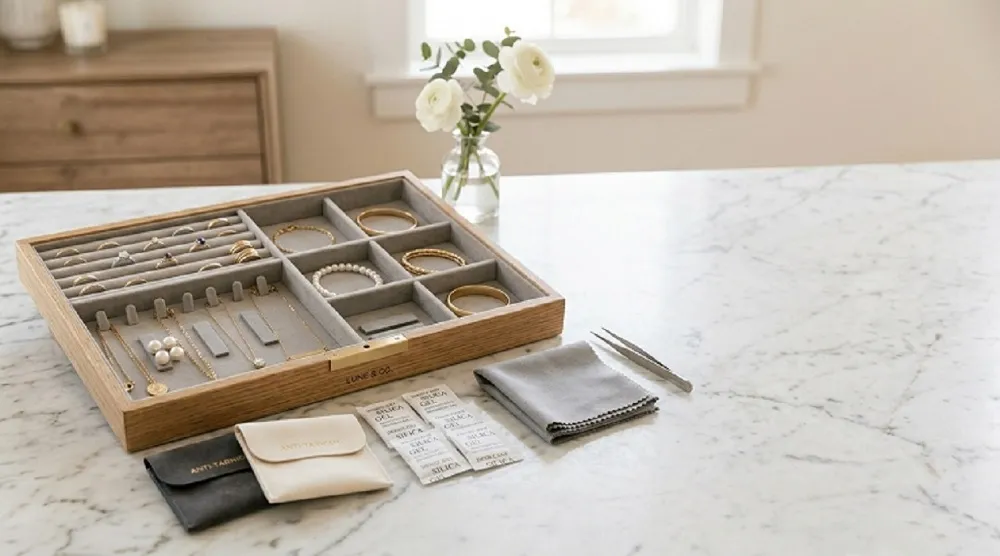
How to Stop Jewellery from Tarnishing: The Complete Prevention Guide
Jewellery tarnish is one of the most frustrating problems for jewellery lovers. One day your favourite necklace looks bright and polished, and a few weeks later it appears dull, dark, or even black. Whether you wear fashion jewellery, gold-plated pieces, sterling silver, or costume jewellery, tarnishing can make beautiful accessories look old before their time.
The good news is that tarnish is usually preventable. Understanding why it happens and making a few simple changes to your daily routine can dramatically extend the life of your jewellery.
Many people think tarnishing means jewellery is poor quality. In reality, even high-quality metals can tarnish under the right conditions. Factors such as humidity, sweat, cosmetics, air pollution, and improper storage all contribute to oxidation and discolouration.
In this guide, you’ll learn exactly how to stop jewellery from tarnishing, which materials are most vulnerable, the best storage methods, common mistakes to avoid, and practical strategies that can keep your jewellery looking new for years.
What Is Jewellery Tarnish?
Before learning how to prevent tarnish, it helps to understand what tarnish actually is.
Tarnish is a chemical reaction that occurs when metal surfaces interact with oxygen, moisture, sulphur compounds, and environmental pollutants. Over time, these reactions create a dark layer on the surface of the metal.
Unlike dirt, tarnish cannot simply be wiped away with a cloth. It develops because the metal itself reacts with its surroundings.
Tarnish vs Dirt
Many jewellery owners confuse tarnish with ordinary dirt.
Dirt comes from:
- Dust
- Makeup
- Skin oils
- Sweat
- Environmental debris
Tarnish comes from:
- Oxidation
- Sulphur exposure
- Humidity
- Chemical reactions
Understanding this difference is important because prevention methods target tarnish, not just surface dirt.
Why Tarnish Looks Different on Different Metals
Not all metals tarnish in the same way.
For example:
- Sterling silver often develops black or grey tarnish.
- Brass may appear brown.
- Copper can produce green discolouration.
- Gold-plated jewellery may become dull as the plating wears down.
The appearance depends on the metal composition and environmental conditions.
Is Tarnish Permanent?
In most cases, no.
Light tarnish can often be removed through proper cleaning and maintenance. However, severe tarnish combined with worn plating may require professional restoration or replacement.
This is why prevention is always easier and cheaper than repair.
Why Jewellery Tarnishes
One of the biggest content gaps we identified in competitor articles is that they explain what causes tarnish but rarely explain why these factors matter.
Air Exposure
Oxygen naturally reacts with many metals.
The longer jewellery remains exposed to air, the greater the chance of oxidation occurring.
This is why jewellery stored in open trays often tarnishes faster than jewellery stored in sealed containers.
Humidity
Humidity is one of the most overlooked causes of tarnishing.
Moisture accelerates chemical reactions on metal surfaces. Even if your jewellery never gets wet directly, a humid environment can still speed up tarnish formation.
Bathrooms are among the worst places to store jewellery because showers create a constantly humid environment.
Sweat and Body Oils
Your skin naturally produces oils and perspiration throughout the day.
When jewellery comes into contact with sweat, salt deposits and oils accumulate on the surface.
Over time, this creates conditions that encourage oxidation.
People who wear the same jewellery every day often notice tarnishing sooner because their jewellery is exposed to these substances continuously.
Perfume, Lotions, and Cosmetics
Beauty products can significantly affect jewellery longevity.
Common culprits include:
- Perfume
- Hair spray
- Sunscreen
- Moisturiser
- Foundation
- Body lotion
Many of these products contain chemicals that interact with metal surfaces and accelerate discolouration.
A simple rule can help:
Apply beauty products first. Put jewellery on last.
Swimming Pools and Seawater
Chlorine and salt water are especially damaging.
Pool chemicals can weaken plating, while salt water encourages corrosion.
Removing jewellery before swimming is one of the easiest ways to protect it.
Which Jewellery Tarnishes Fastest?
Not all jewellery materials behave the same way. Understanding the risks associated with different metals helps you create a more effective care routine.
Sterling Silver
Sterling silver is beautiful but highly susceptible to tarnishing.
Silver reacts with sulphur compounds in the air, creating the dark coating many people associate with tarnish.
The good news is that silver usually responds well to proper maintenance and storage.
Gold-Plated Jewellery
Many fashion jewellery pieces use a thin layer of gold over a base metal.
While gold itself resists tarnish, the underlying metal can become exposed as plating wears away.
This is why gold-plated jewellery often loses its shine over time.
Brass Jewellery
Brass contains copper and zinc.
These metals naturally oxidise, producing darker colours and sometimes green residue.
Regular cleaning and proper storage help minimise these effects.
Copper Jewellery
Copper is particularly reactive.
Exposure to moisture and air can quickly create visible tarnish.
Some people also experience green staining on their skin when wearing copper jewellery.
Stainless Steel Jewellery
Stainless steel is among the most tarnish-resistant materials available.
Its chromium content helps protect against corrosion and oxidation.
Although not completely immune, stainless steel generally requires less maintenance than other jewellery materials.
15 Proven Ways to Stop Jewellery from Tarnishing
If you’ve been searching for how to stop jewellery from tarnishing, this is the section that matters most.
Most competitors give 5 to 8 generic tips. The reality is that tarnish prevention works best when you combine multiple strategies. Think of it as creating a protective system around your jewellery rather than relying on a single solution.
1. Keep Jewellery Dry at All Times
Moisture is one of the biggest causes of tarnish.
Even a small amount of water left on jewellery can encourage oxidation over time.
Always remove jewellery before:
- Showering
- Swimming
- Washing dishes
- Using hot tubs
- Exercising
If jewellery becomes wet, dry it immediately with a soft microfiber cloth.
Expert Insight
Many people focus on cleaning jewellery but ignore drying. In reality, improper drying causes more tarnish problems than cleaning itself.
2. Store Jewellery in a Cool, Dry Place
Where you store jewellery matters.
Bad storage locations include:
- Bathrooms
- Windowsills
- Humid wardrobes
- Areas exposed to sunlight
Better storage locations include:
- Bedroom drawers
- Jewellery cabinets
- Closed jewellery boxes
- Climate-controlled rooms
Reducing humidity exposure dramatically slows oxidation.
3. Use Anti-Tarnish Strips
Anti-tarnish strips absorb harmful airborne compounds that contribute to tarnishing.
They are inexpensive and highly effective.
Benefits include:
- Reduced oxidation
- Longer jewellery lifespan
- Less frequent cleaning
- Better protection for silver jewellery
Most competitors briefly mention storage but fail to discuss anti-tarnish technology in detail.
4. Add Silica Gel Packets to Storage Boxes
This is one of the most overlooked jewellery care hacks.
Silica gel packets absorb excess moisture from the surrounding environment.
You often find them inside:
- Shoe boxes
- Electronics packaging
- Handbags
Placing a few inside your jewellery box can significantly reduce humidity levels.
Why This Works
Lower humidity means slower oxidation.
This simple trick can help preserve jewellery for months longer.
5. Store Pieces Separately
Jewellery rubbing against other jewellery creates friction.
This can:
- Wear away plating
- Create scratches
- Expose base metals
- Accelerate tarnishing
Store items individually whenever possible.
Use:
- Soft pouches
- Separate compartments
- Small jewellery bags
6. Remove Jewellery Before Sleeping
Many people wear jewellery to bed without realising the damage it causes.
While sleeping, jewellery experiences:
- Friction against bedding
- Exposure to sweat
- Pressure from movement
Over time, this contributes to faster wear and tarnishing.
Creating a nightly removal habit can greatly extend jewellery life.
7. Avoid Perfume Contact
Perfume contains chemicals that can react with jewellery surfaces.
Apply:
- Perfume
- Hair spray
- Sunscreen
- Body lotion
Before putting on jewellery.
Wait a few minutes for products to dry before wearing accessories.
This simple habit protects plating and reduces chemical exposure.
8. Clean Jewellery Regularly
Many people only clean jewellery once tarnish appears.
A better approach is preventative maintenance.
Recommended schedule:
| Usage | Cleaning Frequency |
|---|---|
| Daily wear | Every 2 to 4 weeks |
| Weekly wear | Every 4 to 6 weeks |
| Occasion wear | Every 2 to 3 months |
Regular cleaning removes oils and residue before they cause problems.
9. Use a Microfiber Cloth After Wearing
One of the easiest ways to prevent tarnish is wiping jewellery after each use.
This removes:
- Sweat
- Skin oils
- Makeup residue
- Dust
The entire process takes less than a minute.
Yet it can significantly improve long-term appearance.
10. Avoid Swimming Pools
Swimming pools contain chlorine.
Chlorine can:
- Damage plating
- Cause discoloration
- Accelerate corrosion
Even short exposure can affect delicate fashion jewellery.
Always remove jewellery before entering the pool.
11. Keep Jewellery Away from Household Chemicals
Many cleaning products contain ingredients that react with metals.
Examples include:
- Bleach
- Ammonia
- Bathroom cleaners
- Kitchen degreasers
Remove jewellery before cleaning your home.
This simple habit prevents accidental chemical damage.
12. Rotate Your Jewellery Collection
Wearing the same necklace every day exposes it to constant wear.
Rotating pieces allows jewellery to rest between uses.
Benefits include:
- Less friction
- Less sweat exposure
- Reduced plating wear
- Longer lifespan
People with larger collections often notice slower tarnishing because individual pieces are worn less frequently.
13. Choose Tarnish-Resistant Materials
Some materials naturally resist tarnishing better than others.
Examples include:
- Stainless steel
- Titanium
- Platinum
- Tungsten carbide
These materials are excellent options for everyday wear.
If you’re frequently replacing tarnished jewellery, material choice may be part of the problem.
14. Protect Jewellery During Travel
Travel exposes jewellery to:
- Humidity changes
- Temperature fluctuations
- Physical damage
Always use:
- Travel jewellery cases
- Soft pouches
- Separate compartments
Avoid tossing jewellery loosely into bags.
Travel storage is rarely discussed by competitors, making this an excellent content gap to cover.
15. Control Humidity Levels at Home
Humidity affects jewellery more than most people realise.
High-humidity environments accelerate oxidation reactions.
Consider:
- Dehumidifiers
- Air conditioning
- Silica gel packets
- Moisture-resistant storage
This is especially important in coastal areas where humidity levels remain elevated year-round.
Best Jewellery Storage Methods
Storage is one of the most important factors in jewellery longevity.
Many people spend hundreds on jewellery but store it incorrectly.
Let’s look at the best options.
Jewellery Boxes
A quality jewellery box offers:
- Organization
- Protection from dust
- Reduced air exposure
- Scratch prevention
Look for boxes with:
- Soft lining
- Separate compartments
- Secure closures
Anti-Tarnish Bags
Anti-tarnish bags are designed to slow oxidation.
Benefits include:
- Reduced moisture exposure
- Protection from airborne contaminants
- Longer-lasting shine
These are particularly useful for:
- Sterling silver
- Silver-plated jewellery
- Brass jewellery
Soft Fabric Pouches
Individual pouches reduce friction and scratching.
They are ideal for:
- Necklaces
- Bracelets
- Earrings
- Rings
Using separate pouches also prevents chain tangling.
Jewellery Organizers
Modern organisers provide visibility and convenience.
Look for designs that:
- Separate pieces
- Limit metal-to-metal contact
- Protect delicate finishes
The Science Behind Jewellery Tarnish
Most articles explain tarnish in simple terms.
Very few explain the science.
Tarnish is essentially a chemical reaction between metal and environmental elements.
The main contributors include:
- Oxygen
- Moisture
- Sulphur compounds
- Pollutants
When these substances interact with metal surfaces, they create oxidation products.
This process is similar to rust formation, although different metals produce different results.
For example:
- Silver develops dark silver sulfide.
- Copper develops green copper compounds.
- Brass develops brown oxidation layers.
The speed of tarnish depends on:
- Metal type
- Humidity
- Temperature
- Chemical exposure
- Storage conditions
Understanding these factors helps you make smarter decisions about jewellery care.
Tarnish Risk by Material
| Material | Tarnish Risk |
|---|---|
| Copper | Very High |
| Brass | High |
| Sterling Silver | High |
| Silver-Plated | Medium-High |
| Gold-Plated | Medium |
| Stainless Steel | Low |
| Titanium | Very Low |
| Platinum | Very Low |
This table is a major content opportunity because few competitors directly compare materials.
Seasonal Jewellery Care Tips
Summer
Challenges:
- Sweat
- Humidity
- Sunscreen
- Swimming pools
Focus on:
- Frequent wiping
- Proper drying
- Avoiding water exposure
Winter
Challenges:
- Dry indoor heating
- Increased cosmetic use
Focus on:
- Gentle cleaning
- Proper storage
Travel Season
Challenges:
- Humidity fluctuations
- Packing damage
Focus on:
- Travel cases
- Individual pouches
- Anti-tarnish storage
Common Mistakes That Cause Jewellery to Tarnish Faster
Even high-quality jewellery can tarnish quickly if it’s exposed to the wrong conditions. Many people unknowingly shorten the lifespan of their favourite pieces through simple daily habits.
Storing Jewellery in the Bathroom
Bathrooms are one of the worst places to keep jewellery.
Every shower creates humidity that becomes trapped in the room. Over time, that moisture accelerates oxidation and tarnish formation.
Better alternative: Store jewellery in a bedroom drawer, jewellery box, or wardrobe away from moisture.
Applying Perfume After Putting on Jewellery
Perfume contains alcohol and other chemicals that can react with metal surfaces.
Many people spray perfume directly onto necklaces and earrings without realising the damage this can cause.
Best practice: Apply perfume first, allow it to dry, then put on jewellery.
Leaving Jewellery Wet
After cleaning jewellery, some people immediately place it back into storage.
This traps moisture and creates ideal conditions for tarnishing.
Best practice: Allow jewellery to dry completely before storing.
Wearing Jewellery During Exercise
Sweat contains salt and natural oils that build up on jewellery surfaces.
This increases the risk of tarnish and can also damage delicate plating.
Remove jewellery before:
- Gym workouts
- Running
- Cycling
- Sports activities
Not Cleaning Jewellery Regularly
Dirt, oils, and cosmetic residue accumulate over time.
Without routine maintenance, these substances contribute to tarnish and dullness.
A quick wipe with a microfiber cloth after wearing jewellery can make a significant difference.
Mixing Different Jewellery Pieces
Necklaces, rings, bracelets, and earrings rubbing against each other can:
- Create scratches
- Wear down plating
- Increase oxidation
Store pieces separately whenever possible.
Ignoring Humidity
Humidity is one of the biggest hidden causes of tarnish.
Many competitor articles briefly mention moisture but fail to explain how important humidity control really is.
If you live in a humid climate, consider:
- Silica gel packets
- Anti-tarnish bags
- Dehumidifiers
- Sealed jewellery containers
These solutions can dramatically slow tarnish formation.
Ultimate Tarnish Prevention Checklist
Use this quick checklist to keep your jewellery looking new:
- Remove jewellery before showering
- Remove jewellery before swimming
- Remove jewellery before exercise
- Apply perfume before wearing jewellery
- Store jewellery in a dry environment
- Use anti-tarnish strips
- Add silica gel packets to storage boxes
- Store pieces separately
- Clean jewellery regularly
- Wipe jewellery after each use
- Use travel cases when travelling
- Rotate frequently worn pieces
- Avoid direct sunlight
- Avoid household cleaning chemicals
- Inspect jewellery every month
Following these habits consistently will significantly reduce tarnish and extend the life of your jewellery.
Frequently Asked Questions
Why does jewellery tarnish so quickly?
Jewellery usually tarnishes quickly because of exposure to moisture, humidity, sweat, cosmetics, air pollution, and improper storage. Certain metals such as silver, brass, and copper are naturally more prone to oxidation.
How do I stop gold-plated jewellery from tarnishing?
To prevent gold-plated jewellery from tarnishing:
- Avoid water exposure
- Keep it away from perfume
- Store it in anti-tarnish pouches
- Wipe it after wearing
- Clean gently every few weeks
Can tarnished jewellery become shiny again?
Yes. In many cases, tarnished jewellery can be restored using gentle cleaning methods, polishing cloths, and proper maintenance. However, heavily worn plating may require replacement or professional restoration.
What is the best way to store jewellery to prevent tarnish?
The best storage method includes:
- A jewellery box with separate compartments
- Anti-tarnish strips
- Silica gel packets
- A cool, dry environment
Avoid storing jewellery in bathrooms or humid areas.
Does fake jewellery tarnish faster than real jewellery?
Generally, yes.
Fashion jewellery and costume jewellery often contain base metals that are more susceptible to oxidation than solid precious metals. However, proper care can dramatically extend their lifespan.
Conclusion
Knowing how to stop jewellery from tarnishing is one of the most valuable jewellery care skills you can learn. Tarnish is not always a sign of poor quality. In most cases, it results from everyday exposure to moisture, air, sweat, cosmetics, and improper storage.
The good news is that preventing tarnish is often easier than removing it. Small habits such as wiping jewellery after wearing it, keeping it dry, storing it correctly, and avoiding harsh chemicals can make a huge difference over time.
Remember the key principles:
- Keep jewellery dry.
- Store it properly.
- Reduce humidity exposure.
- Clean it regularly.
- Use anti-tarnish protection.
- Rotate frequently worn pieces.
By following the strategies in this guide, you can preserve the shine, beauty, and lifespan of your jewellery while reducing the need for frequent cleaning or replacement.
Whether you own gold-plated necklaces, sterling silver rings, fashion jewellery, or treasured keepsakes, these prevention methods will help keep them looking their best for years to come.