
How Long Does Gold-Plated Jewellery Last? The Complete UK Guide
Gold-plated jewellery looks beautiful, feels luxurious, and costs a fraction of solid gold. But there is one question almost every buyer asks at some point: how long will it actually last before it starts to fade?
The honest answer is between one and three years with daily wear, and up to five years or more if you wear it occasionally and look after it well. That is the short version. The longer version depends on five specific factors that most people never know about when they buy.
This guide covers everything: what affects lifespan, which pieces last longest, how to care for your jewellery properly, and what to do when the plating eventually wears through. By the end, you will know exactly what to look for and how to get the most from every piece you own.
How Long Does Gold-Plated Jewellery Last? The Short Answer
Gold-plated jewellery typically lasts between one and three years with regular daily wear. Pieces worn occasionally, stored properly, and kept away from water and chemicals can last five years or longer without any visible signs of fading.
The key word here is “typically.” That range exists because lifespan varies a great deal depending on how thick the gold layer is, what metal sits underneath it, how often you wear the piece, and how you treat it day to day.
Average Lifespan at a Glance
| Plating Type | Gold Thickness | Average Lifespan (Daily Wear) |
| Standard gold plating | 0.5 microns | 6 months to 1 year |
| Heavy gold plating | 2.5 to 5 microns | 1 to 3 years |
| Waterproof gold-plated stainless steel | 2+ microns on a corrosion-resistant base | 1 to 3+ years |
| Gold vermeil | Min. 2.5 microns on sterling silver | 2 to 5 years |
| Gold-filled | 50-100x thicker than plating | 10 to 30 years |
Lifespan by Jewellery Type
Not all gold-plated pieces wear at the same rate. The type of jewellery matters just as much as the plating quality, because friction is one of the biggest factors in how quickly the gold layer disappears.
| Piece Type | Friction Level | Average Lifespan |
| Rings | Very high | 6 to 12 months daily wear |
| Bracelets | High | 6 to 18 months daily wear |
| Belly bars | High | 6 to 18 months daily wear |
| Huggie and sleeper earrings | Moderate | 1 to 2 years |
| Hoop and stud earrings | Low | 2 to 3 years |
| Necklaces and pendants | Low | 2 to 4 years |
| Ear cuffs | Low to moderate | 1 to 3 years |
Rings and bracelets sit on parts of your body that move constantly, press against surfaces, and get exposed to handwashing and lotion throughout the day. Earrings and necklaces live in gentler conditions, which is why they tend to hold their shine far longer.
What Is Gold-Plated Jewellery and How Is It Made?
Gold-plated jewellery starts with a base metal, usually brass, copper, stainless steel, or sterling silver. A thin layer of real gold is then applied to the surface through a process called electroplating.
Electroplating works by submerging the base metal piece in a solution containing dissolved gold. An electric current passes through the liquid, which causes gold ions to bond onto the surface of the metal. The result is a thin but genuine gold coating that gives the piece its colour and shine.
The gold is real. What makes plated jewellery different from solid gold is that the gold only exists on the outside. Beneath it is a base metal, and the thickness of that outer gold layer is measured in microns.
Gold Plating Thickness Explained: What Microns Mean
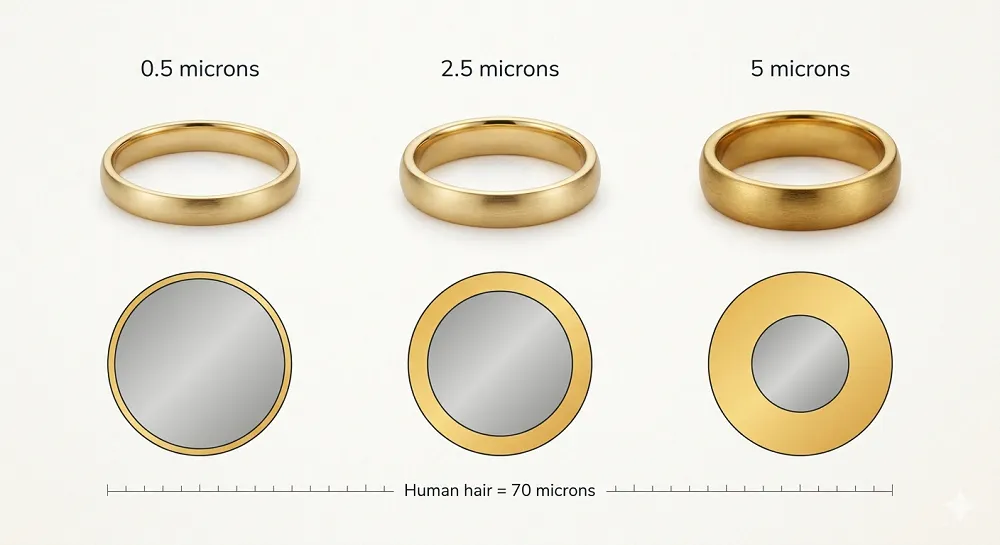
A micron is one thousandth of a millimetre. To put that in perspective, a single human hair is roughly 70 microns thick. Standard gold plating is around 0.5 microns, which means it is about 140 times thinner than one strand of hair.
That is not a defect. That is just the nature of gold plating, and it is exactly why understanding thickness matters when you are choosing a piece.
| Thickness | Type | What to Expect |
| 0.175 microns | Minimum electroplate standard | Very short lifespan, budget pieces |
| 0.5 microns | Standard gold plating | Moderate lifespan with care |
| 2.5 microns | Heavy plating / gold vermeil minimum | Noticeably more durable |
| 5 microns | Heavy gold plating | Best durability outside gold-filled |
The thicker the gold layer, the more material has to wear away before the base metal shows through. It is that simple. When you are shopping, look for pieces that specify plating thickness. If a brand does not mention it, standard thickness is the safe assumption.
Why the Base Metal Matters as Much as the Gold Layer
The base metal is not just a foundation. It actively affects how long the gold layer lasts.
Metals like brass and copper corrode when they meet moisture, sweat, and air. That corrosion can push up through the gold layer from beneath, causing the plating to flake or discolour faster than the surface friction alone would explain.
Stainless steel and sterling silver behave very differently. Both are corrosion-resistant, which means they sit quietly beneath the gold layer without reacting to everyday exposure. This is why gold-plated jewellery on a stainless steel or sterling silver base consistently lasts longer than the same plating on brass or copper.
Surgical steel and titanium take this further. Both are used in body jewellery for good reason: they are among the most inert metals available, meaning they resist chemical reactions almost entirely. For pieces like belly bars, flat back studs, and ear cuffs that sit directly against skin for extended periods, a surgical steel or titanium base is a meaningful quality advantage.
Is Gold-Plated Jewellery Real Gold?
Technically, yes. The outer layer is genuine gold, and the karat marking (9ct, 14k, 18ct, 24k) tells you the purity of that layer.
What gold-plated jewellery is not is solid gold all the way through. A solid 18ct gold ring contains 75% gold throughout. An 18ct gold-plated ring has a thin 18ct gold surface over a base metal core. Both use the same gold for their outer surface, but the amount of gold in each piece is dramatically different, which is reflected in the price.
For everyday wear and style purposes, gold-plated jewellery delivers the same visual result as solid gold at a fraction of the cost. It is just not designed to last a lifetime.
Does Gold-Plated Jewellery Tarnish?
Yes, gold-plated jewellery can tarnish over time, although the process is slightly different from tarnishing in solid precious metals.
The thin layer of gold itself is highly resistant to corrosion, but the base metal underneath may react with moisture, air, sweat, and everyday chemicals. As the gold layer gradually wears away, the underlying metal becomes exposed, making discoloration and tarnish more noticeable.
Several factors can speed up tarnishing, including:
- Frequent exposure to water
- Perfume and skincare products
- Humid environments
- Excessive sweating
- Improper storage
Many people assume that tarnishing means their jewellery is poor quality, but this is not always true. Even well-made gold-plated jewellery will eventually show signs of wear if worn regularly.
To slow the tarnishing process, clean your jewellery gently, avoid exposing it to chemicals, and store it in a dry place when not in use. Proper care can significantly extend the life and appearance of gold-plated pieces.
5 Key Factors That Determine How Long Gold-Plated Jewellery Lasts
1. Plating Thickness: The Single Biggest Variable
Thickness is the most important factor, full stop. A piece with 2.5 microns of gold has five times more material protecting the base metal than a piece with 0.5 microns. Under the same conditions, the thicker piece will always outlast the thinner one.
The challenge is that most brands do not advertise their plating thickness. As a general guide, budget pieces and fast-fashion jewellery tend to use thinner plating. Jewellery that is described as “heavy gold plate” or “thick plate” typically sits in the 2.5 to 5 micron range.
If longevity matters to you, ask the brand. A brand confident in its quality will tell you.
2. Base Metal Quality: Why Surgical Steel and Sterling Silver Outlast Brass
As covered above, corrosion-resistant base metals preserve the gold layer from the inside. Brass and copper bases are cheaper to produce but corrode faster. Stainless steel, surgical steel, titanium, and sterling silver are more expensive but extend the useful life of the plating noticeably.
For pieces worn against skin daily, like rings, belly bars, and sleeper earrings, the base metal choice genuinely changes the experience. Surgical steel and titanium bases also reduce the risk of skin reactions once the gold layer eventually wears thin.
3. Wear Frequency and Friction: The Hidden Accelerators
Every time a gold-plated piece rubs against your skin, clothing, or a surface, a microscopic amount of the gold layer disappears. This is not something you can see happening, but over months of daily wear, it adds up.
Rings experience the highest friction of any jewellery type. They press against everything you touch, get wet with every handwash, and flex against skin and bone constantly. Bracelets are similar. Belly bars and certain ear cuffs also sit in high-movement areas.
Necklaces and pendants, by contrast, mostly hang freely. They touch skin but rarely rub against hard surfaces. This is why the same quality of gold plating lasts two to three times longer on a necklace than on a ring.
If you want daily wear jewellery that holds up, prioritise quality plating on rings and bracelets. For earrings and necklaces, even standard plating can last years with basic care.
4. Chemical Exposure: Perfume, Sweat, Lotions, and Chlorine
Chemicals are the enemy of gold plating, and they are everywhere in a normal day.
Perfume contains alcohol that dissolves the gold layer over time. Body lotion and sunscreen leave residues that react with the metal. Sweat, particularly from exercise, introduces salts and acids onto the surface. Household cleaning products contain harsh chemicals that can strip plating almost immediately. Chlorine in swimming pools is particularly aggressive and can damage a gold-plated piece in a single session.
The practical rule is simple: jewellery on last, off first. Put your jewellery on after your perfume has dried and your moisturiser has absorbed. Take it off before swimming, showering, or doing housework.
5. Storage and Aftercare: How You Keep It Between Wears
Storage is something most people overlook, but it makes a real difference. Air exposure, humidity, and friction between pieces all contribute to tarnishing and wear even when you are not wearing the jewellery.
Keeping pieces in individual anti-tarnish pouches or separate compartments in a jewellery box prevents them from scratching against each other. A cool, dry drawer is better than a bathroom shelf, where humidity from showers creates an environment that accelerates oxidation. If you live in a humid climate, a small silica gel sachet in your jewellery box absorbs excess moisture.
Why Some People’s Gold-Plated Jewellery Lasts Longer Than Others
Have you ever noticed that a friend’s gold-plated necklace still looks brand new after years of wear while yours starts fading within months?
The answer often comes down to body chemistry and lifestyle.
Every person’s skin has a slightly different pH level. More acidic skin can accelerate the breakdown of gold plating, causing the protective layer to wear away faster. Similarly, people who naturally sweat more may expose their jewellery to higher levels of moisture and salt, both of which can speed up deterioration.
Climate also plays a major role. Gold-plated jewellery typically lasts longer in cooler, drier environments than in hot, humid conditions. Someone living near the coast may experience faster wear due to higher humidity and salt exposure.
Daily habits can make a surprising difference as well. Activities such as exercising while wearing jewellery, applying perfume directly onto jewellery, or frequently washing hands while wearing rings can reduce the lifespan of gold plating.
This is why there is no single answer to how long gold-plated jewellery lasts. Two identical pieces can age very differently depending on how they are worn, stored, and cared for.
How to Tell When Your Gold-Plated Jewellery Is Starting to Wear Off
Gold plating does not disappear all at once. It wears away gradually, usually starting at the points of highest friction.
Visual and Physical Warning Signs
- Colour fading from rich gold to a lighter, brashy, or silvery tone
- Dark patches or spots, usually on raised edges and contact points
- Uneven colouring across the surface of the piece
- A dull rather than shiny appearance that does not come back with cleaning
- Visible scratches that cut through to a different coloured metal beneath
When you notice any of these, the base metal is beginning to show. At that point, you have three options: wear it less often to slow further degradation, take it to a jeweller for replating, or replace it.
Does Gold-Plated Jewellery Fade Over Time?
Yes, gold-plated jewellery naturally fades over time.
Unlike solid gold, gold plating is a surface layer applied over another metal. With regular wear, friction gradually removes small amounts of this coating.
Areas that experience the most contact often fade first, including:
- Ring bands
- Bracelet clasps
- Necklace chains
- Pendant edges
Fading does not happen overnight. High-quality gold-plated jewellery can maintain its appearance for years when cared for properly. However, daily wear and exposure to moisture will eventually reduce the thickness of the gold layer.
If you notice silver, brass, or copper tones appearing underneath the gold surface, it is usually a sign that the plating is wearing away.
Why Does Gold-Plated Jewellery Turn Skin Green?
The green marks that sometimes appear on skin beneath gold-plated jewellery are caused by the base metal, not the gold itself.
When the gold layer wears thin enough for the base metal to make contact with your skin, and that base metal is brass or copper, a chemical reaction takes place between the metal and the natural moisture and oils on your skin. This reaction produces copper salts, which are green and harmless but not exactly the look anyone wants.
This does not mean your jewellery is poor quality. It means the gold layer has worn through on that section of the piece. A copper or brass base will always eventually produce this reaction once the plating is gone. A surgical steel, titanium, or sterling silver base will not, because those metals do not react with skin in the same way.
If green marks are a concern for you, look for jewellery with surgical steel, titanium, or sterling silver as the base metal.
Can Gold-Plated Jewellery Cause Skin Allergies?
When the gold layer is intact, most gold-plated jewellery is safe for everyday wear, including for people with moderately sensitive skin.
The issue arises when the plating wears through and the base metal comes into direct contact with skin. Brass often contains nickel, which is one of the most common causes of contact dermatitis. Symptoms include redness, itching, and small raised bumps where the jewellery sits.
If you have known metal allergies or very sensitive skin, look for pieces with hypoallergenic base metals. Surgical steel (specifically implant-grade 316L or ASTM F138), titanium, and sterling silver are the safest options. These metals contain no nickel or allergens that commonly trigger reactions.
How to Make Gold-Plated Jewellery Last Longer: Expert Care Guide
Good care habits genuinely extend the life of your pieces. These are not complicated routines. They are small adjustments that add up to months or even years of extra wear.
Daily Habits That Protect the Gold Layer
The single most impactful habit is the jewellery-on-last, off-first rule. Before you leave the house, your perfume, moisturiser, and sunscreen should already be fully absorbed into your skin. Then put your jewellery on. When you get home, take your jewellery off before cooking, cleaning, exercising, or showering.
After each wear, give pieces a gentle wipe with a soft, dry cloth. This removes sweat, oils, and product residue before they have time to react with the metal. It takes about ten seconds and makes a noticeable difference over time.
Remove jewellery before any water exposure. This includes handwashing as much as possible, though a quick splash of water is far less damaging than extended contact.
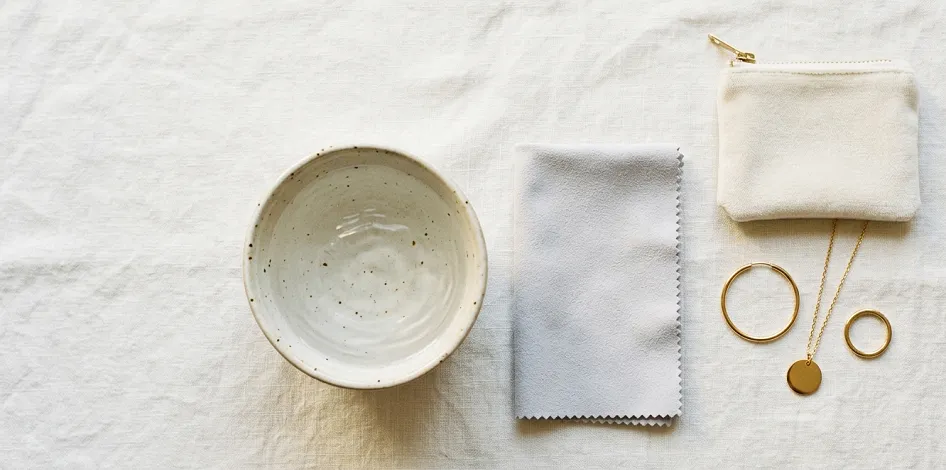
How to Clean Gold-Plated Jewellery at Home Safely
When your jewellery needs more than a quick wipe, follow these steps:
- Fill a small bowl with lukewarm water. Not hot. Hot water can weaken the bond between the gold layer and the base metal.
- Add a tiny drop of mild washing-up liquid and mix gently.
- Place the jewellery in the bowl and let it soak for no more than 30 seconds.
- Use a very soft cloth or the tips of your fingers to gently clean the surface. Do not scrub.
- Rinse under cool, clean water.
- Pat completely dry with a soft cloth immediately. Do not leave it to air dry wet.
- Leave it on a dry surface to finish air drying before storing.
What not to use: toothpaste, baking soda, silver polishing cloths, ultrasonic cleaners, or any abrasive material. All of these physically remove or chemically damage the gold layer.
Best Storage Practices to Prevent Tarnish Between Wears
Individual anti-tarnish zip pouches are the most effective storage option for gold-plated jewellery. They keep pieces separated so they cannot scratch each other, and the anti-tarnish lining slows oxidation.
If you use a jewellery box, ensure each piece has its own compartment or is wrapped in a soft cloth. Store the box away from your bathroom. Humidity from daily showers creates the exact conditions that accelerate tarnishing even when the jewellery is not being worn.
Can Gold-Plated Jewellery Be Replated? What to Know Before You Decide
Yes. A local jeweller can replate gold-plated jewellery, and it is a common service. The process applies a fresh layer of gold over the existing piece, restoring its colour and shine.
In the UK, replating typically costs between £10 and £40 depending on the size and complexity of the piece. For a pendant or simple ring, it is usually at the lower end of that range. A jeweller will clean the piece first, strip any remaining plating, and apply the new gold layer.
The result looks like new. The lifespan after replating is similar to the original, though it depends on the thickness of the new layer applied.
When Replating Is Worth It
Replating makes sense when:
- The piece has sentimental value
- The base metal and overall construction are still in good condition
- The cost of replating is reasonable relative to the piece’s value
- You would genuinely wear it again and look after it properly
It does not make sense when the underlying metal is bent, the clasp is broken, or the piece was very inexpensive to begin with. In those cases, replacing it is more practical than restoring it.
How Much Does It Cost to Replate Gold-Plated Jewellery in the UK?
Replating can restore the appearance of worn gold-plated jewellery and is often a cost-effective alternative to replacement.
In the UK, replating costs generally vary depending on the size and complexity of the piece.
Typical price ranges include:
- Rings: £20–£50
- Earrings: £20–£40
- Bracelets: £30–£60
- Necklaces: £40–£100+
Luxury pieces, gemstone settings, and intricate designs may cost more due to the additional labour involved.
Before paying for replating, consider the quality of the original jewellery. Replating is often worthwhile for sentimental pieces or high-quality jewellery but may not be economical for very inexpensive fashion jewellery.
What Is PVD Coating and Why It Outlasts Traditional Gold Plating
PVD stands for Physical Vapour Deposition. It is a coating process where gold atoms are applied to a metal surface inside a vacuum chamber at extremely high temperatures. The result is a layer that bonds to the base metal at a molecular level rather than sitting on top of it through an electrochemical process.
PVD-coated pieces are significantly harder and more scratch-resistant than traditionally electroplated pieces. The bond is stronger, which means the coating lasts longer under the same conditions. A PVD-coated gold piece on a stainless steel base can realistically last three to five years with daily wear, compared to one to two years for standard electroplating.
The waterproof stainless steel category of gold-plated jewellery typically uses either thick electroplating or PVD processes on a non-corrosive base. This combination is what makes those pieces more durable than standard gold-plated jewellery on a brass base.
Gold-Plated vs Gold Vermeil vs Gold-Filled vs Solid Gold: Which Lasts Longest?
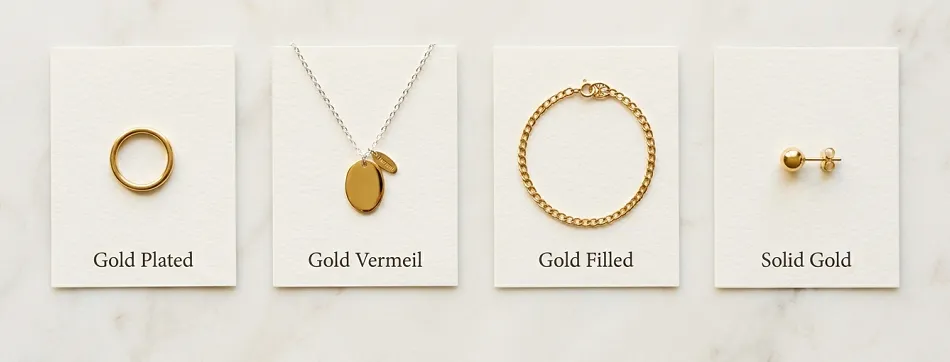
Here is a straightforward comparison of the four main types of gold jewellery at different price points.
| Type | Base Metal | Min. Gold Thickness | Avg. Lifespan | Best For |
| Gold plated | Brass, copper, steel | 0.175 microns | 6 months to 3 years | Fashion, trend pieces |
| Gold vermeil | Sterling silver (92.5%) | 2.5 microns | 2 to 5 years | Demi-fine, sensitive skin |
| Gold-filled | Brass core | 5% of total weight | 10 to 30 years | Everyday wear, longevity |
| Solid gold (9ct-24ct) | Solid gold alloy | N/A (solid throughout) | Lifetime | Heirlooms, investment |
What Is Gold Vermeil and How Long Does It Last?
Gold vermeil (pronounced “ver-may”) is a specific type of gold plating with stricter requirements. Under UK hallmarking standards, vermeil must use sterling silver as the base metal and have a gold layer of at least 2.5 microns.
The sterling silver base is hypoallergenic, which means vermeil is gentler on sensitive skin than brass-based plating. The thicker gold layer means it wears more slowly. With proper care, good quality vermeil can last two to five years before showing signs of wear.
Vermeil is not waterproof. The sterling silver base can tarnish if regularly exposed to water, so the same care rules apply: remove before swimming, showering, or applying products.
How Long Does Gold-Filled Jewellery Last Compared to Plated Jewellery?
Gold-filled jewellery is in a different category entirely. Instead of a thin coating applied by electricity or heat, gold-filled pieces have a layer of solid gold mechanically bonded to a brass core. That layer makes up at least 5% of the total weight of the piece.
To put that in context: gold-filled has a gold layer approximately 50 to 100 times thicker than standard gold plating. With daily wear and basic care, gold-filled pieces last 10 to 30 years. They can be worn in water and are generally safe for sensitive skin.
If you want the look of gold for daily wear over many years, gold-filled is the most practical choice below solid gold.
How Long Does Waterproof Gold-Plated Jewellery Last?
Waterproof gold-plated jewellery uses a corrosion-resistant base metal (usually stainless steel) combined with thicker plating or PVD coating. This combination makes the piece significantly more resistant to water, sweat, and everyday wear than standard gold plating on a brass base.
With regular daily wear and basic care, waterproof gold-plated stainless steel jewellery typically lasts one to three years, often longer with good habits. It handles incidental water contact well, though prolonged exposure to chlorine or salt water is still best avoided.
This category includes many earrings, necklaces, bracelets, and huggies that are designed for those who want gold jewellery they can actually live in without constantly worrying about wear.
Can You Shower With Gold-Plated Jewellery?
It is generally not recommended to shower while wearing gold-plated jewellery.
Although occasional exposure to water may not cause immediate damage, repeated contact with water can gradually wear down the gold layer.
Shower products such as:
- Shampoo
- Conditioner
- Body wash
- Soap
can leave residues on the jewellery’s surface. Over time, these substances may dull the shine and accelerate plating wear.
Hard water can also leave mineral deposits that affect the appearance of gold-plated jewellery.
Swimming presents an even greater risk. Chlorine from swimming pools and saltwater from the sea can significantly shorten the lifespan of gold plating.
To maximise longevity, remove gold-plated jewellery before showering, swimming, or participating in water-based activities.
9ct vs 18ct Gold-Plated Jewellery: Does Karat Affect How Long It Lasts?
This is a question UK buyers ask frequently, and almost nobody answers clearly.
The karat of the gold in the plating refers to its purity, not its thickness. 18ct gold is 75% pure gold. 9ct gold contains around 37.5% gold and a higher proportion of other metals in the alloy.
In terms of longevity, karat has a smaller effect than thickness. An 18ct gold plating at 0.5 microns will not outlast a 9ct gold plating at 2.5 microns. Thickness wins every time.
What karat affects is colour and, to a smaller degree, hardness. 18ct gold has a richer, warmer yellow tone. 9ct gold looks slightly paler, and its higher alloy content makes it marginally harder, which can resist surface scratching slightly better.
For most buyers, the practical takeaway is: prioritise plating thickness and base metal quality. The karat matters more for colour preference than for how long the piece will last.
Is Gold-Plated Jewellery Worth Buying in the UK?
For many people, gold-plated jewellery offers an excellent balance between affordability and style.
Solid gold jewellery can be expensive, especially for trend-driven designs. Gold-plated jewellery allows consumers to enjoy the appearance of gold without the premium price tag.
It is particularly suitable for:
- Fashion jewellery collections
- Special occasions
- Trend-based accessories
- Budget-conscious shoppers
- Gift purchases
When purchased from reputable retailers and cared for properly, gold-plated jewellery can provide years of enjoyment.
While it may not last as long as solid gold, it remains one of the most popular jewellery options in the UK thanks to its affordability, versatility, and elegant appearance.
Common Myths About Gold-Plated Jewellery
Myth 1: Gold-Plated Jewellery Is Fake
Gold-plated jewellery contains real gold. The difference is that the gold is applied as a thin outer layer rather than forming the entire piece.
Myth 2: Gold-Plated Jewellery Always Turns Skin Green
Not everyone experiences skin discoloration. Reactions depend on factors such as skin chemistry, moisture levels, and the underlying base metal.
Myth 3: Gold-Plated Jewellery Only Lasts a Few Weeks
Quality gold-plated jewellery can last for years with proper care and storage.
Myth 4: You Cannot Repair Worn Gold-Plated Jewellery
Many gold-plated pieces can be professionally replated to restore their appearance.
Myth 5: Gold-Plated Jewellery Is Not Worth Buying
For many consumers, gold-plated jewellery offers excellent value, combining affordability with the look of genuine gold.
FAQs Gold-Plated Jewellery
Does gold-plated jewellery tarnish?
Yes, it can, but it is not the gold itself that tarnishes. Gold is a stable metal that does not react with air or moisture. Tarnishing happens when the gold layer wears thin, and the base metal beneath it starts to oxidise. The thicker the plating and the more corrosion-resistant the base metal, the longer it takes for tarnish to appear.
Can you shower or swim wearing gold-plated jewellery?
Standard gold-plated jewellery is best kept out of the shower and away from swimming pools. Water itself is not immediately destructive, but repeated exposure weakens the bond between the gold layer and the base metal over time. Soap, shampoo, chlorine, and salt water accelerate this. Waterproof gold-plated stainless steel pieces handle water better, though prolonged chlorine exposure is still best avoided for any plated piece.
How do I clean gold-plated jewellery at home?
Use lukewarm water with a small drop of mild washing-up liquid, a soft cloth, and gentle pressure. Rinse with cool water, then pat dry immediately. Never use abrasives, toothpaste, or polishing compounds. Full step-by-step instructions are in the care section above.
Is gold-plated jewellery safe for sensitive skin?
When the gold layer is intact, yes. The issue only arises when plating wears through and base metals like brass (which can contain nickel) come into contact with skin. If you have sensitive skin or a nickel allergy, look for pieces with surgical steel, titanium, or sterling silver as the base metal. These do not contain the allergens that typically cause reactions.
Is gold-plated jewellery worth buying?
Absolutely, as long as your expectations are realistic. Gold-plated jewellery is not designed to last a lifetime, but it is designed to look great at an accessible price. Pieces with quality plating thickness and a good base metal can look beautiful for years with basic care. Think of it as a mid-term style investment rather than a permanent one.
Shop Gold-Plated Jewellery Designed to Last
Understanding what makes gold-plated jewellery last longer is the first step. The second is choosing pieces built with that quality in mind from the start.
What Makes High-Quality Gold-Plated Jewellery Last Longer?
Not all gold-plated jewellery is created equal. The lifespan of a piece depends heavily on the quality of the materials used and the manufacturing process.
High-quality gold-plated jewellery often uses durable base metals such as stainless steel, surgical steel, titanium, or sterling silver. These materials provide a stable foundation for the gold layer and are generally more resistant to corrosion than cheaper alternatives such as brass or copper.
Plating thickness is another important factor. Jewellery with a thicker gold coating typically lasts longer because it takes more time for everyday wear to remove the outer layer. Advanced finishes such as PVD coating can also improve durability and resistance to fading.
When shopping for gold-plated jewellery, look for details about the base metal, plating thickness, waterproof properties, and care instructions. Investing in higher-quality pieces can help you enjoy the appearance of gold for much longer while reducing the need for frequent replacement or replating.
This version serves the keyword, helps the reader, and still allows you to internally link to your product categories without sounding like an advertisement.
Conclusion: How Long Does Gold-Plated Jewellery Last?
So, how long does gold-plated jewellery last?
For most people, the answer is between one and three years with regular wear, although high-quality pieces can last significantly longer when properly cared for. Factors such as plating thickness, base metal quality, exposure to water and chemicals, and daily wear habits all play an important role in determining how quickly the gold layer fades.
The good news is that gold-plated jewellery offers an excellent balance between affordability and style. While it may not have the lifetime durability of solid gold, it allows you to enjoy the luxurious look of gold at a much more accessible price point. Choosing pieces made with quality base metals such as stainless steel, surgical steel, titanium, or sterling silver can further improve longevity and comfort.
Simple habits like removing jewellery before showering, storing it correctly, cleaning it gently, and avoiding harsh chemicals can add months or even years to its lifespan. If the plating eventually wears away, professional replating can often restore the piece and give it a fresh new look.
Whether you are buying your first gold-plated necklace or building a complete jewellery collection, understanding how gold plating works helps you make smarter purchasing decisions and get better value from every piece.
With the right care and realistic expectations, gold-plated jewellery can remain beautiful, stylish, and wearable for years to come.