
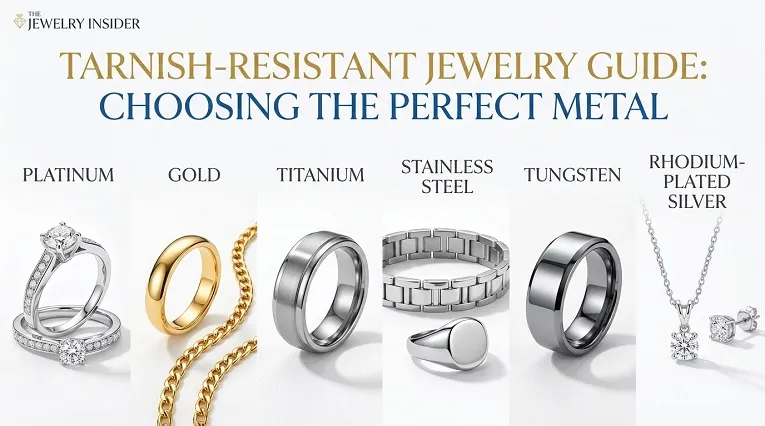
Best Jewellery Materials That Don’t Tarnish: The Complete Guide to Long-Lasting Shine
You find the perfect necklace. You wear it every day for a month and then one morning it looks dull, dark, or it has left a green ring around your neck. That is not a defect. That is what happens when a reactive metal meets sweat, air, and moisture over time.
The good news is that some jewellery materials are built to resist this completely. Once you know which ones they are, you will never waste money on a piece that loses its shine within weeks.
This guide covers every major tarnish-free material available today, explains the science in plain English, and helps you pick the right metal for your budget, lifestyle, and skin type.
Why Choosing the Right Jewellery Material Matters More Than You Think
Most people choose jewellery based on how it looks in a shop. Very few think about what it is made of. That is the reason so many people end up with pieces that need constant polishing, leave marks on their skin, or simply stop looking good after a few months of regular wear.
The material determines everything: how long the shine lasts, whether it reacts with your skin, whether it can go in the shower, and how much maintenance it needs over time. Getting this choice right means you spend less, worry less, and actually enjoy wearing your jewellery every day.
What Exactly Is Tarnish, and How Is It Different from Rust?
Tarnish is a thin, discoloured layer that forms on the surface of certain metals when they react with substances in the environment. It usually appears as darkening, dullness, or a faint greenish or brownish film on the metal.
Rust, by contrast, is a form of corrosion that eats into iron and steel from the surface inward, causing structural damage. Tarnish is almost always a surface-only issue. In most cases, you can polish it away and restore the original shine.
The key difference: tarnish is reversible, rust is progressive. For jewellery, tarnish is far more common and, with the right material choice, entirely preventable.
The Science Behind Why Jewellery Tarnishes
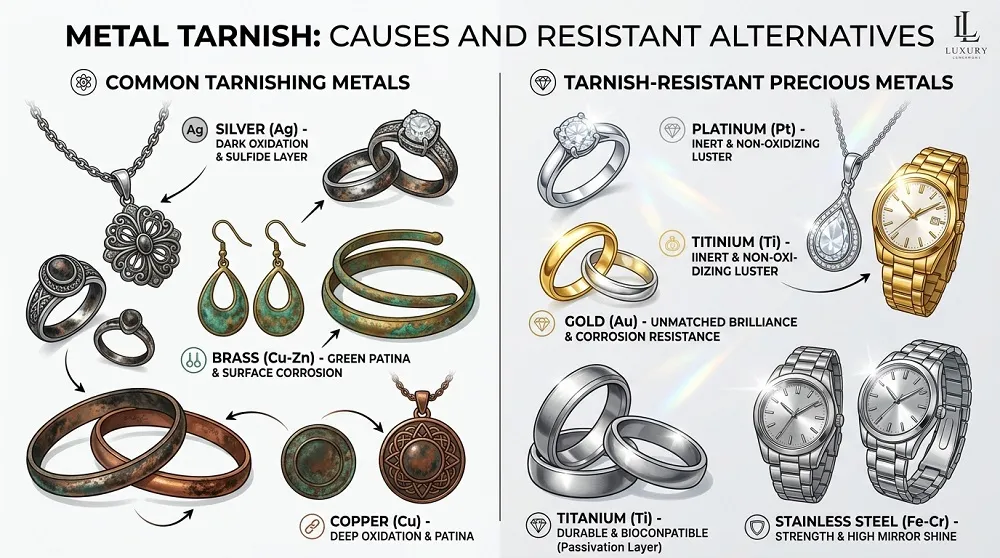
Tarnish happens through a process called oxidation. When certain metals come into contact with oxygen, sulfur compounds, or moisture, a chemical reaction occurs on the surface of the metal. This reaction produces a new compound, usually a metal oxide or metal sulfide, which has a different colour and appearance from the original metal.
The most common example is sterling silver. When silver is exposed to hydrogen sulfide gas in the air, it reacts to form silver sulfide, which appears as a dark grey or black layer on the surface. Copper reacts with oxygen and moisture to form copper oxide or copper carbonate, creating that familiar greenish patina.
Not all metals react this way. Noble metals like platinum and gold are chemically stable, meaning they do not readily react with most environmental substances. That stability is what makes them naturally tarnish-resistant.
The Six Main Tarnish Triggers
Understanding what causes tarnish helps you both choose the right material and care for your pieces properly.
Sweat contains salt, amino acids, and trace amounts of sulfur. When jewellery sits against your skin during physical activity, these compounds accelerate oxidation, especially in reactive metals like copper and silver.
Air exposure is the most constant trigger. Oxygen and sulfur dioxide in the air react slowly with the surface of many metals over time. Leaving jewellery on a bedside table rather than storing it properly speeds this process up considerably.
Water and humidity introduce moisture that acts as a catalyst for oxidation. Coastal or tropical climates with high ambient humidity can cause noticeably faster tarnishing on the same piece compared to dry climates.
Chemicals from everyday products are a surprisingly common culprit. Perfume, hand lotion, sunscreen, and hairspray all contain compounds that can react with metal surfaces and strip protective coatings from plated pieces.
Friction from daily wear gradually exposes fresh layers of metal that are more reactive. This is why plated rings lose their colour at contact points like the inner band, where friction against your finger is constant.
Climate matters more than most people realise. If you live near the ocean, the salt in the air dramatically increases the tarnish speed on reactive metals. High-humidity environments similarly accelerate the process. This is a factor no other jewellery guide seems to address, but if you live in a coastal or tropical area, it should heavily influence your material choice.
The Best Jewellery Materials That Don’t Tarnish
Here is a clear look at each material that genuinely resists tarnishing, starting with the most durable and finishing with some options most people do not know exist.
Platinum: The Benchmark for Tarnish-Free Fine Jewellery
Platinum is genuinely one of the most chemically stable metals available for jewellery. It belongs to the platinum group metals (PGMs), a category of six elements that share exceptional resistance to oxidation and corrosion.
What makes platinum so resistant to tarnish is its electrochemical inertness. It does not react with oxygen, sulfur, or most common chemicals at normal temperatures. When you expose platinum to air or water, it does not form an oxide layer the way iron or copper does. Its surface remains essentially unchanged.
Over time, platinum does develop a slight surface change sometimes called a patina. This is not tarnish. It is a soft, brushed-looking sheen caused by microscopic surface scratches that scatter light differently. Many platinum jewellery owners actually prefer this aged look, and a professional polish restores the original mirror finish whenever desired.
Why Platinum Resists Tarnish: Chemical Stability and Passivation
The technical reason platinum resists tarnish lies in its high standard reduction potential. In simple terms, this means platinum has very little tendency to lose electrons and form compounds with other elements. Silver and copper, by contrast, readily give up electrons when they meet sulfur or oxygen, which is exactly why they tarnish.
Platinum jewellery sold commercially must contain at least 95% pure platinum, which means very little reactive metal is present in the alloy to cause any surface reaction.
Pros, Cons, and Best Uses for Platinum Jewellery
Platinum is an excellent choice for engagement rings, wedding bands, and any piece intended as a long-term investment or heirloom. It holds gemstones securely, its weight gives a premium feel, and it genuinely requires almost no maintenance.
The main limitation is cost. Platinum is significantly denser and rarer than gold, which makes it one of the most expensive material options available. It also scratches more easily than tungsten or titanium, though the scratches are surface-level and do not involve metal loss, so a jeweller can repolish it.
Best for: engagement rings, wedding bands, heirloom pieces, people who want zero maintenance jewellery for life.
Solid Gold: Why the Karat Number Changes Everything
Gold has a reputation as a tarnish-free metal, and pure gold truly lives up to it. The problem is that very little jewellery is made from pure gold. Most pieces are gold alloys, which means gold mixed with other metals, and those added metals are what introduce tarnish risk.
24K vs 18K vs 14K vs 10K Gold: Tarnish Risk at Each Level
Understanding gold purity levels is essential for making an informed purchase decision.
24K gold is 99.9% pure gold. It is completely tarnish-free because there are no reactive metals in the alloy. The problem is that pure gold is extremely soft. It bends, scratches, and deforms easily under normal wear. This is why 24K gold is rarely used in everyday jewellery.
18K gold contains 75% pure gold with 25% other metals, usually silver, copper, or palladium. It is highly tarnish-resistant and durable enough for regular wear. The small percentage of base metals creates minimal tarnish risk under normal conditions, making 18K the preferred choice for fine jewellery.
14K gold contains 58.3% pure gold and is the most popular choice for everyday rings and necklaces. It is more durable than 18K and still highly resistant to tarnishing. Over many years of heavy daily wear, 14K gold may develop very slight surface dulling in areas where the alloyed metals are exposed, but this is minor and easily polished away.
10K gold contains just 41.7% pure gold. The majority of the alloy is other metals, which increases tarnish risk noticeably compared to 18K. It is the most affordable solid gold option, but it requires more frequent cleaning and care than higher-karat pieces.
A useful rule: the higher the karat, the more tarnish-resistant the piece. For everyday wear with minimal maintenance, 14K is the sweet spot between durability, cost, and tarnish resistance.
Rose Gold, White Gold, and Yellow Gold: Which Tarnishes Least?
Yellow gold at 18K or 14K is the most naturally tarnish-resistant of the three because it uses silver and palladium as alloy metals, both of which are relatively stable.
Rose gold gets its warm pinkish colour from copper. Copper is a reactive metal, so rose gold is slightly more prone to subtle colour shifts over years of heavy use, especially if exposed to harsh chemicals. That said, at 14K or 18K purity levels, the effect is minimal under normal conditions.
White gold is yellow gold alloyed with nickel, palladium, or other white metals, then typically plated with rhodium to achieve its bright white colour. The rhodium plating is what keeps white gold looking pristine. When that plating wears off, which typically happens after one to two years of regular wear, the underlying metal can look slightly yellowish. Replating is straightforward and inexpensive at most jewellers.
Stainless Steel (316L): The Best Tarnish-Free Option at an Affordable Price
If you want reliable, long-lasting jewellery at a budget-friendly price, stainless steel is one of the strongest options available. It does not tarnish, does not rust, and does not require any special care.
The reason stainless steel resists corrosion lies in its chromium content. When chromium (at least 10.5% in any true stainless steel) is exposed to oxygen, it instantly forms an invisible layer of chromium oxide on the surface. This passive layer acts as a barrier between the metal and the environment, preventing oxidation from reaching the iron beneath it.
If the surface gets scratched or damaged, the chromium oxide layer reforms automatically when exposed to air. This self-healing property is what makes stainless steel so practical for everyday jewellery.
What Makes 316L Surgical Grade Better Than Standard Stainless Steel?
Not all stainless steel is equal. The grade matters significantly for jewellery.
Standard 304-grade stainless steel is widely used in kitchenware and construction. It contains roughly 18% chromium and 8% nickel and offers reasonable corrosion resistance. However, it can be sensitive to chlorides, meaning prolonged salt water or pool exposure can eventually cause surface pitting.
316L grade stainless steel adds molybdenum (around 2-3%) to the alloy. This addition dramatically improves resistance to chloride corrosion, making 316L far better suited for jewellery worn in the ocean, pool, or humid coastal environments. The “L” designation means low carbon, which further improves corrosion resistance and makes the metal easier to work with during manufacturing.
For jewellery that needs to handle real daily life including sweat, swimming, and salt air, 316L is the only grade worth considering.
Best for: everyday wear, men’s jewellery, sport and water-friendly pieces, budget-conscious buyers, people in coastal or humid climates.
Titanium: Light, Strong, and Completely Non-Reactive
Titanium has the highest strength-to-weight ratio of any natural metal used in jewellery. It is stronger than steel but lighter than aluminium, which makes it exceptionally comfortable for rings, bracelets, and bangles worn all day.
From a tarnish perspective, titanium is excellent. When titanium is exposed to oxygen, it forms a stable, tightly bonded layer of titanium dioxide on its surface. This oxide layer is chemically inert and adheres so strongly to the metal that it effectively seals the surface from further environmental reaction.
Titanium is also naturally hypoallergenic. It contains no nickel and does not react with skin, which makes it one of the safest options for people with sensitive skin or metal allergies. It is widely used in medical implants for exactly this reason.
Titanium Anodizing: How Colour Is Added Without Compromising Tarnish Resistance
One of the most interesting things about titanium that almost no jewellery guide covers is the process of anodizing. Unlike most metals, titanium can be coloured without dyes, paints, or coatings. By passing an electrical current through the titanium in an electrolytic bath, jewellers cause the titanium dioxide surface layer to grow thicker. Different thicknesses of this oxide layer refract light differently, producing vivid interference colours including blue, purple, gold, and pink.
Because the colour comes from the oxide layer itself rather than an added coating, anodized titanium does not chip, peel, or fade over time. The tarnish resistance of the metal is entirely unchanged by the process.
Best for: daily wear, sensitive skin, sports jewellery, piercings, people who want lightweight pieces.
Palladium: The Underrated Choice for Fine Jewellery
Palladium belongs to the same platinum group metals family as platinum. It shares many of platinum’s key properties: naturally white colour, tarnish resistance, and hypoallergenic composition. However, it costs less than platinum because it is less dense and lighter in weight.
Commercial palladium jewellery is typically 95% pure palladium alloyed with 5% ruthenium. At this purity level, tarnish risk is virtually zero. Palladium does not react with oxygen or common environmental chemicals, and it holds its white colour without requiring rhodium plating, unlike white gold.
The main limitation is that palladium is harder to work with than gold, which means fewer jewellers can resize or repair palladium pieces. For buyers who want the look of platinum at a lower price point, palladium is a genuinely strong option that most competitors in this space do not mention.
Best for: fine jewellery, white metal pieces, those who want platinum-level tarnish resistance without the full platinum price tag.
Tungsten Carbide: The Toughest Option on the Market
Tungsten carbide is not pure tungsten. It is a compound made by combining tungsten with carbon at very high temperatures. The result is one of the hardest materials used in consumer jewellery, ranking around 8.5 to 9 on the Mohs hardness scale. For comparison, a diamond scores 10 and steel scores around 4 to 4.5.
This extreme hardness means tungsten carbide jewellery will not scratch under normal conditions. It resists tarnishing because its surface is so dense and stable that environmental substances have very little opportunity to penetrate or react with it.
The significant trade-off is that tungsten carbide cannot be resized. Because it is so hard, it cannot be cut or shaped after manufacturing without shattering. If you buy a tungsten carbide ring and your finger size changes, you will need to replace the ring entirely. This is an important practical consideration, particularly for wedding bands.
Best for: men’s wedding bands, people who work with their hands, buyers who prioritise durability over everything else.
Cobalt, Niobium, and Ceramic: Three Alternatives Worth Knowing About
These three materials rarely appear in mainstream jewellery guides, which is exactly why covering them adds real value here.
Cobalt is a silver-white metal often alloyed with chromium for jewellery use. Cobalt jewellery is tarnish-resistant, hypoallergenic, and notably bright white, which makes it a strong visual alternative to white gold or platinum at a much lower cost. It is harder than gold and scratches less easily.
Niobium is perhaps the best-kept secret in hypoallergenic jewellery. It is biocompatible, meaning it is used in surgical applications, and it contains no nickel whatsoever. Niobium is naturally greyish but can be anodized in the same way as titanium to produce vivid colours. It is an excellent choice for ear piercings and sensitive skin applications where even titanium causes a reaction in rare cases.
Ceramic jewellery (specifically zirconium oxide, also called zirconia ceramic) is a material gaining popularity for rings. It is extraordinarily scratch-resistant, tarnish-proof, and lightweight. It comes in black, white, and other colours without any coating. The main limitation, similar to tungsten carbide, is brittleness. Ceramic can crack or shatter if dropped on a hard surface, and it cannot be resized.
Tarnish-Resistant Coatings and Plating: What Actually Works
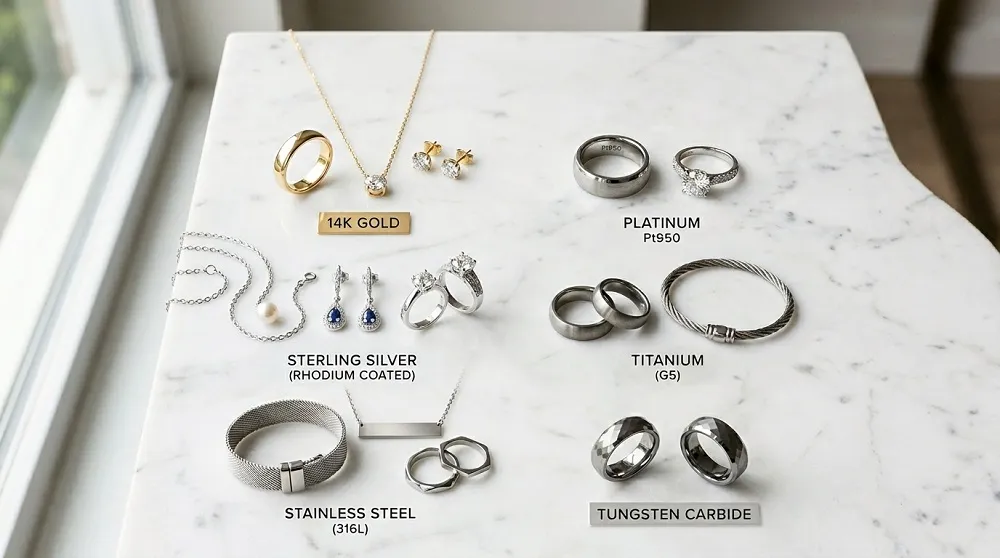
The metal itself is not the only factor in whether jewellery tarnishes. The surface treatment applied to that metal matters just as much, especially for pieces that use base metals as their foundation.
PVD Coating: The Most Durable Finish Available
Physical Vapor Deposition (PVD) is a vacuum coating technology that produces a significantly more durable finish than standard electroplating. During PVD coating, the jewellery is placed inside a vacuum chamber where metallic particles are vaporised and then deposited onto the surface of the piece at a molecular level.
The result is a coating that bonds directly to the base metal at an atomic level, rather than sitting on top of it the way traditional plating does. PVD coatings are typically four to five times thicker and far more resistant to scratching, chipping, and chemical exposure than conventional gold plating.
PVD-coated stainless steel jewellery in particular has become a popular category because it combines the corrosion resistance of 316L steel with the appearance of gold or other finishes, all protected by a PVD layer that can realistically last several years under normal daily wear.
Rhodium Plating: Longevity, Reapplication, and Best Uses
Rhodium is a platinum-group metal prized for its brilliant white colour and high reflectivity, and is applied to white gold, yellow gold, and silver to create a bright, tarnish-resistant surface finish.
The plating itself is thin, typically between 0.1 and 1 micron. Over time, it wears through at friction points, usually revealing the underlying metal within one to three years depending on how frequently the piece is worn. Replating is a routine jewellery service that most jewellers offer at a reasonable cost.
Rhodium-plated sterling silver is an excellent way to make silver jewellery significantly more resistant to tarnishing while keeping costs low. Just be aware that the protection is not permanent and does require maintenance.
Gold-Filled vs Gold-Plated vs Gold Vermeil: Tarnish Resistance Compared
These three terms are frequently confused, and the differences have a direct impact on how long the jewellery maintains its appearance.
Gold-plated jewellery has the thinnest gold layer, typically less than 0.5 microns. The base metal beneath is often brass or copper, both of which are reactive. Once the thin gold layer wears through at friction points, the reactive base metal is exposed and tarnishing or green skin discolouration follows quickly.
Gold vermeil (pronounced “ver-may”) is gold plating applied specifically over sterling silver. The gold layer must be at least 2.5 microns thick to qualify as vermeil. Because sterling silver is a more noble base metal than brass, the overall tarnish resistance is better, but the piece still requires care to preserve the plating.
Gold-filled jewellery has the thickest gold layer of the three. Federal standards in many countries require that at least 5% of the total weight must be solid gold. The gold is heat-bonded to the base metal under pressure, creating a far more durable bond than electroplating. With proper care, gold-filled jewellery can maintain its appearance for 10 to 30 years, making it the most practical middle-ground option between solid gold and gold plating.
How Plating Thickness Determines How Long Your Jewellery Keeps Its Shine
The single biggest predictor of how long plated jewellery stays looking new is the thickness of the metal layer and the quality of the bonding process. Thin plating on a highly reactive base metal like brass will degrade in months. Thick bonded layers over stable base metals last years or decades.
When buying plated jewellery, look for pieces that specify the micron thickness of their coating or the bonding method used. PVD bonding and pressure bonding (gold-filled) outperform standard electroplating significantly.
Jewellery Metals That Do Tarnish, and What Happens When They Do
Knowing what to avoid is just as useful as knowing what to choose.
Sterling Silver: Beautiful but High-Maintenance
Sterling silver is 92.5% pure silver alloyed with 7.5% copper. The copper content, added to improve durability, is exactly what causes tarnishing. When copper is exposed to oxygen and moisture, it forms copper oxide. When silver is exposed to hydrogen sulfide in the air, it forms silver sulfide, creating that characteristic dark grey or black tarnish layer.
Sterling silver is genuinely beautiful and widely loved, but it requires regular polishing to maintain its appearance. If you love the look of silver and do not mind the maintenance, it remains a worthwhile choice. If you want something that looks after itself, rhodium-plated sterling silver or a naturally tarnish-free white metal like titanium or palladium will serve you better.
Copper, Brass, and Nickel: The Reactive Metals That Leave Green Marks
The green ring left on your finger or wrist after wearing certain jewellery is a copper compound called copper carbonate or copper acetate, formed when copper reacts with the acids in your sweat.
Copper itself is highly reactive and tarnishes quickly with a green patina. Brass is an alloy of copper and zinc, so it shares the same tarnish problems. Both are common base metals in inexpensive jewellery, often hidden beneath thin gold or silver plating.
Nickel is reactive to oxygen and moisture and is also a very common allergen. Many people who think they have a metal allergy are actually reacting specifically to nickel. If you have experienced skin redness, itching, or rash from jewellery, nickel is usually the culprit.
Low-Karat Gold and Gold-Plated Jewellery: When the Shine Does Not Last
10K gold and gold-plated pieces both have high proportions of base metals in their composition. In 10K gold, less than half the alloy is actual gold. The remaining copper, zinc, or silver content increases oxidation risk over time.
Gold-plated brass or copper pieces face a predictable lifespan: when the thin gold surface layer wears through, the reactive base metal underneath begins to tarnish immediately. This is not a sign of poor quality necessarily. It is just the nature of plated jewellery and what sets it apart from solid metal pieces.
Tarnish-Free Materials Compared: A Practical Reference
The table below gives a direct comparison of the key properties across the main tarnish-free jewellery materials. Use it as a quick reference when making a purchase decision.
| Material | Tarnish Risk | Mohs Hardness | Hypoallergenic | Resizable | Relative Cost |
|---|---|---|---|---|---|
| Platinum | None | 4 to 4.5 | Yes | Yes | Very High |
| 18K Gold | Very Low | 2.5 to 3 | Mostly | Yes | High |
| 14K Gold | Very Low | 3 to 4 | Mostly | Yes | Medium-High |
| Palladium | None | 4.75 | Yes | Difficult | High |
| Titanium | None | 6 | Yes | No | Low-Medium |
| 316L Stainless Steel | None | 5.5 to 6.3 | Mostly | No | Low |
| Tungsten Carbide | None | 8.5 to 9 | Mostly | No | Low-Medium |
| Cobalt | None | 5 to 6 | Yes | No | Low-Medium |
| Niobium | None | 6 | Yes | No | Low |
| Ceramic (Zirconia) | None | 8 to 8.5 | Yes | No | Low-Medium |
Mohs Hardness Rankings for Jewellery Metals
The Mohs scale measures scratch resistance on a scale of 1 (softest) to 10 (hardest). For everyday jewellery, higher Mohs ratings mean the piece maintains its surface finish better over time.
Tungsten carbide and ceramic rank near diamond on the Mohs scale, meaning they will resist scratches that would visibly damage gold or platinum. However, very hard materials are also more brittle. A tungsten ring will not scratch, but it can crack under sudden impact.
Platinum and gold, while soft on the Mohs scale, do not actually lose metal when scratched. The metal displaces rather than removes, which is why they can be repolished repeatedly throughout their lifetime.
Price-Per-Year Value Analysis
A useful way to think about the cost of jewellery materials is not the upfront price but the cost divided by the realistic lifespan of the piece.
A solid 14K gold ring costing significantly more upfront than a gold-plated brass ring will last decades with no replacement cost. The plated piece may need replacing every two to three years. Over ten years, the solid gold option often costs less in total.
Similarly, a tungsten carbide or titanium ring at a fraction of the price of platinum will last just as long from a tarnish-resistance perspective, though without the resizability.
The materials with the best long-term value, when you factor in durability, maintenance cost, and lifespan, are 14K or 18K solid gold, platinum, titanium, and 316L stainless steel.
Choosing the Right Tarnish-Free Material for Your Needs
There is no single best material for everyone. The right choice depends on how you live, what you can spend, and how much maintenance you are willing to do.
Best Tarnish-Free Metals for Engagement Rings and Wedding Bands
For engagement rings and wedding bands, platinum is the traditional choice and with good reason. It holds diamonds and gemstones securely due to its density, it does not require rhodium plating, and it will genuinely last a lifetime without tarnishing.
18K gold is an excellent alternative. It is available in yellow, white, and rose varieties, and at 18K purity, tarnishing is not a realistic concern for most wearers. White 18K gold does require periodic rhodium replating to maintain its colour.
Palladium is a strong option for buyers who want platinum-level tarnish resistance at a lower price point, particularly in white metal styles.
Best Materials for Daily Wear Jewellery
For rings, necklaces, bracelets, and earrings worn every day, 14K gold and 316L stainless steel represent the two best options at different price points.
14K gold is durable, tarnish-resistant, available in every style, and holds its value over time. For people who want quality pieces they can wear without thinking about them, 14K gold is a sensible choice.
316L stainless steel is the best budget option. It handles everything daily life throws at it, including sweat, water, and friction, without any maintenance required.
Titanium is worth considering for anyone who wants lightweight comfort above everything else or has sensitive skin.
Jewellery for Sensitive Skin and Nickel Allergies
If you have had reactions to jewellery in the past, the metal causing the issue is almost certainly nickel. Many alloys used in fashion jewellery and even some gold alloys contain nickel as a hardening agent.
The safest tarnish-free options for sensitive skin are:
- Titanium (completely nickel-free and biocompatible)
- Platinum (naturally hypoallergenic at 95% purity)
- Niobium (surgical-grade biocompatibility, excellent for piercings)
- 316L stainless steel (low nickel content, generally well-tolerated)
- Palladium (naturally white and hypoallergenic)
Always check whether a piece is labelled nickel-free before purchasing if skin sensitivity is a concern.
Waterproof and Sport Jewellery: What You Can Actually Wear in the Water
316L stainless steel and titanium are the clear leaders for jewellery that needs to handle water, sweat, and outdoor activity. Both form stable, self-healing surface layers that water and chlorine do not degrade.
Solid gold at 14K or 18K can be worn in fresh water without concern, but regular pool use and exposure to chlorinated water should be minimised as chlorine can degrade the alloy metals in gold over time.
Platinum is safe in water but is expensive enough that it is worth being careful about beach and pool environments where loss risk is higher.
Gold-plated and gold-vermeil pieces should not be worn in the pool, ocean, or gym. The combination of chlorine, salt, and friction will degrade the plating quickly.
Jewellery for Humid and Coastal Climates
This is an angle that most jewellery buyers in tropical, coastal, and monsoon-prone regions never get advice on, and it matters considerably.
In high-humidity or salt-air environments, the tarnish rate for reactive metals accelerates dramatically. Sterling silver can tarnish visibly within days in a coastal city versus weeks or months inland. Copper and brass-based pieces react almost immediately to salt air.
For buyers in these environments, the priorities shift clearly toward materials that form stable, self-healing surface barriers: 316L stainless steel, titanium, platinum, and solid gold above 14K. These materials are genuinely unaffected by the additional environmental stress that comes with coastal or tropical climates.
Budget Guide: Best Tarnish-Free Jewellery at Every Price Point
High budget: Platinum, 18K solid gold, palladium. Zero tarnish risk, maximum longevity, heirloom quality.
Mid budget: 14K solid gold, gold-filled pieces. Strong tarnish resistance, widely available, good long-term value.
Affordable budget: 316L stainless steel, titanium, cobalt, niobium, PVD-coated stainless steel. Genuinely tarnish-free, durable, and practical for everyday wear.
Avoid regardless of budget: Gold-plated brass or copper base pieces, 10K gold for frequent wear, untreated sterling silver in coastal or high-humidity environments.
Buyer’s Checklist Before Choosing Tarnish-Free Jewellery
Before purchasing jewellery, check the following:
- Is the metal solid or plated?
- Does the product specify 316L stainless steel, titanium, platinum, or another known tarnish-resistant material?
- Is the jewellery intended for daily wear or occasional use?
- Do you need hypoallergenic properties?
- Can the item be resized later if needed?
- Will the jewellery be exposed to water, sweat, or humidity regularly?
- Is the price reasonable compared to the expected lifespan?
A few minutes spent checking these details can prevent disappointment and help you choose jewellery that stays attractive for years.
How to Care for Tarnish-Resistant Jewellery
Even the most durable materials benefit from basic care. The goal is not to prevent something that will not happen. It is to keep the surface clean, free of product buildup, and looking its best over years of use.
Cleaning Methods by Material
For all tarnish-free metals, the baseline cleaning method is warm water, a small amount of mild dish soap, and a soft cloth. Rinse thoroughly and dry completely. Never air-dry jewellery as water spots can leave mineral deposits.
For platinum and gold, an occasional professional ultrasonic cleaning will remove buildup that a cloth cannot reach. At-home polishing with a jewellery cloth maintains shine between professional cleans.
For stainless steel and titanium, a soft toothbrush can help clean around engraved details or settings. These metals are durable enough to tolerate slightly firmer scrubbing.
For tungsten carbide and ceramic, avoid ultrasonic cleaners as the vibrations can cause cracking in very hard materials. A soft cloth and mild soap is sufficient.
For rhodium-plated pieces, avoid polishing cloths that contain abrasives. They will remove the rhodium plating faster. Use only very soft cloths and mild soap.
Storage Best Practices: Anti-Tarnish Strips, Silica Gel, and Airtight Storage
Proper storage is the single most effective way to extend the life of any jewellery, including pieces made from tarnish-resistant metals. This is a topic that receives almost no attention in most jewellery guides, which is a real gap.
Anti-tarnish strips are small treated paper or cloth strips that absorb tarnish-causing gases in the air. Placed inside a jewellery box or pouch, they significantly slow down surface reactions in any metal stored nearby. They are inexpensive and worth using even for supposedly tarnish-proof pieces, as they help keep surfaces clean.
Silica gel packets absorb moisture from the air inside storage containers. In humid climates especially, placing a few silica packets in your jewellery box creates a noticeably drier microenvironment that slows any humidity-driven reactions.
Airtight compartments are the most effective option for long-term storage. Individual zip-seal bags or airtight jewellery cases limit exposure to air, humidity, and tarnish-causing sulfur compounds.
Keep pieces stored separately to avoid scratching, particularly for softer metals like gold and platinum.
Resizing Limitations by Material
This is a practical consideration that most buyers discover too late. Not all tarnish-free metals can be resized by a jeweller, and this affects which materials make sense as permanent jewellery purchases like wedding bands.
Can be resized: platinum, gold (all karats), palladium, sterling silver.
Cannot be resized: tungsten carbide, titanium, ceramic, cobalt. These materials are either too hard to cut and reshape or too brittle to survive the process. If a ring made from one of these materials no longer fits, the only option is replacement.
If there is any chance your ring size will change, choosing a resizable metal makes practical sense regardless of how attractive the non-resizable options may be.
Common Myths About Tarnish-Free Jewellery
Many buyers assume tarnish-free means completely maintenance-free, but that is not always true. Tarnish-resistant metals still benefit from occasional cleaning to remove oils, skincare products, and environmental residue.
Another common myth is that expensive jewellery never tarnishes. Price alone does not determine tarnish resistance. The metal composition matters far more than the cost of the piece.
Finally, many people believe all stainless steel jewellery is identical. In reality, higher-quality grades such as 316L stainless steel offer significantly better corrosion resistance than lower-grade alternatives.
Frequently Asked Questions
What is the single best jewellery material that never tarnishes?
Platinum is the most reliably tarnish-free metal available for jewellery. It is chemically inert under normal conditions, requires no plating, and does not react with sweat, air, or moisture. For buyers who want a maintenance-free material with no caveats, platinum is the answer. For those who want comparable performance at a lower price, 316L stainless steel or titanium are the best practical alternatives.
Does sterling silver always tarnish, or can it be made tarnish-free?
Sterling silver (92.5% silver, 7.5% copper) will always tarnish over time without some form of treatment. However, rhodium plating applied to sterling silver creates a protective barrier that significantly delays tarnishing and makes the piece much easier to maintain. Rhodium-plated sterling silver is a good middle-ground option, though the plating does require reapplication every one to three years depending on how often the piece is worn.
Can I wear tarnish-proof jewellery 24/7, including in the shower?
Yes, with the right materials. Platinum, titanium, and 316L stainless steel can be worn around the clock, in the shower, pool, and ocean, without concern about tarnishing or corrosion. Solid gold at 14K or 18K is also safe for most water exposure. The exceptions are plated pieces of any kind, which should be removed before showering, swimming, or heavy exercise to preserve the plating.
Why does my jewellery turn my skin green, and how do I stop it?
The green colour comes from copper compounds formed when copper-containing metals react with the acids in your sweat. This is most common with copper, brass, and low-quality base metals under thin plating. To stop it, choose jewellery made from nickel-free, copper-free materials like titanium, platinum, niobium, or 316L stainless steel. Solid gold at 14K or above is generally safe, though rose gold contains copper and may occasionally cause mild skin reactions in people with very sensitive skin.
Is gold-filled jewellery worth it compared to solid gold?
Gold-filled jewellery is a very strong option for buyers who want the look of gold without the solid gold price. Because the gold layer is mechanically bonded to the base metal under heat and pressure rather than electroplated, it is significantly more durable than standard gold plating. With normal care, gold-filled pieces can maintain their appearance for 10 to 30 years. The main limitation is that gold-filled pieces cannot be resized or repaired the same way solid gold can. For everyday accessories, gold-filled is excellent value. For important sentimental pieces like engagement rings, solid gold is worth the investment.
What is PVD coating and is it better than standard gold plating?
PVD (Physical Vapor Deposition) is a vacuum-based coating process that bonds metallic particles to a base metal at an atomic level inside a sealed chamber. The result is a coating that is harder, more adhesive, and more resistant to scratching and chemicals than conventional electroplated finishes. A standard electroplated gold layer sits on top of the base metal and can be worn through relatively quickly. A PVD coating is chemically bonded to the surface and typically lasts several times longer under the same conditions. For jewellery that needs to withstand daily friction and exposure, PVD-coated pieces are a significantly better choice than standard gold-plated alternatives.
Sustainable and Ethical Tarnish-Free Jewellery
Consumer awareness around the environmental and ethical impact of jewellery has grown substantially. The global jewellery market was valued at approximately USD 374 billion in 2025, with strong growth driven partly by demand for responsibly sourced materials, particularly among younger buyers.
Several tarnish-free materials align well with sustainability goals. Recycled platinum and recycled gold are increasingly available from responsible jewellery brands. Because these metals are chemically stable, they can be melted down and reprocessed without any degradation in quality, making them genuinely circular materials.
Stainless steel and titanium both require energy-intensive production processes, but they last so long and require so little replacement that their lifetime environmental footprint compares favourably to frequently replaced fashion jewellery made from short-lived plated brass pieces.
For buyers who prioritise sustainability, the most responsible choices are recycled solid gold, recycled platinum, and long-lasting materials like titanium or 316L stainless steel that do not need replacing often.
Lab-grown stones set in recycled metals represent the current frontier of ethical fine jewellery, combining tarnish-free durability with traceable, low-impact sourcing.
Conclusion: Which Jewellery Material Should You Choose?
There is no universal answer, but the decision becomes simple once you know your priorities.
For long-term investment and heirloom quality with zero maintenance: choose platinum or 18K solid gold. These materials will outlast everything else and never need replacing.
For everyday durability at an accessible price: 14K solid gold is the sweet spot of quality and practicality. 316L stainless steel is the best budget choice with no meaningful compromise on tarnish resistance.
For sensitive skin: titanium and niobium are your safest options. Both are biocompatible, nickel-free, and genuinely tarnish-proof.
For sport, water, and active lifestyles: 316L stainless steel and titanium handle everything. They are the only materials you can wear in every environment without any concern.
For the look of gold without the full price, gold-filled pieces or PVD-coated stainless steel offer lasting finishes that are considerably more durable than standard gold-plated alternatives.
Whatever your budget, the right choice is a material that matches your lifestyle and won’t need to be replaced. Jewellery that lasts a lifetime is always better value than jewellery that costs less but needs replacing repeatedly.
Buy once, wear always. That is the real goal of choosing the right material from the start.