
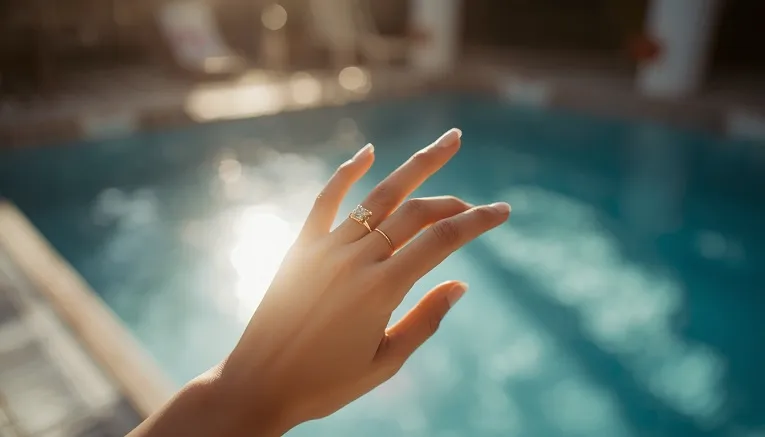
The Quick Answer: Can You Wear Jewellery in the Pool?
Yes, you can wear jewellery in the pool, but most pieces will not thank you for it. Pool water is treated with chlorine, and chlorine reacts with many of the metals used in everyday jewellery. Some pieces handle this without any trouble. Others come out dull, discoloured, or permanently damaged after a single afternoon.
The real answer depends entirely on what your jewellery is made from. Stainless steel, titanium, and platinum shrug off pool water without much fuss. Sterling silver, gold plating, and most gemstones do not fare so well. By the end of this guide, you will know exactly which pieces to keep on and which ones belong on the side of the pool.
If you only remember one thing from this article, let it be this: when in doubt, take it off. A few minutes without your favourite ring is a small price to pay compared to permanent tarnish or a lost piece at the bottom of the deep end.
Why Pool Water Is Hard on Jewellery
Chlorine and How It Reacts With Metal
Chlorine keeps swimming pools clean by killing bacteria. Still, the same chemical reaction that makes it effective against germs also makes it harsh on metal surfaces and is an oxidising agent. When it comes into contact with certain metals, particularly base metals like copper, zinc, and nickel, it accelerates a process called oxidation. This is the same chemical family of reactions that causes rust on iron, just acting on different metals.
Most fashion jewellery is not pure metal. Gold jewellery below 24 karat, for example, is alloyed with other metals to make it harder and more affordable. Those alloy metals are usually the weak point. Pure gold itself barely reacts with chlorine, but the copper or silver mixed into an 18-karat or 9-karat piece will.
pH Levels and Pool Chemical Balance
Pool water is not just chlorine. It is also balanced for pH, often with added stabilisers and sometimes algaecides. A poorly balanced pool, particularly one running slightly acidic, accelerates metal corrosion even further. This is one reason two people can wear the same gold ring in different pools and get very different results. The chemical balance of the water matters as much as the chlorine level itself.
Sunscreen, Body Oils and Lotion Matter Too
Many people assume chlorine is the only problem around the pool, but sunscreen, tanning oils, moisturisers, and body lotions can also affect jewellery. These products leave a residue on metals and gemstones that attracts dirt and can dull the finish over time.
Applying sunscreen before putting your jewellery back on, and cleaning your jewellery after swimming, helps keep it looking brighter for longer.
Jewellery Materials That Are Safe for the Pool
Stainless Steel
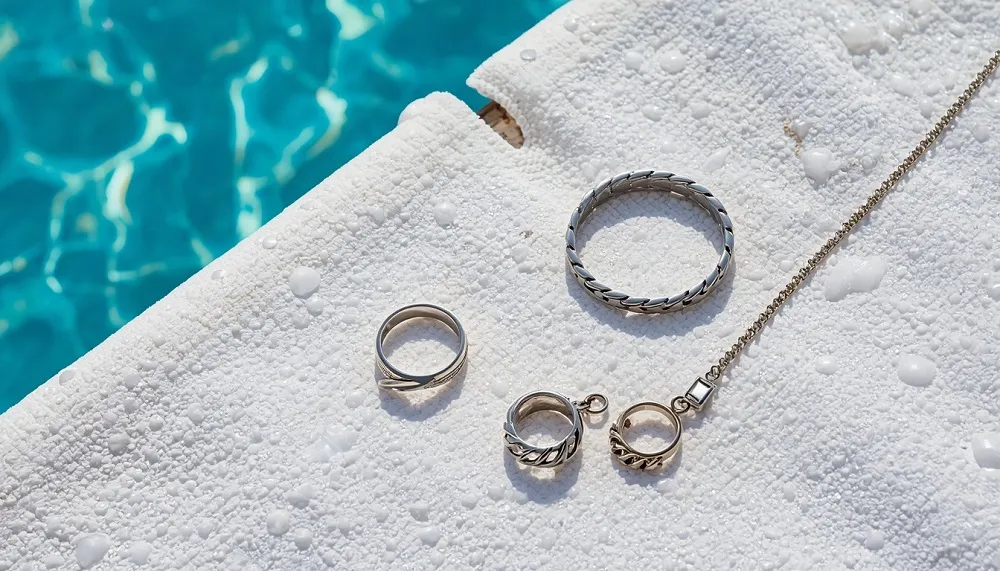
Stainless steel is the most pool-friendly material on the market, and it is not close. The chromium content in stainless steel forms a thin, invisible oxide layer on the surface that chlorine simply cannot break through under normal conditions. This layer is self-healing too, so light scratches do not expose the metal underneath to further damage.
This is why so many waterproof jewellery brands build their entire swim and gym collections around stainless steel. It holds its shine through chlorine, saltwater, sweat, and repeated exposure without the fading or dulling you would see in softer metals.
Titanium
Titanium performs almost as well as stainless steel in the pool. It is lightweight, hypoallergenic, and naturally resistant to corrosion because it also forms a protective oxide layer when exposed to air and water. The one caveat is titanium jewellery blended with gold or silver alloys, which behaves more like the metal it is mixed with than pure titanium.
Platinum
Platinum is one of the most chemically stable metals used in fine jewellery. It does not tarnish, and chlorine has very little effect on it compared to gold or silver. That said, platinum is soft and can pick up surface scratches more easily during pool activity, even if the chemical damage stays minimal.
Can You Wear PVD Jewellery in the Pool?
PVD-coated jewellery is one of the best options for swimming because the coating forms a strong molecular bond with the stainless steel or titanium underneath. Unlike traditional gold plating, PVD coatings resist chlorine, sweat, and everyday moisture much more effectively.
While occasional swimming is generally safe, prolonged exposure to heavily chlorinated pools can still reduce the lifespan of the coating over time. Rinsing the jewellery with fresh water after swimming helps preserve its finish.
If you regularly swim or exercise while wearing jewellery, PVD-coated stainless steel offers one of the best balances between durability, affordability, and corrosion resistance.
Solid High-Karat Gold
Pure gold, 24 karat, is chemically inert and essentially unaffected by chlorine. The problem is that 24-karat gold is rarely used in jewellery because it is too soft to hold its shape under daily wear. As the karat number drops, more alloy metal is introduced, and the piece becomes more vulnerable. 18 karat gold can usually handle occasional pool exposure better than 9 karat or 10 karat, simply because it contains a higher percentage of pure, unreactive gold.
Jewellery Materials You Should Take Off Before Swimming
Sterling Silver
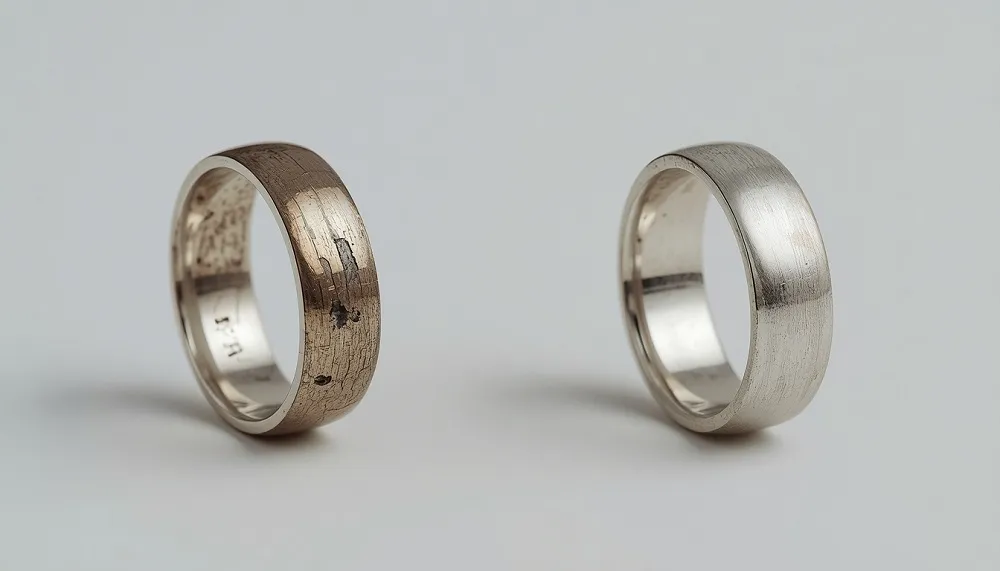
Sterling silver is 92.5 per cent pure silver mixed with other metals, usually copper, for strength. Chlorine accelerates the natural tarnishing process in silver dramatically. A piece that might tarnish gradually over months of normal wear can darken noticeably after just one swim. Rhodium-plated sterling silver holds up slightly better, but the plating itself is thin and will wear away with repeated chlorine exposure.
Gold-Plated and Gold Vermeil
Gold-plated jewellery is a thin layer of gold electroplated onto a base metal, often brass or copper. That gold layer is typically measured in microns, and chlorine is one of the fastest ways to strip it away. Once the plating wears through, the base metal underneath is exposed, and it will tarnish on its own. Gold vermeil, which uses a sterling silver base with a thicker gold layer, lasts a little longer in water but still is not built for regular pool use.
White Gold
White gold gets its bright, silvery colour from a rhodium coating applied over a yellow gold alloy. Chlorine can dull or discolour that rhodium layer over time, which means your ring slowly starts to show a yellowish tint underneath. Once that happens, the only fix is a professional rhodium replating.
Costume and Fashion Jewellery
Most costume jewellery relies on glued settings, painted finishes, or cheap base metal alloys to keep the price low. None of these holds up to chlorine. Glue can loosen, paint can flake, and the base metal underneath tarnishes quickly. If a piece is inexpensive and not something you would be upset to lose or damage, it is the safest category to risk in the pool, simply because there is little to lose.
What Happens to Gemstones in the Pool?
Metal is only half the story. Gemstones react to pool chemicals differently depending on their hardness and porosity. Diamonds are extremely hard and largely chlorine-resistant, though prolonged exposure can dull the metal setting around them even if the stone itself stays intact.
Softer or porous stones are a different matter entirely. Pearls, opals, turquoise, and emeralds are particularly vulnerable. Pearls especially can lose their lustre and even develop a chalky appearance after chlorine exposure, since their structure is organic rather than mineral. Opals can crack if the chemical exposure dries out the water content within the stone. As a general rule, if a gemstone is rated below 7 on the Mohs hardness scale, it is best kept far away from the pool.
Can You Wear Jewellery in a Hot Tub? (Different From a Pool)
Hot tubs are a separate concern entirely, and arguably a more aggressive one. The combination of heat and chlorine speeds up every chemical reaction described above. Warm water increases the rate at which chlorine reacts with metal surfaces, meaning damage that might take repeated pool visits to show up can appear after a single soak in a hot tub.
If you would hesitate to wear a piece in a regular swimming pool, treat the hot tub as an automatic no. This applies even to materials like stainless steel and titanium, which handle standard pool conditions well but face a tougher test under prolonged heat and chemical exposure.
What Jewellery Do Lifeguards and Swimmers Wear?
Professional swimmers and lifeguards usually avoid wearing valuable jewellery while in the water. Those who choose to wear jewellery often prefer silicone rings, titanium bands, or stainless steel pieces because they are lightweight, corrosion-resistant, and less likely to become damaged during daily use.
Saltwater Pools vs Chlorinated Pools: Is One Safer?
Saltwater pools still use chlorine, just generated through electrolysis rather than added directly. This means the chlorine exposure is often gentler and more consistent than a traditionally chlorinated pool, which can have a stronger or weaker concentration depending on maintenance. However, saltwater pools introduce their own corrosion risk through the salt itself, which is mildly abrasive and accelerates oxidation on metals that are already vulnerable, such as sterling silver or gold-plated pieces.
Natural seawater follows a similar pattern. It is gentler than a harshly chlorinated pool in some respects, but salt residue left to dry on jewellery without a rinse will still cause long-term wear on clasps, settings, and softer metals. Neither option is truly safe for delicate jewellery, just differently risky.
The Hidden Risk Nobody Talks About: Losing Your Jewellery
Chemical damage gets most of the attention, but losing a piece entirely is just as common, and arguably more upsetting. Fingers shrink in cold water as blood vessels constrict, which means a ring that fits snugly on a warm day can slip off unnoticed in the pool. This is one of the most common ways engagement rings and wedding bands are lost on holiday.
Necklaces and bracelets face a different risk from splashing, swimming strokes, and contact with pool walls or other swimmers. A clasp that has weakened slightly from chlorine exposure is far more likely to give way under that kind of movement. If a piece holds sentimental or financial value, the safest place for it during a swim is not on your body at all.
How to Care for Your Jewellery After Swimming
If you do end up swimming with jewellery on, whether by choice or because you forgot to take it off, a quick aftercare routine limits the damage.
- Rinse the piece in fresh, lukewarm water as soon as possible after leaving the pool
- Use a soft cloth to gently dry it rather than letting it air dry with chlorine residue still on the surface
- For tarnished sterling silver, a paste of three parts bicarbonate of soda to one part water can help restore some shine
- Avoid scrubbing gemstones directly, as some settings loosen when exposed to repeated chemical contact
- Store the piece somewhere dry once it is fully cleaned, rather than leaving it damp in a swim bag
- Book a professional inspection if the piece is fine jewellery, since clasps and prongs can weaken in ways that are not visible to the eye
Quick Comparison Table: Pool-Safe vs Pool-Risky Jewellery
| Material | Pool Safe? | Why |
| Stainless Steel | Yes | Chromium oxide layer resists chlorine and saltwater |
| Titanium | Yes | Naturally corrosion-resistant unless alloyed |
| Platinum | Mostly | Chemically stable but can scratch |
| Solid 18k+ Gold | Occasionally | High purity resists chlorine; avoid daily exposure |
| Sterling Silver | No | Tarnishes rapidly with chlorine exposure |
| Gold-Plated | No | Plating strips away, exposing base metal |
| White Gold | No | Rhodium coating dulls and discolours |
| Porous Gemstones | No | Pearls, opals and emeralds are chemically sensitive |
Frequently Asked Questions
Can you wear gold jewellery in the pool?
Solid gold of 18 karat or higher can usually handle occasional pool exposure without serious damage, since it contains a high percentage of chemically stable pure gold. Lower karat gold and gold-plated jewellery are more vulnerable and should be removed before swimming.
Can you wear silver jewellery in the pool?
Sterling silver is not recommended for the pool. Chlorine speeds up tarnishing significantly, and the discolouration can be difficult to reverse without professional cleaning.
Does chlorine ruin diamond rings?
The diamond itself is highly resistant to chlorine, but the metal setting around it is not. A diamond ring set in white gold or sterling silver can still suffer damage to the band, even if the stone stays perfectly fine.
Is it safe to wear jewellery in a saltwater pool?
Saltwater pools are generally gentler than heavily chlorinated pools, but they are not risk-free. Salt accelerates corrosion on already vulnerable metals like sterling silver, so the same precautions apply.
Can chlorine make jewellery lose its shine?
Yes. Repeated chlorine exposure can gradually dull many metals, particularly sterling silver, gold-plated jewellery, and white gold. Regular cleaning helps reduce long-term damage.
Can you wear jewellery in a hotel swimming pool?
Yes, but hotel pools are usually chlorinated in the same way as public pools. The same care recommendations apply, especially for plated jewellery and gemstones.
Conclusion
Swimming with jewellery may seem harmless, but even occasional exposure to chlorine and pool chemicals can shorten the life of certain metals and gemstones. Stainless steel, titanium, and platinum are among the safest choices for regular swimmers, while gold-plated jewellery, sterling silver, pearls, and opals are best removed before entering the water.
If you’re unsure whether a piece is suitable for swimming, it’s always safer to take it off. A few seconds spent removing your jewellery can prevent tarnishing, damaged coatings, loose gemstones, or even losing a treasured piece at the bottom of the pool.
Choosing the right materials and following a simple cleaning routine will help your favourite jewellery stay beautiful for years to come.
About the Author
|