

Can You Wear Jewellery at the Beach? A Complete Guide to Sun, Sand and Saltwater
The Quick Answer: Yes, But Choose Wisely
You can wear jewellery at the beach. You just need to be sensible about which pieces you bring along. Saltwater, sand, sun and sunscreen are hard on delicate materials, so the trick is knowing what holds up and what doesn’t.
As a general rule, solid metals and hard gemstones cope well. Plated pieces, soft stones and anything with sentimental or high value are better left at home. Fashion jewellery made from nickel-free, lead-free materials is often a smart middle ground, since it looks good on the sand and won’t break the bank if it gets lost in the surf.
The rest of this guide walks through exactly what to wear, what to avoid, and how to look after your pieces before, during, and after a beach day.
Why the Beach Is Tough on Jewellery
Before choosing what to wear, it helps to understand what you’re up against. A few different forces work on your jewellery at once when you’re by the sea.
Salt and Saltwater
Salt draws moisture and speeds up tarnishing, particularly on silver. Sterling silver reacts with sulphur in the air and on your skin, and salty sea air makes that reaction happen faster. Rose gold is also vulnerable, since seawater can corrode the copper content in the alloy over time.
Sand and Abrasion
Sand is mostly made of silica, the same mineral used to make glass. It sits fairly high on the hardness scale, which means it can scratch softer metals and stones. Solid gold and solid silver generally shrug off light sand contact, but thin gold plating or vermeil can wear through much faster, exposing the base metal underneath.
Sun and UV Exposure
Direct sunlight fades some materials over a long day outdoors. Coloured resin, dyed stones and certain natural materials like turquoise or coral can lose their vibrancy with repeated sun exposure.
Sunscreen, Sweat and Lotions
Sunscreen, tanning oil and sweat all leave a film on jewellery. This residue can dull the shine of metal, build up in the crevices of detailed pieces, and weaken cords or elastic on strung jewellery. It’s one of the most overlooked causes of jewellery damage at the beach, since the harm builds up slowly rather than happening all at once.
Best Metals to Wear at the Beach
Some metals are built for this kind of environment. If you want to wear your favourite pieces without worry, start here.
Solid Gold (14k to 18k)
Solid gold resists rust and tarnish, making it one of the safest choices for a beach day. It’s dense enough to withstand light sand contact and won’t react badly to saltwater. The main thing to watch is your setting and clasps, since gold itself is fairly soft and can pick up small scratches over time.
Platinum
Platinum is about as tough as fine jewellery gets. It holds up beautifully in saltwater and doesn’t tarnish, though it does pick up a matte patina with wear that many people actually like. It’s a heavier, pricier option, so it suits people who want one dependable piece rather than a full stack.
Stainless Steel and Titanium
Both metals resist corrosion and scratching, which makes them popular for everyday and activewear jewellery. They’re budget-friendly, lightweight, and increasingly used in fashion jewellery collections aimed at holidays and outdoor wear.
Sterling Silver, With a Caveat
Sterling silver can handle the beach, but it tarnishes faster in salty air than gold or platinum. If silver is your go-to, plan on a quick polish when you get home rather than avoiding it altogether.
Can You Wear PVD Jewellery at the Beach?
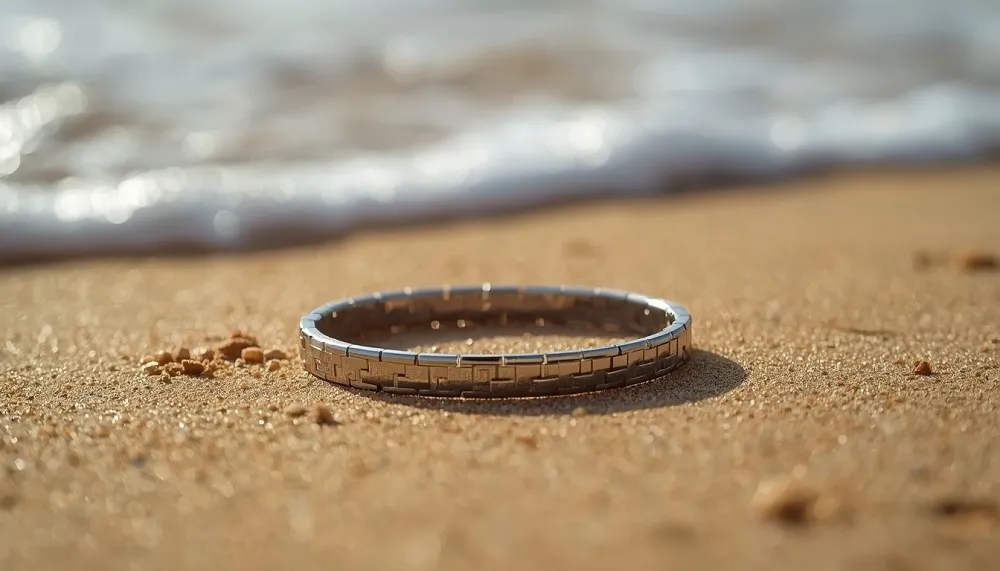
PVD-coated jewellery is one of the best choices for beach holidays because the coating forms a strong molecular bond with the stainless steel underneath. This makes it much more resistant to saltwater, sweat, and everyday wear than traditional gold-plated jewellery.
Although PVD jewellery handles occasional swimming and beach conditions very well, it is still worth rinsing it with fresh water after exposure to salt and sand. This simple habit removes salt residue that can gradually affect the finish over time.
For anyone looking for stylish jewellery that can cope with holidays, outdoor activities, and everyday wear, PVD-coated stainless steel offers one of the best combinations of durability, affordability, and low maintenance.
Metals and Materials to Avoid
A few materials cause more problems than they’re worth in a beach setting.
Gold-Plated and Vermeil Jewellery
Plating is a thin layer of gold over a base metal. Sand and saltwater wear through that layer faster than you’d expect, and once it’s gone, the base metal underneath can tarnish or irritate skin. Save your plated pieces for evenings out rather than a day in the surf.
Rose Gold
The copper in rose gold reacts with salt, which can lead to a dull or corroded look after repeated beach exposure. An occasional day out is fine, but it’s not the best choice for daily wear on holiday.
Wood, Coral and Turquoise
These natural materials are porous, meaning they absorb salt and moisture. Over time this can cause discolouration, cracking or a rotted appearance. They’re lovely for an evening look but not ideal companions for a swim.
What About Gemstones? Which Ones Can Handle the Beach
Not every stone reacts the same way to sand and salt. Hardness is the main factor that decides whether a gem is beach-friendly.
Durable Stones
Diamonds are the hardest natural material on earth, so sand and saltwater won’t damage the stone itself. Sapphires, rubies, and spinel are also hard enough to take a beach day in their stride. The one thing to check with any of these is the setting, since prongs can loosen over time from repeated exposure to sand and sunscreen.
Stones to Leave at Home
Pearls, opals and amber are all softer and more porous. Pearls in particular don’t like chlorine, saltwater or sunscreen, all of which can dull their natural lustre. If a piece features one of these stones, it’s better suited to dry land.
Should You Wear Jewellery in the Sea?
This is where most damage and loss actually happens. A few reasons to think twice before swimming with jewellery on:
- Rings slip off easily. Cold water makes fingers shrink slightly, so rings that fit snugly on land can come loose in the sea.
- Shiny jewellery can attract fish. Reflective metal catches light the same way fish scales do, and some marine life will investigate the glint out of curiosity.
- Clasps and closures can catch on things. Currents, seaweed and playful splashing all increase the chance of a clasp snagging and opening.
If you want to swim with something on, choose a snug-fitting, matte or non-reflective piece with a secure clasp, and accept there’s always some risk involved.
Jewellery and Beach Activities
Even if your jewellery is made from durable materials, beach sports increase the risk of damage. Activities such as volleyball, paddleboarding, surfing, football, or climbing over rocks can scratch metal surfaces, loosen gemstone settings, or cause jewellery to catch on clothing and equipment.
If you plan to be active rather than relax on the beach, removing your jewellery beforehand is usually the safest option.
Jewellery You Can Confidently Wear on the Sand
For sunbathing, walking the boardwalk or a beach lunch, these styles tend to work well:
- Small stud earrings or huggie hoops
- Thin, solid-metal chains
- Sterling silver or stainless steel anklets
- Stackable rings in solid metal
- Simple bangles that don’t dangle or catch on towels
Lightweight, close-fitting pieces are less likely to snag, tangle, or fall off during normal beach activity.
Jewellery to Leave at Home
Some pieces simply carry too much risk for a day at the beach:
- Engagement rings and other high-sentimental-value pieces
- Anything with intricate filigree or lots of small gaps that trap sand
- Loose bracelets or long dangling necklaces that can snag
- Delicate chains prone to tangling or snapping
- Anything you genuinely couldn’t bear to lose
If in doubt, ask yourself how you’d feel if the piece disappeared into the sand for good. If the answer is “devastated,” it stays in the jewellery box.
How to Protect Your Jewellery During a Beach Day
A little planning goes a long way toward keeping your pieces intact.
- Apply sunscreen first, then wait for it to absorb before putting jewellery on. This stops lotion from getting trapped against the metal.
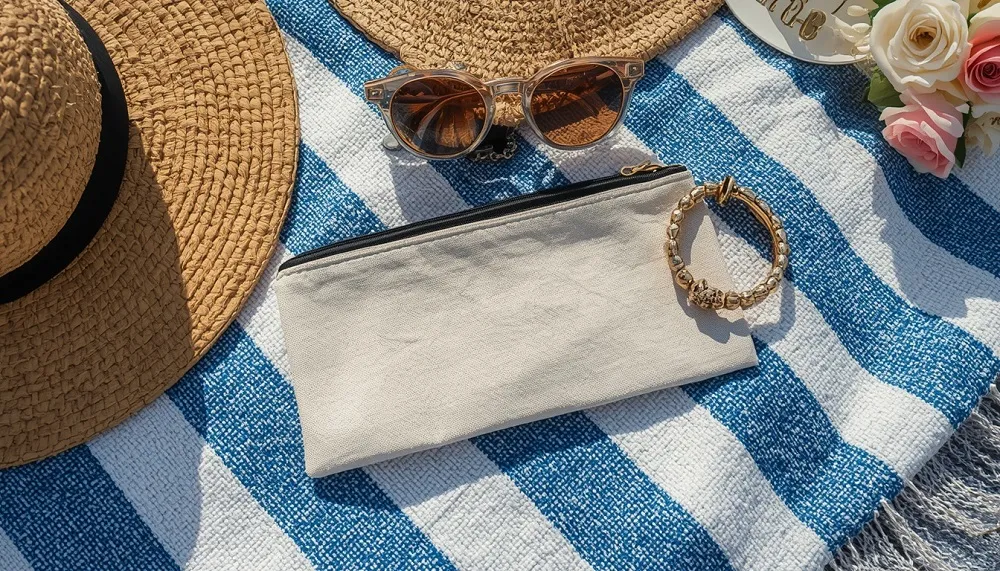
- Pack a small, zip-top pouch for anything you take off during the day, whether that’s for swimming or just giving your skin a break.
- Check clasps and settings before you leave home. A loose clasp is far more likely to fail once sand and moisture are added to the mix.
- Keep valuables out of open bags. A closed pouch tucked into a beach bag is safer than a loose item sitting on top of a towel.
- Rinse jewellery with fresh water if it gets wet. Don’t let salt residue sit on metal any longer than necessary.
Caring for Jewellery After the Beach
Once you’re home, a short aftercare routine keeps everything looking its best.
- Rinse with clean, lukewarm water to remove salt, sand and sunscreen residue.
- Use a soft cloth or soft toothbrush to gently clean any buildup in crevices.
- Pat dry rather than air dry. Air drying can leave water spots, especially on silver.
- Store in a cool, dry, ventilated spot. Avoid sealed plastic bags, which trap moisture and can actually speed up tarnishing rather than prevent it.
- Give silver an occasional polish if you’ve worn it several days in a row by the sea.
Choosing Beach-Friendly Fashion Jewellery
Fine jewellery isn’t the only option for a stylish beach look. Fashion jewellery has come a long way, and there are good reasons to reach for it specifically on holiday.
Nickel-free and lead-free pieces reduce the chance of skin irritation when combined with sun, sweat and salt, which can otherwise make sensitive skin more reactive. Fashion jewellery is also far more replaceable than fine jewellery. If a bracelet slips off in the waves, losing an affordable piece stings a lot less than losing a family heirloom.
Look for fashion jewellery described as stainless steel, solid metal or specifically labelled water-friendly, rather than delicate plated pieces meant for indoor wear. Many holiday-focused collections are designed with exactly this kind of durability in mind, so you can layer up necklaces, stack rings and add anklets without worrying every time you walk into the sea.
Frequently Asked Questions
Can you wear gold jewellery at the beach?
Yes. Solid 14k or 18k gold resists tarnish and corrosion well, making it one of the safest metals for beach wear. Gold-plated pieces are more vulnerable, since the thin gold layer can wear away from sand and saltwater exposure.
Is it safe to wear silver jewellery in the sea?
Sterling silver can go in the sea, but salty air speeds up tarnishing. Expect to give silver pieces a clean or polish after a beach trip, particularly if you’ve worn them several days running.
Can you wear a diamond ring at the beach?
Yes, diamonds themselves are extremely hard and won’t be damaged by sand or saltwater. The setting is the weaker point, so check that prongs are secure and consider removing the ring before swimming or playing sports on the sand.
What jewellery should I avoid wearing in the ocean?
Avoid loose rings, delicate chains, anything with sentimental or high monetary value, and porous materials like pearl, opal, coral or turquoise. These are the pieces most likely to be lost or damaged.
Does sunscreen damage jewellery?
Sunscreen itself isn’t corrosive, but it leaves a film that dulls shine, builds up in detailed settings, and can weaken cords on strung jewellery. Apply sunscreen before putting on jewellery, and clean pieces after a day of wear.
Related reading: check our guides on Can You Wear Jewellery in the Pool? and choosing hypoallergenic jewellery for sensitive skin for more seasonal tips.
Can sand scratch jewellery?
Yes. Sand contains tiny particles of quartz, which are harder than many jewellery metals. Repeated rubbing can create fine scratches on gold, silver, and plated jewellery, especially if sand becomes trapped between the jewellery and your skin.
About the Author
Sarah Mitchell is a UK jewellery writer specialising in jewellery care, materials, and seasonal buying advice. She researches manufacturer recommendations, independent testing, and jewellery industry best practices to help readers choose, wear, and care for jewellery with confidence.