
What Is Hypoallergenic Jewellery? The Complete Guide for Sensitive Skin
If your ears turn red and itchy a few hours after putting in a new pair of earrings, you already know the frustration. You bought the earrings because the tag said: “hypoallergenic.” So why does your skin disagree?
This happens to more people than you might think. Hypoallergenic jewellery can genuinely help, but the term gets used loosely, and not every piece that wears the label actually deserves it. This guide explains what hypoallergenic jewellery really means, which metals are worth your money, and how to shop smarter so you stop guessing and start wearing jewellery without worry.
What Does “Hypoallergenic” Actually Mean?
The Real Definition (And Why It’s Not a Guarantee)
The word “hypoallergenic” comes from the prefix “hypo,” meaning “below” or “under,” combined with “allergenic.” Put simply, it means a product is less likely to cause an allergic reaction than a typical product in its category.
That word “less” matters. Hypoallergenic jewellery is not allergy-proof. It is jewellery made with materials that have a low chance of triggering a reaction in most people. Someone with a severe or unusual sensitivity can still react to a metal that is hypoallergenic for almost everyone else.
Think of it like sunscreen. SPF 50 dramatically lowers your risk of sunburn, but it doesn’t make you immune to the sun. Hypoallergenic jewellery works the same way. It reduces your risk significantly. It doesn’t eliminate it.
Why “Hypoallergenic” Is an Unregulated Marketing Term
Here’s something most jewellery guides skip over: in both the UK and the US, “hypoallergenic” is not a legally defined or regulated term for jewellery. Any brand can print it on a label, regardless of what’s actually inside the metal.
This is different from claims backed by real standards. For example, ASTM F136 is a specific material standard for titanium used in medical and body-piercing applications. The EU Nickel Directive sets a legal limit on how much nickel can be released from items in direct, prolonged contact with skin. When a product meets one of these named standards, that’s a verifiable claim. When a product just says “hypoallergenic” with no further detail, that’s a marketing claim you can’t fully verify without testing it yourself.
This doesn’t mean hypoallergenic labels are useless. It means you should treat the word as a starting point, not a guarantee, and look for the specific metal and any accompanying certification.
Why Jewellery Causes Allergic Reactions
Quick Answer: Hypoallergenic jewellery is made from materials that are less likely to trigger allergic reactions. Titanium, niobium, platinum, and high-quality surgical stainless steel are among the safest options for sensitive skin. While hypoallergenic jewellery reduces allergy risk, no material can guarantee a reaction-free experience for every wearer.
Nickel Allergy and Contact Dermatitis Explained
Most jewellery reactions come down to one metal: nickel. Nickel is cheap, durable, and easy to mix into alloys, which is exactly why it shows up in so much budget jewellery, including pieces marketed as gold or silver-toned.
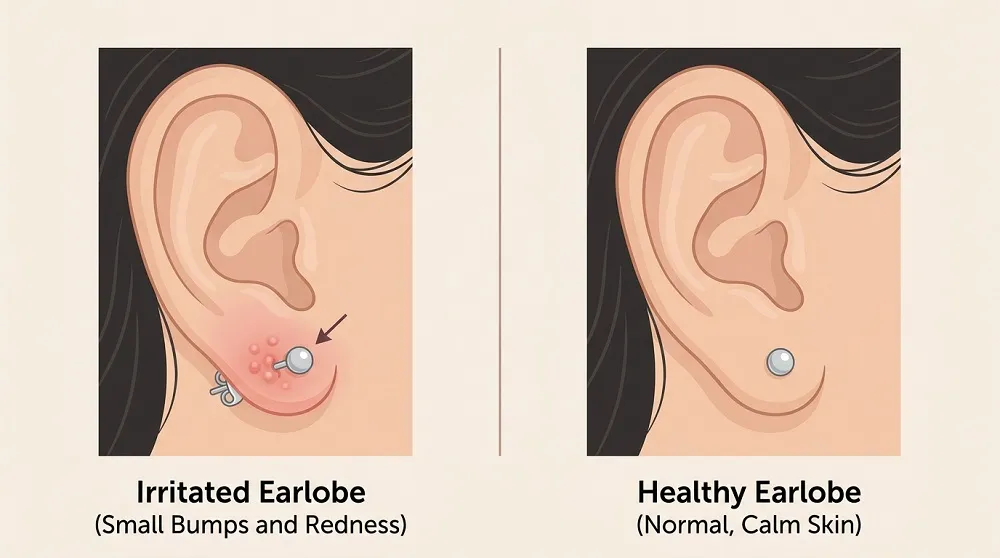
When nickel touches your skin repeatedly, especially in a warm, moist spot like an earlobe, your immune system can start treating it as a threat. This reaction is called allergic contact dermatitis. It usually shows up as redness, itching, small bumps, or dry, scaly patches exactly where the metal touched your skin.
According to the American Academy of Dermatology, nickel allergy affects a meaningful share of the population, and women are affected more often than men, largely because of higher rates of ear piercing and nickel exposure through jewellery and fasteners. Once your skin becomes sensitized to nickel, that sensitivity typically doesn’t go away. It tends to get worse with repeated exposure, not better.
Allergic Reaction vs. Infection: How to Tell the Difference
This is something almost no other guide on this topic addresses clearly, and it matters, especially for new piercings.
An allergic reaction and an infection can look similar at first glance, but they behave differently.
| Sign | Allergic Reaction | Infection |
|---|---|---|
| Onset | Hours to a few days after wearing | Often appears later, can worsen suddenly |
| Discharge | Rarely, skin may be dry or flaky | Often present, may be yellow or cloudy |
| Pain | Usually itchy, mild discomfort | Often throbbing or sharply painful |
| Warmth | Mild, localized | Skin often feels noticeably warm or hot |
| Spread | Stays close to the contact area | Can spread outward, swelling increases |
| What helps | Removing the metal usually improves it within days | Often needs medical treatment, sometimes antibiotics |
If you remove the jewellery and the irritation calms down within a few days, you’re likely dealing with an allergic reaction. If things get worse, you see discharge, or the area feels hot and increasingly painful, see a doctor. Don’t try to self-treat what might be an infection with allergy remedies.
Non-Metal Allergens Hiding in Jewellery
Metal isn’t the only culprit. Plenty of reactions come from materials people never think to question.
Resin and acrylic used in costume jewellery can contain residual chemicals that irritate skin. Dyes and surface coatings, especially on cheaper fashion pieces, can flake or react with sweat. Leather and faux-leather cords used in bracelets and necklaces sometimes contain tanning chemicals that cause contact reactions. Even the glue used to set stones in cheap earrings can be a hidden trigger.
If you’ve switched to a “hypoallergenic” metal and you’re still reacting, check the rest of the piece. The post might be titanium, but the glue holding a gemstone in place might not be skin-friendly at all.
Best Hypoallergenic Metals for Sensitive Skin
Not all hypoallergenic metals are created equal. Some are virtually risk-free for almost everyone. Others are a step up from cheap alloys but still carry some risk for highly sensitive skin. Here’s how the most common options actually compare.
Titanium
Titanium is one of the safest options available. It’s naturally free of nickel, lightweight, and highly resistant to corrosion. Medical-grade titanium that meets the ASTM F136 standard is widely used in body piercings and surgical implants, which tells you a lot about how skin-friendly it is. If you’ve reacted to almost everything else, titanium is usually the first thing a piercer or dermatologist will recommend.
Surgical or Medical-Grade Stainless Steel
True surgical-grade steel (often labeled 316L) contains very low nickel levels and is a solid choice for most people. The catch is that “stainless steel” jewellery sold cheaply isn’t always genuine surgical grade. Lower-quality stainless steel can still contain enough nickel to cause a reaction in sensitive wearers, so the specific grade matters more than the word “steel” on its own.
Platinum
Platinum is naturally hypoallergenic and typically used at 95% purity or higher in fine jewellery. It doesn’t tarnish, it’s extremely durable, and reactions to platinum are rare. The tradeoff is price. Platinum sits at the premium end of the market.
Niobium
Niobium doesn’t get nearly enough attention in most jewellery guides, but it deserves to. It’s nickel-free, lightweight, and commonly used in piercing studios for sensitive or healing skin. It also comes in a range of anodized colors, so it’s a good option if you want something other than plain silver tones.
Palladium and Tantalum
Both of these are dense, strong, naturally nickel-free metals. Palladium is often used in white gold alloys as an alternative to nickel-based mixes. Tantalum has a distinctive dark tone and shows up more often in men’s rings and minimalist designs. Neither is as widely available as titanium or steel, but both are excellent choices if you find them.
High-Karat Gold (18K to 24K)
Pure 24K gold is naturally hypoallergenic, but it’s too soft for everyday jewellery, which is why it’s rarely used alone. 18K gold, at 75% pure gold, strikes a good balance between durability and low allergy risk. Lower karat gold, like 9K or 10K, contains a higher percentage of other metals, which increases the chance one of them is nickel.
Rhodium-Plated Sterling Silver
Sterling silver is 92.5% pure silver mixed with other metals, ideally copper rather than nickel. A rhodium plating adds an extra protective layer between your skin and the metal underneath. This works well for many people with mild sensitivity, but the plating can wear off over time, especially with frequent contact like rings worn daily. Once it wears thin, the metal underneath is exposed again.
Comparison Table: Hypoallergenic Rating, Durability, and Cost
| Metal | Hypoallergenic Rating | Durability | Typical Cost |
|---|---|---|---|
| Titanium | Excellent | Very high | Low to moderate |
| Surgical steel (316L) | Good to excellent | High | Low |
| Platinum | Excellent | Very high | High |
| Niobium | Excellent | High | Low to moderate |
| Palladium | Excellent | High | Moderate to high |
| Tantalum | Excellent | High | Moderate |
| 18K gold | Good | High | High |
| Rhodium-plated silver | Fair to good | Moderate (plating wears) | Low to moderate |
If you have a confirmed nickel allergy, titanium and niobium offer the best combination of safety and affordability. If budget isn’t a concern and you want fine jewellery, platinum is the gold standard, no pun intended.
Metals and Materials to Avoid
Nickel, Brass, Cobalt, and Leaded Alloys
Nickel is the main one to watch for, but it’s not the only risk. Brass, a mix of copper and zinc, sometimes contains trace nickel and can also irritate skin through oxidation, especially in humid conditions or with sweat exposure. Cobalt shows up in some white gold and tungsten alloys and can cause reactions similar to nickel in people who are cross-sensitive. Lead is rare in modern jewellery due to safety regulations, but it still turns up occasionally in low-cost imported pieces and can cause more serious health issues beyond skin irritation.
Why Cheap Costume Jewellery Is the Biggest Culprit
Costume jewellery is designed to look like fine jewellery at a fraction of the price, and the way manufacturers cut costs is usually through the base metal. A gold-toned earring that costs a few dollars almost certainly isn’t made of real gold underneath. It’s more likely a nickel or brass alloy with a thin gold-colored coating. That coating wears off with wear, washing, and time, exposing the reactive metal underneath.
This doesn’t mean all costume jewellery is unsafe. Some brands now use nickel-free base metals specifically to serve sensitive-skin customers. The key is checking what the base metal actually is, not just trusting the finish or the price tag.
Is Gold-Plated or Gold-Filled Jewellery Hypoallergenic?
These two terms sound similar but mean very different things, and mixing them up is one of the most common shopping mistakes.
Gold-plated jewellery has a very thin layer of gold, often just a few microns thick, applied over a base metal. That base metal could be brass, copper, or, in worse cases, a nickel alloy. As the plating wears, the base metal underneath gets exposed to your skin.
Gold-filled jewellery has a much thicker layer of gold, mechanically bonded to the base metal, usually making up at least 5% of the total weight. It lasts far longer and exposes you to much less of the base metal over time.
So gold-plated jewellery is not reliably hypoallergenic. Gold-filled is a better, though still imperfect, option if solid gold is out of your budget.
How to Tell If Jewellery Is Genuinely Hypoallergenic
Labels, Certifications, and Standards to Look For
Since “hypoallergenic” alone isn’t a regulated term, look for more specific information instead. ASTM F136 indicates medical-grade titanium suitable for piercings and implants. A stated nickel content compliant with the EU Nickel Directive tells you the release rate has been tested and limited by law, at least for products sold in the EU and UK. ISO 13485 indicates a manufacturer follows medical device quality standards, which some piercing and jewellery brands choose to meet voluntarily. The more specific the claim, the more you can trust it.
How to Patch-Test Jewellery Before Committing
This is one of the most useful things you can do, and almost no competing guide mentions it. Before wearing a new piece for a full day, try this simple test.
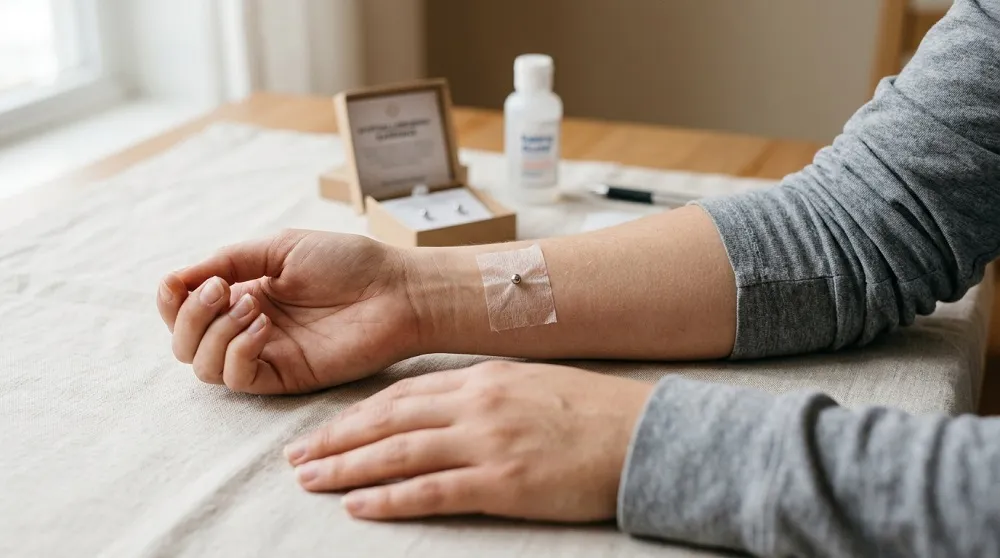
Clean the area of skin where you plan to wear the jewellery. Place the metal against that skin, for example by taping a stud to your inner forearm, and leave it in place for 24 to 48 hours. Check the skin underneath. If you see redness, itching, or a rash, that metal isn’t right for you, regardless of what the label says.
This takes a couple of days longer than just putting on new earrings and hoping for the best, but it saves you from a painful surprise, especially with jewellery that’s expensive or hard to return.
Questions to Ask Before You Buy
When you’re shopping, especially online, ask the retailer directly: What is the base metal, not just the plating or finish? Is it certified to any specific standard, like ASTM F136? What percentage of the metal is the stated material, especially for gold or silver? A retailer who can answer these clearly is generally more trustworthy than one who only repeats the word “hypoallergenic” without details.
Hypoallergenic Jewellery by Use Case
Best Hypoallergenic Earrings for Sensitive Ears
Earrings cause more reactions than almost any other jewellery type, mainly because earlobes stay in constant, close contact with the metal, often for entire days at a time. For sensitive ears, titanium and niobium studs are usually the safest starting point. If you wear earrings daily, consider rotating between a couple of pairs so no single piece stays in constant contact with your skin.
Hypoallergenic Jewellery for First and New Piercings
Healing skin is more reactive than settled skin, which is why most professional piercers insist on specific materials for new piercings, regardless of what you eventually want to wear long term. Titanium and niobium are the standard recommendations during the healing period, which can take anywhere from a few weeks for earlobes to several months for cartilage. Avoid sterling silver for healing piercings specifically, since it can tarnish inside the wound and slow healing.
Hypoallergenic Jewellery for Kids and First Piercings
This is an area most jewellery content skips entirely, which is surprising given how common children’s ear piercing is. Children’s skin can be just as reactive as adult skin, sometimes more so, since their immune systems are still developing. For a child’s first piercing, titanium or surgical steel starter studs are generally the safest choice. Avoid novelty or costume jewellery for children’s piercings, even temporarily, since these are some of the most common sources of nickel exposure in kids. If a child develops redness or swelling after a piercing, don’t wait it out. Speak to the piercer or a doctor promptly, since children may struggle to describe discomfort accurately.
Rings, Necklaces, Bracelets, and Watches for Sensitive Skin
Rings sit against skin constantly and are exposed to soap, water, and friction throughout the day, which can wear down plating faster than almost any other jewellery type. Solid titanium or platinum bands hold up best for daily wear. Necklaces and bracelets have more breathing room since they don’t sit in one fixed spot the way rings do, but clasp materials are often overlooked. A nickel clasp on an otherwise hypoallergenic necklace can still irritate the back of the neck. Watch straps, especially metal mesh or link bands, are another common but rarely discussed source of reactions, since they sit against the wrist for extended periods, often while sweating.
Hypoallergenic Jewellery in the UK and EU
UK and EU Nickel Regulations Explained
Unlike the US, the UK and EU actually regulate nickel release from items that have prolonged direct skin contact, including jewellery, through what’s commonly known as the Nickel Directive (originally an EU regulation, retained in UK law post-Brexit). It sets a maximum nickel release rate for items like earrings, which is lower for items inserted into pierced skin compared to other jewellery. This is a real, enforceable legal standard, not just marketing language, which makes it one of the more reliable things to look for if you’re shopping in the UK.
Where to Buy Certified Hypoallergenic Jewellery in the UK
Look for UK and EU retailers who explicitly reference compliance with nickel release regulations, not just the word hypoallergenic. Piercing studios that follow professional body piercing association guidelines are also a reliable source for compliant starter jewellery, since they’re held to stricter material standards than general fashion retailers.
Buyer’s Checklist for Hypoallergenic Jewellery
Before purchasing hypoallergenic jewellery, check the following:
- Is the base metal clearly disclosed?
- Does the product mention ASTM F136, 316L surgical steel, or nickel-free certification?
- Is the jewellery intended for sensitive skin or healing piercings?
- Does the retailer provide material specifications?
- Is the jewellery plated or made from solid hypoallergenic metal?
- Are customer reviews mentioning comfort and skin sensitivity?
Taking a few moments to verify these details can help you avoid irritation and choose jewellery that remains comfortable for long-term wear.
Caring for Hypoallergenic Jewellery
Cleaning and Storage Tips
Even hypoallergenic metals benefit from proper care. Clean jewellery gently with a soft cloth and mild soap, avoiding harsh chemicals that can degrade plating or finishes over time. Store pieces separately, ideally in a dry, lined box or pouch, to prevent scratching and to reduce contact with other metals that could transfer trace nickel during storage. Remove jewellery before swimming, showering with strong soaps, or exercising heavily, since sweat and chlorine can accelerate wear on plated pieces specifically.
Does Hypoallergenic Jewellery Tarnish?
It depends on the metal. Titanium, platinum, and niobium are highly resistant to tarnish and oxidation. Sterling silver, even rhodium-plated, can tarnish over time, especially with exposure to moisture, perfume, or certain skin chemistries. If your hypoallergenic jewellery is tarnishing quickly, that’s not necessarily an allergy problem, but it’s worth checking that the metal is what the label claims it to be.
Sustainability and Ethics of Hypoallergenic Metals
Titanium and Recycled Metals vs. Traditionally Mined Gold
This angle rarely comes up in hypoallergenic jewellery guides, but it’s worth a moment. Titanium is abundant and increasingly sourced through processes with a smaller environmental footprint compared to traditional gold mining, which has well-documented environmental and labor concerns in parts of the global supply chain. Recycled gold and recycled sterling silver are also becoming more widely available, offering a way to get the comfort benefits of higher-purity precious metals without the same environmental tradeoffs as newly mined material. If sustainability matters to you alongside skin safety, asking retailers about recycled content or responsibly sourced titanium is a reasonable next step.
Frequently Asked Questions
Is sterling silver hypoallergenic?
Sterling silver can be hypoallergenic if it’s alloyed with copper rather than nickel, which is the traditional formula. Some lower-quality sterling silver uses nickel in the alloy, so checking the source matters. Rhodium plating adds extra protection but can wear off over time.
Is rose gold hypoallergenic?
It depends on the karat and alloy mix. Rose gold gets its color from added copper, and sometimes a small amount of silver or other metals. Higher-karat rose gold, 18K or above, generally carries a lower risk than lower-karat versions, which contain more alloy metal overall.
Is stainless steel hypoallergenic?
True surgical-grade stainless steel, often labeled 316L, is generally safe for most people with sensitive skin. Lower-grade stainless steel sold in fast fashion jewellery isn’t always held to the same standard and can still contain enough nickel to cause a reaction.
What is the best jewellery material for sensitive skin?
For most people with a confirmed metal allergy, titanium and niobium offer the strongest combination of safety, affordability, and durability. For fine jewellery, platinum is the most reliable hypoallergenic option.
Can hypoallergenic jewellery still cause a reaction?
Yes. Hypoallergenic means lower risk, not zero risk. A small percentage of people react even to metals like titanium, particularly if they have an unusually severe sensitivity. Patch testing before committing to a piece is the best way to confirm how your specific skin responds.
What should I do if I think I’m having an allergic reaction to jewellery?
Remove the jewellery as soon as you notice redness, itching, or swelling. Clean the area gently and avoid scratching. If symptoms improve within a few days, it is likely an allergic reaction. If the area becomes increasingly painful, swollen, or starts discharging fluid, see a doctor, since this can indicate an infection rather than a simple allergy.
Conclusion: Choosing the Right Hypoallergenic Jewellery for You
There’s no single metal that’s right for everyone, but there is a clear way to think through the decision. If you have a confirmed nickel allergy or highly reactive skin, start with titanium or niobium. They offer strong protection without a high price tag. If you want fine jewellery for special pieces like engagement rings, platinum is worth the investment, since reactions to it are genuinely rare. If you’re working with a tighter budget, look closely at gold-filled options over gold-plated, and choose surgical-grade steel over vague “stainless steel” labeling.
Whatever you choose, remember that the word “hypoallergenic” on its own isn’t proof of anything. The real proof is in the specific metal, the certification behind it, and how your own skin actually responds. A quick patch test before committing to a new piece costs you almost nothing and can save you days of discomfort. Your skin will tell you the truth faster than any label can.