
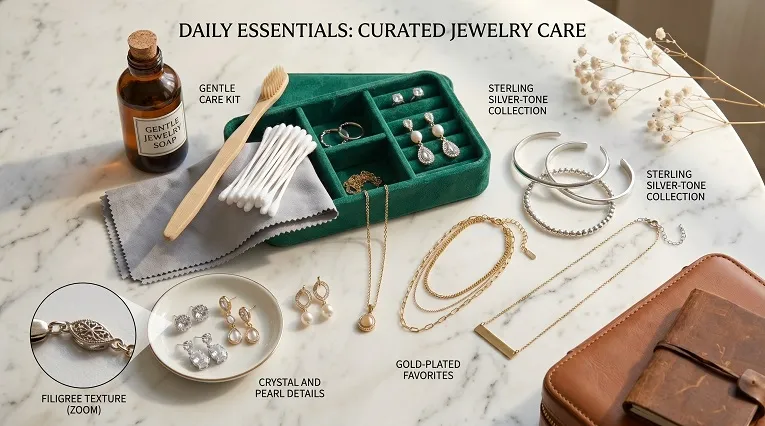
How to Clean Jewellery at Home: The Complete Care & Tarnish Prevention Guide
Fashion jewellery allows you to enjoy beautiful, stylish accessories without spending a fortune. Whether it’s a gold-plated necklace, a pair of statement earrings, a crystal bracelet, or a trendy ring, fashion jewellery can elevate any outfit. However, unlike fine jewellery made from solid gold, platinum, or precious gemstones, fashion jewellery requires special care to maintain its appearance.
Many people notice their favourite pieces becoming dull, discoloured, or tarnished after only a few months of wear. This often happens because fashion jewellery is exposed to moisture, perfumes, lotions, sweat, dust, and everyday environmental factors. The good news is that you don’t need expensive products or professional services to restore its shine.
Learning how to clean fashion jewellery at home properly can help extend the lifespan of your accessories, preserve their appearance, and save money in the long run. In this guide, you’ll discover safe cleaning methods, common mistakes to avoid, expert storage tips, and practical ways to prevent tarnishing before it starts.
What Is Fashion Jewellery?
Before you start cleaning your jewellery, it’s important to understand exactly what fashion jewellery is and why it requires a different care routine from fine jewellery.
Fashion Jewellery vs Fine Jewellery
Fine jewellery is typically made from precious metals such as gold, platinum, and sterling silver. It often contains genuine gemstones and is designed to last for generations with proper maintenance.
Fashion jewellery, sometimes called costume jewellery, is created using more affordable materials such as:
- Brass
- Copper alloys
- Zinc alloys
- Stainless steel
- Gold plating
- Silver plating
- Rhinestones
- Crystal embellishments
- Synthetic gemstones
Because these materials are less expensive, they are also more vulnerable to tarnishing, oxidation, and surface damage.
Common Materials Used in Fashion Jewellery
Most fashion jewellery contains a base metal covered by a thin decorative layer. For example:
Gold-Plated Jewellery
A thin layer of gold is applied over another metal. While attractive, the plating can wear away if cleaned incorrectly.
Silver-Plated Jewellery
Features a thin silver coating that can tarnish over time when exposed to air and moisture.
Stainless Steel Jewellery
More resistant to tarnishing and corrosion but still benefits from regular cleaning.
Crystal and Rhinestone Jewellery
Requires extra care because moisture can weaken the adhesive that secures decorative stones.
Why Different Materials Need Different Cleaning Methods
One of the biggest mistakes jewellery owners make is assuming all pieces can be cleaned the same way.
A cleaning technique that works well for stainless steel could permanently damage gold plating. Similarly, methods suitable for solid silver may loosen stones in fashion jewellery.
Understanding your jewellery’s material is the first step toward safe and effective maintenance.
Why Fashion Jewellery Becomes Dull, Tarnished, or Discoloured
If you’ve ever opened your jewellery box and found a favourite necklace looking darker than before, you’re not alone.
Tarnishing is one of the most common issues affecting fashion jewellery.
Understanding Tarnish and Oxidation
Tarnish occurs when metals react with oxygen, sulphur compounds, and moisture in the air. This process is known as oxidation.
Although tarnish doesn’t necessarily mean your jewellery is ruined, it can significantly reduce its shine and appearance.
Some metals tarnish faster than others:
- Copper-based alloys tarnish quickly
- Brass develops a darker patina over time
- Silver plating reacts with sulphur compounds
- Gold plating generally resists tarnish, but can wear away
The Effects of Moisture and Humidity
Humidity is one of the biggest enemies of fashion jewellery.
Bathrooms, kitchens, and humid climates create ideal conditions for oxidation. Even storing jewellery in a damp room can accelerate tarnishing.
Research into metal corrosion consistently shows that moisture speeds up oxidation reactions, leading to faster degradation of exposed surfaces.
How Perfumes, Lotions, and Cosmetics Cause Damage
Many beauty products contain chemicals that interact with jewellery surfaces.
Common culprits include:
- Perfume
- Hair spray
- Sunscreen
- Moisturiser
- Foundation
- Body lotion
These products can leave residue that dulls jewellery and contributes to discolouration.
A useful rule is:
Jewellery should be the last thing you put on and the first thing you take off.
The Impact of Sweat and Skin Oils
Natural body oils and perspiration also affect jewellery.
If you wear rings, necklaces, or bracelets daily, sweat can gradually build up on the surface. Over time, this buildup traps dirt and moisture, accelerating tarnish formation.
This is especially common during:
- Exercise
- Hot weather
- Outdoor activities
- Summer holidays
How to Identify Your Jewellery Material Before Cleaning
Before attempting any cleaning method, take a few moments to identify what your jewellery is made from.
This simple step can prevent accidental damage.
Gold-Plated Jewellery
Gold-plated pieces often have:
- Bright yellow finish
- Lightweight feel
- Base metal underneath
- Thin decorative coating
Because the gold layer is delicate, harsh scrubbing should be avoided.
Silver-Plated Jewellery
Silver-plated items generally have:
- Bright silver appearance
- Slightly darker tarnish spots
- Reflective finish
These pieces require gentle cleaning to preserve the silver layer.
Stainless Steel Jewellery
Stainless steel is:
- Durable
- Tarnish resistant
- Water resistant
- Easy to maintain
It’s often used in modern fashion accessories because of its strength.
Brass and Alloy Jewellery
Brass jewellery often develops:
- Greenish residue
- Brown discoloration
- Dark patches
While cleaning can restore appearance, aggressive methods may damage protective coatings.
Jewellery with Crystals and Gemstones
Fashion jewellery frequently includes:
- Rhinestones
- Cubic zirconia
- Crystals
- Decorative stones
These embellishments may be glued rather than mechanically set, meaning excessive moisture can weaken the adhesive over time.
Cleaning Supplies You Need at Home
The safest jewellery cleaning kit is probably already in your home.
You don’t need expensive equipment to restore shine and remove dirt effectively.
Essential Cleaning Supplies
Prepare the following:
- Microfiber cloth
- Soft toothbrush
- Mild dish soap
- Cotton swabs
- Small bowl
- Soft towel
- Lukewarm water
These items are gentle enough for most types of fashion jewellery.
Why Microfiber Cloths Work Best
Microfiber cloths are highly effective because they:
- Remove oils
- Lift dirt particles
- Reduce scratching
- Restore shine
Unlike paper towels, they do not create tiny abrasions on delicate surfaces.
Choosing the Right Soap
A mild dish soap is ideal because it removes grease without damaging finishes.
Avoid products containing:
- Bleach
- Ammonia
- Strong acids
- Abrasive particles
Tools to Avoid
Never use:
- Steel wool
- Scouring pads
- Hard-bristle brushes
- Industrial cleaners
These products can permanently damage plating and decorative finishes.
The goal is always gentle cleaning, not aggressive scrubbing.
Step-by-Step Guide: How to Clean Jewellery at Home
Now that you’ve identified your jewellery material and gathered the correct supplies, it’s time to clean your pieces safely.
Many people search for complicated cleaning hacks, but the truth is that the safest method is usually the simplest one. Professional jewellery care experts generally recommend gentle cleaning rather than harsh treatments, especially for plated or costume jewellery.
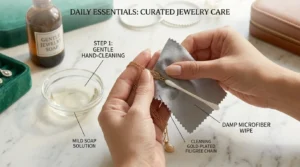
Step 1: Prepare a Gentle Cleaning Solution
Fill a small bowl with lukewarm water.
Add 2-3 drops of mild dish soap and stir gently.
Avoid hot water because excessive heat may weaken adhesives used in fashion jewellery and could affect certain decorative coatings.
Step 2: Remove Surface Dirt
Dip a microfiber cloth into the solution and gently wipe the jewellery surface.
For necklaces and bracelets, pay special attention to:
- Clasps
- Chain links
- Decorative details
- Areas that touch the skin frequently
These areas usually collect the most oils and dirt.
Step 3: Clean Hard-to-Reach Areas
Use a soft toothbrush or cotton swab to remove buildup from:
- Small crevices
- Stone settings
- Decorative engravings
- Chain connections
Apply only light pressure.
One of the most common reasons gold-plated jewellery loses its finish is excessive scrubbing.
Step 4: Remove Soap Residue
If the jewellery is water-safe, wipe it with a clean damp cloth.
Avoid soaking pieces for extended periods.
For jewellery with glued stones, simply wipe away soap residue instead of rinsing directly under running water.
Step 5: Dry Thoroughly
Place the jewellery on a soft towel.
Pat dry gently.
Allow it to air dry completely before storing it.
Even a small amount of trapped moisture can contribute to oxidation over time.
A Real-World Example
Imagine you wear a gold-plated necklace three times per week. Over several months, natural skin oils, perfume residue, and dust build up on the surface. Without cleaning, the necklace gradually loses its shine.
A simple five-minute cleaning session once every few weeks can dramatically improve its appearance and help preserve the plating.
This is why learning how to clean fashion jewellery at home is not only about appearance but also about extending the lifespan of your accessories.
How to Clean Gold-Plated Jewellery Safely
Gold-plated jewellery is among the most popular forms of fashion jewellery because it provides the appearance of real gold at a much lower price.
However, it is also one of the easiest materials to damage if cleaned incorrectly.
Understanding Gold Plating
Gold-plated jewellery contains a very thin layer of gold applied over another metal.
The gold layer is often measured in microns and can wear away through:
- Friction
- Harsh cleaning
- Chemical exposure
- Frequent water contact
Because the layer is so thin, gentle care is essential.
Safe Cleaning Method
For routine maintenance:
- Wipe with a dry microfiber cloth after each use.
- Use lukewarm water and mild soap when deeper cleaning is needed.
- Clean gently with a soft cloth.
- Dry completely before storage.
This method removes dirt while protecting the plated surface.
What You Should Never Do
Avoid:
- Toothpaste
- Baking soda scrubs
- Abrasive brushes
- Silver polish
- Ultrasonic cleaners
Although many online tutorials recommend these methods, they can gradually remove the gold layer.
Expert Tip
A useful habit is to wipe gold-plated jewellery immediately after wearing it.
Removing sweat, perfume residue, and skin oils takes less than a minute but can significantly increase the lifespan of the plating.
How Often Should Gold-Plated Jewellery Be Cleaned?
For regular wear:
- Light wiping after every use
- Gentle cleaning every 2-4 weeks
- Deep inspection every 2-3 months
This routine helps maintain shine without excessive cleaning.
How to Clean Silver-Plated Jewellery
Silver-plated jewellery offers a bright, elegant appearance, but tarnishing is more common than with gold-plated pieces.
Why Silver-Plated Jewellery Tarnishes
Silver reacts naturally with sulphur compounds found in the environment.
Over time, this reaction creates a dark layer on the surface.
Factors that accelerate tarnish include:
- Humidity
- Air pollution
- Sweat
- Cosmetics
- Improper storage
Safe Cleaning Process
For light tarnish:
- Use a microfiber cloth to polish gently.
- Wipe away surface dirt.
- Use mild soapy water if needed.
- Dry completely.
For moderate tarnish:
Use a jewellery polishing cloth specifically designed for silver-plated items.
What to Avoid
Many people attempt to remove tarnish using aggressive homemade remedies.
Avoid:
- Steel wool
- Abrasive powders
- Rough scrubbing pads
These products can scratch the silver layer and expose the underlying metal.
Long-Term Prevention
Prevention is often more effective than cleaning.
Store silver-plated jewellery:
- In a dry location
- Away from direct sunlight
- Inside anti-tarnish pouches
- In sealed jewellery containers
Reducing exposure to air slows oxidation significantly.
How to Clean Jewellery with Stones and Crystals
Jewellery that contains decorative stones requires additional caution.
The cleaning method depends not only on the metal but also on how the stones are attached.
Crystal Jewellery
Crystal jewellery often accumulates fingerprints, dust, and cosmetic residue.
To clean:
- Use a slightly damp microfiber cloth
- Wipe each crystal individually
- Dry immediately
This helps maintain sparkle without risking damage.
Rhinestone Jewellery
Rhinestones are commonly secured with adhesive.
Avoid:
- Soaking
- Extended water exposure
- Harsh cleaners
Instead, use a cotton swab slightly dampened with water.
Jewellery with Glued Stones
One of the biggest mistakes people make is submerging jewellery with glued stones.
Over time, water can weaken the adhesive and cause stones to loosen or fall out.
Professional Tip
When cleaning jewellery with stones, focus on cleaning the surface rather than attempting deep soaking.
A gentle surface-cleaning approach is almost always safer.
Case Study
Consider two identical crystal necklaces.
One is cleaned monthly using gentle wiping.
The other is soaked regularly in water-based solutions.
After a year, the soaked necklace often shows loose stones, weakened adhesive, and reduced sparkle.
This demonstrates why careful maintenance matters just as much as cleaning itself.
Home Remedies: What Works and What Doesn’t
The internet is full of DIY jewellery cleaning hacks.
Some are useful.
Others can permanently damage fashion jewellery.
Soap and Water
Effectiveness: Excellent
This remains the safest method for most fashion jewellery.
Benefits:
- Removes oils
- Removes dirt
- Low risk
- Widely available
Microfiber Polishing
Effectiveness: Excellent
Perfect for routine maintenance.
Benefits:
- No chemicals required
- Safe for plating
- Quick and effective
Baking Soda
Effectiveness: Limited
While baking soda works well on some metals, it can be too abrasive for plated jewellery.
Use extreme caution.
Vinegar
Effectiveness: Situational
Vinegar is acidic and may damage certain coatings.
It should never be considered a universal cleaning solution.
Toothpaste
Effectiveness: Poor
Many people still recommend toothpaste for jewellery cleaning.
However, toothpaste contains abrasive particles designed to clean teeth.
These particles can scratch delicate finishes and remove plating over time.
The Safest Approach
When in doubt:
Choose the gentlest method possible.
The goal is preserving jewellery, not aggressively restoring it.
Fashion jewellery is designed to look beautiful, but its protective coatings are often delicate.
A conservative cleaning routine almost always produces the best long-term results.
The Biggest Jewellery Cleaning Mistakes
Many people damage their jewellery while trying to clean it. In most cases, the damage happens gradually, making it difficult to notice until the plating wears off, stones become loose, or tarnishing appears more frequently.
Avoiding these mistakes can help your jewellery last much longer.
Using Harsh Chemicals
Products such as bleach, ammonia-based cleaners, and strong household detergents should never be used on fashion jewellery.
These chemicals can:
- Strip protective coatings
- Discolour metal surfaces
- Weaken adhesives
- Accelerate corrosion
Even a single cleaning session with the wrong product can cause irreversible damage.
Scrubbing Too Hard
A common misconception is that more pressure equals better cleaning.
In reality, excessive scrubbing can:
- Remove gold plating
- Scratch silver finishes
- Damage crystal surfaces
- Create dull spots
Always use a gentle touch when cleaning.
Soaking Jewellery for Too Long
Many online tutorials recommend soaking jewellery for extended periods.
While this may be suitable for some solid metal pieces, fashion jewellery often contains adhesives and coatings that do not react well to prolonged water exposure.
Limit contact with water whenever possible.
Storing Jewellery While Damp
Even small amounts of moisture trapped inside storage containers can contribute to oxidation.
Always ensure jewellery is completely dry before putting it away.
Ignoring Routine Maintenance
Many people only clean their jewellery when it already looks dirty.
Regular maintenance prevents dirt buildup and reduces the need for deeper cleaning later.
Think of jewellery care like skincare. Small consistent habits are usually more effective than occasional intensive treatments.
How Often Should You Clean Jewellery?
One content gap we found in competitor articles is the lack of a clear cleaning schedule.
The truth is that different pieces require different levels of maintenance.
Daily Wear Jewellery
Examples:
- Everyday rings
- Favourite necklaces
- Frequently worn bracelets
Recommended care:
- Quick wipe after each use
- Gentle cleaning every 2 to 4 weeks
These items collect sweat, oils, and residue more quickly than occasional-wear pieces.
Weekly Wear Jewellery
Examples:
- Work accessories
- Weekend jewellery
- Social event pieces
Recommended care:
- Wipe after wearing
- Clean every 4 to 6 weeks
Special Occasion Jewellery
Examples:
- Wedding accessories
- Formal jewellery
- Seasonal collections
Recommended care:
- Clean before storage
- Inspect every few months
Jewellery Cleaning Schedule Table
| Jewellery Type | Quick Wipe | Full Clean |
|---|---|---|
| Daily Wear | After Use | Every 2-4 Weeks |
| Weekly Wear | After Use | Every 4-6 Weeks |
| Occasion Wear | Before Storage | Every 2-3 Months |
Following a schedule helps prevent severe tarnish and reduces wear caused by aggressive cleaning.
How to Prevent Tarnishing and Discolouration
Cleaning jewellery is important, but prevention is even more valuable.
The less tarnish that forms, the less cleaning your jewellery will require.
Store Jewellery Properly
Storage is one of the biggest factors affecting jewellery lifespan.
Ideally, jewellery should be stored:
- In a cool location
- Away from direct sunlight
- In low humidity
- Inside separate compartments
Keeping pieces separated also prevents scratches.
Use Anti-Tarnish Bags
Anti-tarnish bags and pouches help reduce exposure to oxygen and moisture.
These inexpensive accessories can dramatically slow tarnish formation.
For jewellery collectors, they are one of the best long-term investments.
Keep Jewellery Away from Moisture
Remove jewellery before:
- Showering
- Swimming
- Exercising
- Washing dishes
Water itself is not always the problem. The minerals, chemicals, and moisture that remain afterward often contribute to oxidation.
Follow the “Last On, First Off” Rule
Apply:
- Perfume
- Hair spray
- Makeup
- Moisturiser
Before putting on jewellery.
This simple habit reduces chemical exposure and helps preserve decorative finishes.
The Role of Humidity
Many people underestimate humidity.
In humid environments, tarnishing occurs much faster because moisture speeds up oxidation reactions.
Adding silica gel packets to jewellery boxes can help reduce excess moisture.
This simple storage upgrade is rarely mentioned by competitors but can significantly extend jewellery lifespan.
How to Make Jewellery Last Longer
Fashion jewellery may not be designed to last forever, but proper care can dramatically increase its lifespan.
Many jewellery owners unknowingly shorten the life of their accessories through daily habits.
Build a Simple Maintenance Routine
A few minutes of care each month can make a noticeable difference.
Suggested routine:
Weekly:
- Quick inspection
- Gentle wipe-down
Monthly:
- Light cleaning
- Check clasps and settings
Quarterly:
- Deep inspection
- Storage review
Know When to Remove Jewellery
Take jewellery off during:
- Exercise
- Housework
- Swimming
- Gardening
- Sleeping
These activities expose jewellery to friction, chemicals, and moisture.
Rotate Your Collection
Wearing the same pieces every day accelerates wear.
Rotating jewellery allows pieces to remain in better condition for longer.
It also helps preserve plating on frequently worn accessories.
Invest in Proper Storage
A quality jewellery box with separate compartments provides:
- Better organisation
- Reduced scratching
- Improved moisture control
- Longer jewellery lifespan
Think Long Term
The goal is not simply to keep jewellery clean.
The goal is to protect its appearance for as long as possible.
Many people replace fashion jewellery every year because of tarnish and wear. With proper care, many pieces can maintain their beauty for several years.
Frequently Asked Questions
Can you clean fashion jewellery with water?
Yes. Most fashion jewellery can be cleaned with small amounts of lukewarm water and mild soap. However, avoid prolonged soaking, especially if the jewellery contains glued stones or delicate plating.
How do you remove tarnish from costume jewellery?
Use a microfiber cloth and gentle cleaning methods. Avoid abrasive cleaners that may remove plating or damage finishes.
How often should fashion jewellery be cleaned?
Daily wear pieces should be wiped after use and cleaned every 2 to 4 weeks. Less frequently worn items can be cleaned every few months.
Is baking soda safe for gold-plated jewellery?
Generally, no. Baking soda can be abrasive and may gradually wear away delicate gold plating.
What is the safest way to clean jewellery at home?
The safest method is to use a microfiber cloth with lukewarm water and mild dish soap. This removes dirt and oils while minimizing the risk of damage.
Conclusion: How to Clean Jewellery at Home
Fashion jewellery adds style, personality, and versatility to any wardrobe, but maintaining its appearance requires a little care and attention. The good news is that you do not need expensive products or professional services to keep your favourite pieces looking their best.
The most effective approach combines gentle cleaning, proper storage, and preventative maintenance. A microfiber cloth, mild soap, and a few minutes of care can often achieve better results than aggressive cleaning methods that risk damaging delicate plating and decorative finishes.
Remember the key principles:
- Clean gently.
- Avoid harsh chemicals.
- Dry thoroughly.
- Store correctly.
- Prevent tarnish before it starts.
By following these simple habits, you can extend the lifespan of your jewellery, maintain its shine, and reduce the need for replacements.
Whether you own gold-plated necklaces, silver-tone bracelets, statement earrings, or crystal accessories, the techniques in this guide will help keep them looking beautiful for years to come.
Start by inspecting one piece of jewellery today, give it a quick clean, and create a simple maintenance routine. Your future self and your jewellery collection will thank you.