
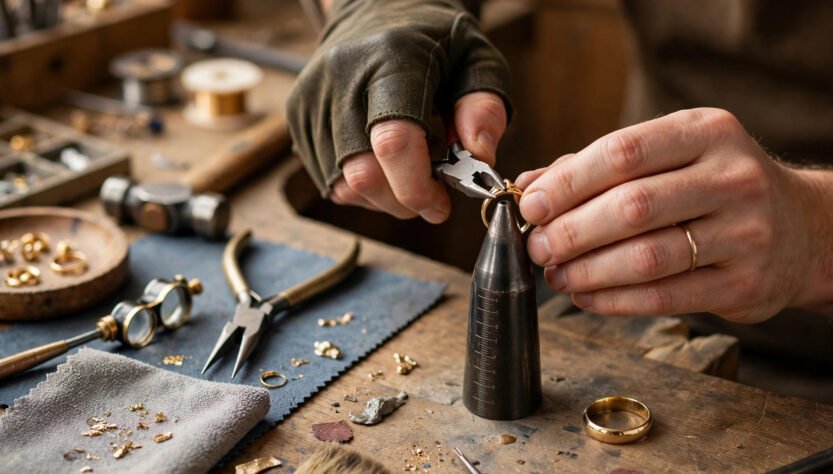
A ring that does not fit is a common problem, and resizing is usually the fix. In the UK, a simple resize typically costs between £20 and £200, depending on the metal, the design, and how many sizes the ring must move. This guide gives you honest price ranges by metal, the hidden costs most guides skip, realistic turnaround times, and the rings that cannot be resized at all.
The short answer is simple. A plain silver or gold band resized by one or two sizes is the cheapest job. A stone-set, platinum, or eternity ring costs more. And some rings, such as tungsten and titanium, cannot be resized in the usual way at all. Get a written quote before you hand your ring over, because no two jobs are priced the same.
Can a Ring Be Resized Up or Down: The Short Answer by Ring Type
Most rings made from gold, silver, platinum, or palladium can be resized up or down. The jeweller cuts the band, adds or removes a small piece of metal, then joins, polishes, and finishes it. The result should look and feel like the original ring.
Sizing down is usually the simpler job. The jeweller removes a section of the band and joins the two ends. Sizing up needs extra metal, so it usually costs more. A half-size change is a small job. A change of two or three sizes is a bigger job, and most jewellers suggest keeping changes within about three sizes. Larger changes can weaken the band or change the shape of the ring.
Some rings need a different answer. Full eternity bands, rings with stones all the way around, and rings made from tungsten or titanium often cannot be resized. The next sections explain why, and what to do instead.
How Resizing Works: Sizing Up, Sizing Down and Sizing Beads
Sizing down works like this. The jeweller marks the band, cuts out a small section, joins the ends with solder, then cleans and polishes the ring. The join should be invisible on a well finished ring.
Sizing up works in two ways. For a small increase, usually up to half a size, the jeweller can stretch the band. For a larger increase, the jeweller cuts the band and solders in an extra piece of matching metal. Stretching is quicker and cheaper, but it is not suitable for every ring, and it cannot add much size.
Sizing beads are a third option. These are two small metal balls soldered inside the band. They grip the finger and stop the ring from spinning. Beads suit a ring that needs only about half a size of adjustment, or a ring with a heavy top that keeps turning. Fitting beads typically costs around £30 to £50. They are permanent, but a jeweller can remove them later if your size changes again.
Which Rings Cannot Be Resized: Tungsten, Titanium, Eternity Bands and Pave
Tungsten carbide rings cannot be resized. The metal is too hard to cut and join in the usual way. The same is true of titanium rings. If a tungsten or titanium ring no longer fits, the usual answer is an exchange or a remake, not a resize. This is worth knowing before you buy, because these metals are popular for men’s wedding bands.
Stainless steel rings are also very hard to resize, and many jewellers will not attempt it. Fashion jewellery rings made from plated base metal are usually not worth resizing either. The plating can be damaged by the heat, and the cost of the work can exceed the value of the ring.
Full eternity bands cannot be resized in the usual way. The stones run all the way around the band, so there is no plain section to cut. A jeweller may suggest a remake, or a sizing aid instead. Pave-set rings, where small stones are held by tiny beads of metal, can sometimes be resized, but only by a specialist, and the risk of loosening stones is real. Ask the jeweller to check the stones before and after the work.
For more on how these metals behave, see what fashion jewellery is made of.
How Much Ring Resizing Costs in the UK: Price Table by Metal
There is no single fixed price for resizing a ring. The ranges below are typical UK prices for a simple band resized by one or two sizes, drawn from published UK jeweller guides. They are a guide, not a quote. Your final price depends on the design, the stones, the size change, and the jeweller.
| Metal | Typical cost | Notes |
|---|---|---|
| Silver | £20 to £50 | Softest metal, quickest job |
| 9ct gold | £40 to £80 | Most common gold for resizing |
| 18ct gold | £50 to £120 | Higher gold content, more material cost |
| 22ct gold | £60 to £200 | Very soft, needs care in handling |
| Platinum | £60 to £200 | Dense metal, needs specialist tools |
| Palladium | £55 to £130 | Similar working properties to platinum |
An engagement ring typically costs between £45 and £150 to resize, depending on the metal and the stone setting. A plain wedding band sits at the lower end of its metal range. A fully stone-set ring sits at the top, and some jewellers will only quote after seeing the ring in person.
Direction matters. Sizing down is usually cheaper, because no extra metal is needed. Sizing up costs more, because the jeweller adds metal and does more work. A change of one size costs less than a change of three sizes. London prices tend to run higher than prices elsewhere in the UK, because rents and overheads are higher.
One cost that often surprises people: nothing. Many retailers resize for free within a set period after purchase, often 60 to 90 days. If you bought the ring recently, check with the original retailer before paying anyone else.
Hidden Costs: Rhodium Re-Plating, Polishing and Stone Checks
The headline price is not always the full price. These are the extras that can appear on the bill.
White gold rings usually need rhodium re-plating after resizing. The heat of the work dulls the bright white coating, so the ring is re-plated to restore its colour. This typically adds around £40 to £50. Some jewellers include it in the quoted price, and some do not. Ask before you agree.
Polishing is usually included. Most jewellers clean and polish the ring as part of the job, so it comes back looking new. If a quote seems very cheap, check whether polishing is included or charged separately.
Stone checks and resetting can add to the bill. A good jeweller checks every stone before the work and again after it. If a stone is loose, it may need resetting, which is charged separately. Rings with many small stones take longer to check, and that time is reflected in the price.
VAT is another point to confirm. Most UK jeweller quotes include VAT, but not all do. Ask whether the quoted price includes VAT, so you are not surprised when you collect the ring.
How Long Resizing Takes: Same-Day, Days and Weeks
A simple plain band can often be ready in three to seven working days. Some high-street jewellers offer a same-day service for a plain band, but do not count on it. It depends on the workshop queue and the complexity of the ring.
Most standard jobs take around one working week. Complex rings, such as stone-set engagement rings or eternity bands that need specialist work, can take one to three weeks. If the ring must be sent away to a specialist workshop, allow extra time for postage both ways.
Allow more time if you need the ring for a specific date, such as a wedding. Tell the jeweller the date when you hand the ring in, and ask for the collection date in writing. Rush services exist at some jewellers, but they cost extra.
How Resizing Affects Hallmarks, Engraving and Warranties
Resizing can affect the hallmark. UK hallmarks are struck into the metal, and if the jeweller cuts through the hallmark, it may need to be re-applied. Ask the jeweller whether the hallmark will be affected and whether re-hallmarking is included in the price.
Engraving inside the band can also be affected. If the cut passes through an inscription, the engraving may be partly lost, and re-engraving is a separate job. Mention any engraving when you hand the ring in, so the jeweller can plan around it.
Warranties need a check too. Some retailers only honour a warranty if they do the resizing themselves. Having the ring resized elsewhere can void it. Ask the original retailer about this before you use another jeweller. Keep the receipt and any valuation documents with the ring, and ask for a written record of the work done.
What to Ask a UK Jeweller Before You Hand Over Your Ring
- How much will it cost, in writing, and what exactly is included?
- Does the price include VAT, polishing, and rhodium re-plating if needed?
- How many sizes will the ring move, and is that change safe for this design?
- Will the hallmark or any engraving be affected?
- How will the stones be protected and checked before and after the work?
- When can I collect it, and is that date confirmed in writing?
- What happens if a stone loosens or the ring is damaged during the work?
- Does resizing elsewhere affect my warranty with the original retailer?
- Is a free resize available because I bought the ring recently?
A jeweller who answers these questions clearly, and puts the price and date in writing, is a jeweller you can trust. Be wary of any jeweller who quotes a firm price without seeing the ring, because that estimate often proves wrong once the ring is examined.
Alternatives When Resizing Is Not Possible: Exchange, Remake and Sizing Aids
If your ring cannot be resized, you still have options. The best one depends on how the ring was bought and what it is made from.
Exchange is the simplest option. If the ring is new and within the retailer’s returns period, ask to exchange it for the correct size. This costs nothing, and it is the usual answer for tungsten and titanium rings bought recently.
Remake is the option for rings that cannot be resized and cannot be exchanged. The jeweller makes a new ring in the correct size, sometimes reusing the stones from the old one. This costs more than a resize, but it keeps the stones and the design you chose.
Sizing aids are the cheapest fix. Ring guards and adjusters are small plastic or metal inserts that sit inside the band and take up space. They cost around £5 to £15, can be fitted at home, and can be removed later. They suit a ring that is only slightly too large, or a finger that changes size with the seasons. They are not a permanent solution, and they do not suit every design, but they are worth trying before paying for a remake.
Frequently Asked Questions About Ring Resizing
Can any ring be resized?
No. Gold, silver, platinum, and palladium rings can usually be resized. Tungsten carbide, titanium, and stainless steel rings usually cannot, and full eternity bands cannot be resized in the usual way.
How many sizes can a ring go up or down?
Most jewellers suggest keeping changes within about three sizes. Larger changes can weaken the band or change the shape of the ring. A change of half a size or one size is a small, safe job.
Is it cheaper to resize a ring up or down?
Sizing down is usually cheaper, because the jeweller removes metal rather than adding it. Sizing up needs extra metal, so it costs more.
Does resizing weaken a ring?
A well done resize on a suitable ring does not weaken it. Problems arise when a ring is resized by too many sizes, or resized more than once. A good jeweller will tell you if a change is too large for the ring.
Will resizing affect my hallmark?
It can, if the cut passes through the hallmark. Ask the jeweller before the work starts, and ask whether re-hallmarking is included in the price.
How long does ring resizing take in the UK?
A simple plain band often takes three to seven working days. Most standard jobs take around one working week. Complex or stone-set rings can take one to three weeks.
Conclusion
Ring resizing in the UK typically costs between £20 and £200. A plain silver band is the cheapest job, and a stone-set platinum ring is the most expensive. Sizing down usually costs less than sizing up, and white gold often needs rhodium re-plating on top. Always get a written quote that states what is included, and check whether a free resize is available from the retailer you bought from.
If your ring cannot be resized, do not force it. An exchange, a remake, or a simple sizing aid will fit the ring to your finger without risking the piece. The right fix is the one that keeps the ring safe and wearable for years.