
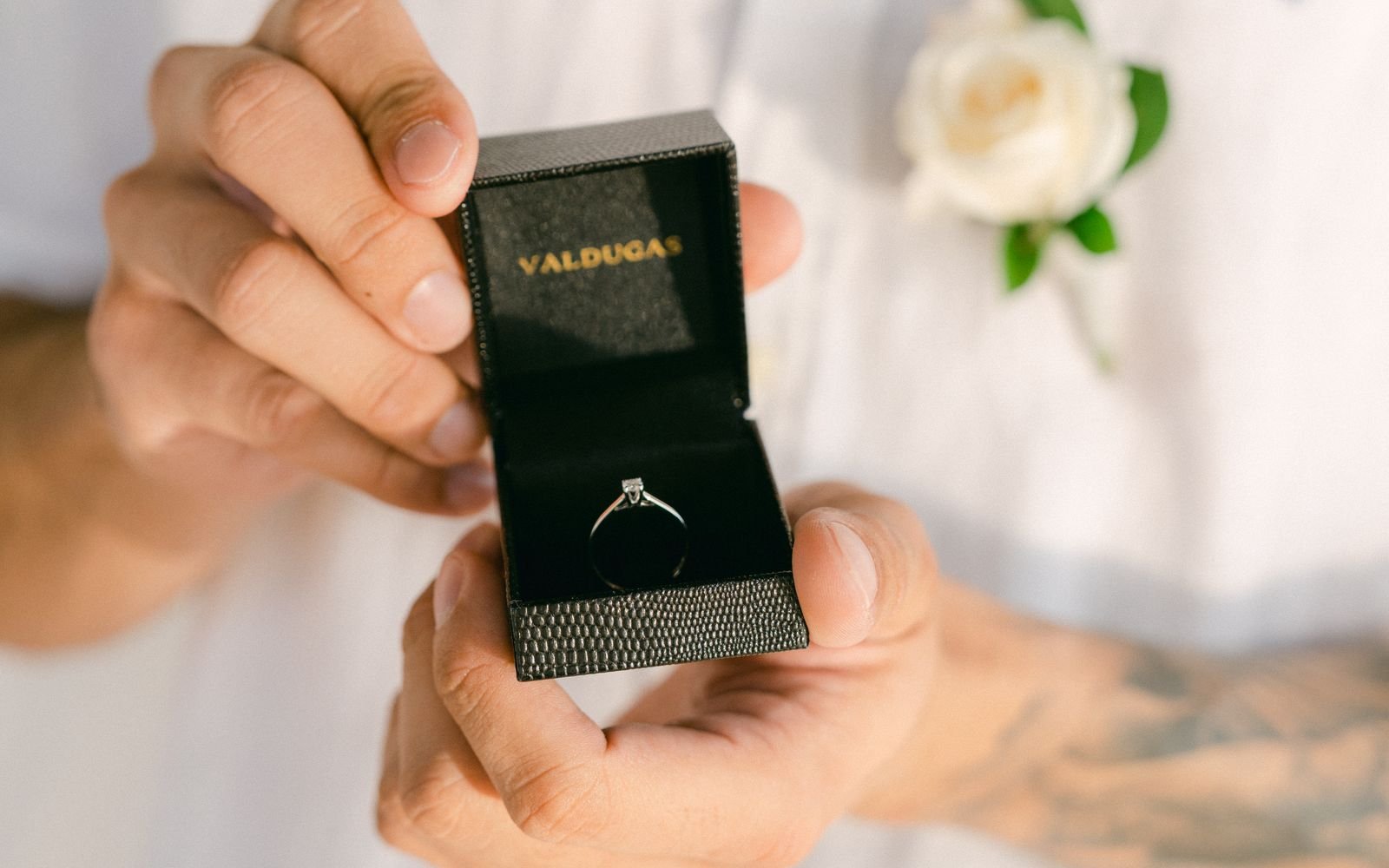
Quick answer: The most common proposal mistakes are proposing before you know your partner is ready for marriage, guessing the ring size and style instead of finding out discreetly, choosing a setting that suits your idea of romance rather than theirs, and overplanning the moment to the point where small details go wrong. Most successful proposals come down to knowing your partner well, getting the ring details right in advance, and keeping the moment personal rather than performative.
A proposal only happens once with any given person, which is exactly why it carries so much pressure. Most proposal mistakes are not dramatic disasters. They are small oversights, an ill fitting ring, a location that does not suit your partner’s personality, a moment rushed or over rehearsed, that quietly take the shine off what should be a genuinely happy memory.
This guide covers the most common mistakes people make when proposing, why they happen, and how to avoid each one without losing the spontaneity that makes a proposal feel special.
Mistake 1: Proposing Without Confirming Readiness
One of the most significant mistakes is assuming your partner is ready for marriage simply because you are. Most successful proposals follow conversations, sometimes months of them, about the future, finances, and what marriage would actually look like for both people. A surprise proposal built on genuine mutual understanding lands very differently to one built on assumption.
Mistake 2: Guessing the Ring Size and Style
Buying a ring in the wrong size is common, and resizing is usually straightforward, so this is rarely a disaster on its own. The bigger mistake is guessing the style without paying attention to what your partner already wears. Look at their existing jewellery collection. Do they lean toward simple and classic pieces, or bold and modern ones? Do they wear yellow gold, white gold, rose gold or silver day to day? A ring that matches their established taste, rather than your personal preference, tends to be worn and loved for decades rather than quietly swapped for something else after the wedding.
Mistake 3: Choosing a Location That Suits You, Not Them
A grand public gesture in front of a crowd feels wonderful to some people and deeply uncomfortable to others. The best location is the one that matches your partner’s personality, not the one that photographs best. A quiet, meaningful spot with personal significance, such as where you had your first date, often means more than an elaborate setup in a place with no shared history.
Mistake 4: Overcomplicating the Plan
Elaborate proposals involving multiple locations, hidden cameras, coordinated friends and family, or precisely timed logistics introduce far more that can go wrong. Weather changes, traffic, and last minute nerves can all derail an intricate plan. A simpler proposal, built around one meaningful detail rather than ten moving parts, is usually both easier to execute and more memorable.
Mistake 5: Rehearsing a Long Speech
A lengthy, heavily rehearsed speech can make the moment feel more like a performance than a genuine question. A short, sincere sentence or two, followed by the question itself, tends to feel far more natural than a memorised paragraph. The ring and the gesture of getting down on one knee already communicate the sincerity of the moment.
Mistake 6: Poor Timing
Proposing during a stressful period, such as a demanding week at work, a family conflict, or immediately before or after another major life event, can overshadow the moment even with the best intentions. Pairing the proposal with a date that already carries meaning, such as an anniversary, tends to work better than a randomly chosen day.
Mistake 7: Telling Too Many People in Advance
It is natural to want support and advice while planning, but telling a wide circle of friends or family before the proposal itself risks the news reaching your partner first, or creating pressure around the timeline. Keep the circle small, and make sure your partner is the first person in your shared social circle to see the ring.
Mistake 8: Not Insuring the Ring Before the Big Day
An engagement ring is often one of the most valuable single items a person will own, yet many couples do not think about insurance until after the proposal. Speak to a specialist jewellery insurer or check whether your home contents policy covers the ring’s value before the day itself, particularly if the proposal involves travel or an outdoor setting.
Quick Reference: Common Mistakes and Simple Fixes
| Mistake | Simple Fix |
|---|---|
| Guessing ring size | Borrow an existing ring, or ask a trusted friend or family member for help |
| Wrong style | Study their current jewellery before shopping |
| Overcomplicated plan | Focus on one meaningful detail rather than several moving parts |
| Long speech | Keep it to a sentence or two, spoken from the heart |
| Poor timing | Choose a day already meaningful to both of you |
| Uninsured ring | Check insurance cover before the proposal, not after |
Frequently Asked Questions
How do I find out my partner’s ring size without them knowing?
Borrow an existing ring they wear on the correct finger and take it to a jeweller for measuring, or ask a close friend or family member who can find out discreetly. Our guide to finding a ring size at home also covers simple methods you can use with a piece they already own.
What if the ring size is wrong on the day?
Most jewellers offer free or low cost resizing within a set period after purchase, so a size that is slightly off is rarely a serious problem as long as the ring can still be safely presented and worn temporarily.
Should I ask permission from a parent before proposing?
This is entirely down to personal and family tradition rather than any fixed rule. Some couples value the gesture, others do not follow it at all, so it is worth considering what matters to your partner and their family specifically.
Is it a mistake to propose without a ring?
Not proposing with a ring at all is one of the most commonly cited regrets among people who have proposed, since the ring adds a tangible symbol to the moment. If timing genuinely does not allow for a ring in advance, choosing one together shortly afterwards is a reasonable alternative.
How long should a proposal speech be?
A short, sincere sentence or two is generally more effective than a long speech. The moment itself, along with the ring, already carries most of the emotional weight.
Final Thoughts
Most proposal mistakes come from overthinking the performance and underthinking the person. Knowing your partner’s taste, choosing a location and timing that suits them, and keeping the moment simple and sincere will matter far more than an elaborate production. If you are still deciding on the ring itself, our guide on choosing the perfect diamond engagement ring covers the four Cs in detail, and our guide to finding a ring size at home will help you get the fit right before the big moment.