
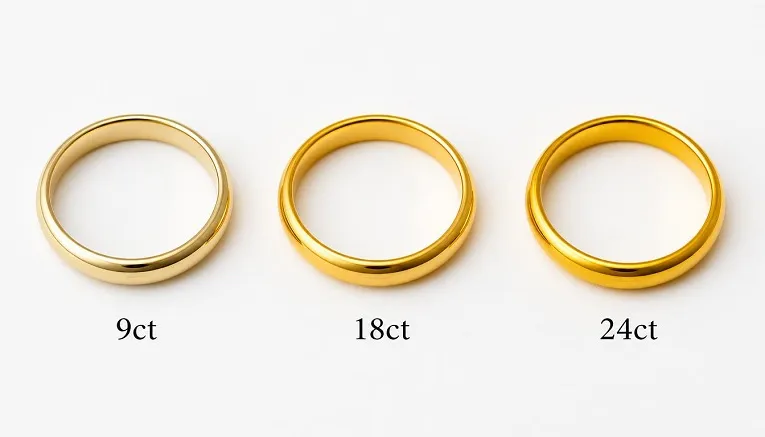
If you have ever stood in front of a jewellery counter staring at three rings that all look like gold but carry three different price tags, you already know the problem. The number stamped inside the band, whether it is 375, 750 or 999, tells you exactly how much real gold is in that piece, and it changes everything from the colour to the price to how well it survives your daily life.
The short answer: 9ct gold is the most affordable and toughest choice for everyday jewellery, 18ct gold gives you a richer colour and more gold content for special pieces like engagement rings, and 24ct gold is pure gold that is better suited to investment bars and ceremonial pieces than anything you plan to wear often. The right pick depends on your budget, your skin, and how often the piece leaves your jewellery box.
This guide breaks down what each carat actually means, how they compare side by side, and which one fits your lifestyle.
What Does Gold Carat Actually Mean?
Carat is a measurement of gold purity, based on a scale of 24 parts. Pure gold equals 24 parts gold out of 24, so it is labelled 24ct. Anything below that number contains a mix of pure gold and other metals, known as alloys.
Here is the maths in plain terms. Take the carat number, divide it by 24, then multiply by 100 to get the percentage of pure gold:
- 9ct gold: 9 ÷ 24 = 37.5% pure gold
- 18ct gold: 18 ÷ 24 = 75% pure gold
- 24ct gold: 24 ÷ 24 = 99.9% pure gold (rarely a full 100%, due to trace impurities)
Jewellers also refer to this as “fineness,” shown as a number out of 1,000. That is why you will see 375, 750 and 999 stamped inside rings and bracelets instead of the carat number itself. Pure gold on its own is too soft to hold its shape in daily wear, which is exactly why alloys such as copper, silver and zinc get mixed in. The alloy metals are what give lower carat gold its extra strength, and they are also responsible for small differences in colour between one carat and the next.
9ct Gold Explained
9ct gold is the carat most commonly used in British jewellery. It contains 37.5% pure gold, with the remaining 62.5% made up of alloy metals such as copper, silver or palladium, depending on whether you are buying yellow, rose or white gold.
Because it has the highest proportion of alloy metal, 9ct gold is noticeably harder and more scratch resistant than higher carats. That makes it a practical option for pieces you wear every single day, including wedding bands, hoop earrings and chains that get knocked around during normal life.
Advantages of 9ct gold
- Most affordable of the common gold carats, since it contains the least pure gold
- Highly durable and resistant to scratching, denting and bending
- Widely available and easy to find in UK jewellery shops
- Comes in yellow, white and rose gold, with rose gold showing a noticeably coppery tone
Disadvantages of 9ct gold
- Paler colour compared with higher carats, particularly in yellow gold
- More prone to tarnishing over time because of the higher alloy content
- Higher risk of skin irritation for people with metal sensitivities, since the alloy makes up a larger share of the piece
- Lower resale value, as it contains less recoverable gold by weight
18ct Gold Explained
18ct gold sits at 75% pure gold, with the remaining quarter made up of alloy. This is the carat most associated with fine jewellery and diamond engagement rings, and it is easy to spot by its 750 hallmark.
The higher gold content gives 18ct pieces a deeper, warmer yellow tone that many people associate with traditional gold jewellery. It is softer than 9ct, so it can pick up surface scratches more easily, but it still holds up well to regular wear with reasonable care.
Advantages of 18ct gold
- Richer, more saturated colour than 9ct gold
- Higher pure gold content, so pieces tend to hold their value better over time
- Generally kinder to sensitive skin, since less alloy metal is present
- Considered the standard for fine jewellery and heirloom pieces
Disadvantages of 18ct gold
- More expensive than 9ct gold for the same design and weight
- Softer than 9ct, so it needs a little more care to avoid scratches
- Less widely stocked in high street fashion jewellery compared with 9ct
24ct Gold Explained
24ct gold is as close to pure gold as jewellery purity gets, typically 99.9% pure. It carries a deep, warm yellow colour that is instantly recognisable, and because there is virtually no alloy metal present, it does not tarnish.
The catch is durability. Pure gold is extremely soft, which means 24ct pieces bend, scratch and lose their shape far more easily than 9ct or 18ct. For this reason, 24ct gold shows up far more often in investment bars, coins and ceremonial jewellery than in rings or bracelets meant for daily wear.
Advantages of 24ct gold
- Highest possible gold content and purity
- Deepest, richest colour of the three carats
- Does not tarnish, since there is little to no reactive alloy metal
- Holds strong intrinsic value, making it a common choice for gold bars and coins
Disadvantages of 24ct gold
- Very soft and easily scratched, dented or bent
- Impractical for rings, bracelets or any jewellery worn regularly
- Most expensive of the three by a clear margin
- Limited design options, since intricate settings are harder to create in soft metal
9ct vs 18ct vs 24ct Gold: Quick Comparison Table
| Feature | 9ct Gold | 18ct Gold | 24ct Gold |
|---|---|---|---|
| Pure gold content | 37.5% | 75% | 99.9% |
| Hallmark number | 375 | 750 | 999 |
| Colour | Pale, subtle gold tone | Rich, warm yellow | Deep, intense yellow |
| Durability | Very durable | Moderately durable | Soft, easily damaged |
| Tarnish resistance | Lower | Higher | Highest |
| Typical use | Everyday jewellery | Fine jewellery, engagement rings | Bars, coins, ceremonial pieces |
| Price | Most affordable | Mid to high | Most expensive |
| Best for sensitive skin | Sometimes an issue | Usually better | Generally safest, but rarely worn |
Colour Differences Between 9ct, 18ct and 24ct Gold
Gold colour changes with purity because the alloy metals mixed in affect how light reflects off the surface. 9ct yellow gold looks paler and slightly more muted because the alloy makes up nearly two-thirds of the piece. 18ct yellow gold has a noticeably warmer, richer tone thanks to its higher gold content. 24ct gold takes this further with a deep, almost orange richness that most people associate with traditional gold coins.
Rose gold makes the differences even more obvious. Because rose gold gets its pink tone from copper in the alloy, 9ct rose gold looks distinctly coppery, while 18ct rose gold shows a softer, more subtle pink because there is less copper relative to gold. If you are choosing between carats partly for looks, it is worth comparing pieces side by side in natural light, since the difference can be harder to spot under shop lighting.
Which Gold Carat Costs More?
Price scales directly with pure gold content, so 24ct will always cost more per gram than 18ct, which in turn costs more than 9ct. For two identical rings made in different carats, the higher carat piece will use more actual gold by weight, and that gold is priced against the live gold market rate.
Design, craftsmanship and brand also affect the final price, so a beautifully made 9ct piece can sometimes cost more than a simple 18ct one. Still, if you are comparing like-for-like designs, expect an 18ct piece to cost roughly double a 9ct piece of the same weight, since it contains twice the pure gold. If you are weighing up gold against other affordable options, our guide to gold plated jewellery covers a lower cost alternative that still gives a genuine gold finish.
Which Gold Is Best for an Engagement Ring?
This is the question most people are really asking when they search for a comparison between carats. There is no single right answer, but here is how it usually breaks down:
Choose 9ct gold if you want a durable, budget-friendly ring that can handle an active lifestyle, including manual work or frequent hand washing.
Choose 18ct gold if you want a richer colour, a piece that feels more luxurious, and you are prepared to take a little extra care of it. Many jewellers recommend 18ct for engagement rings specifically because it balances purity with enough strength for daily wear.
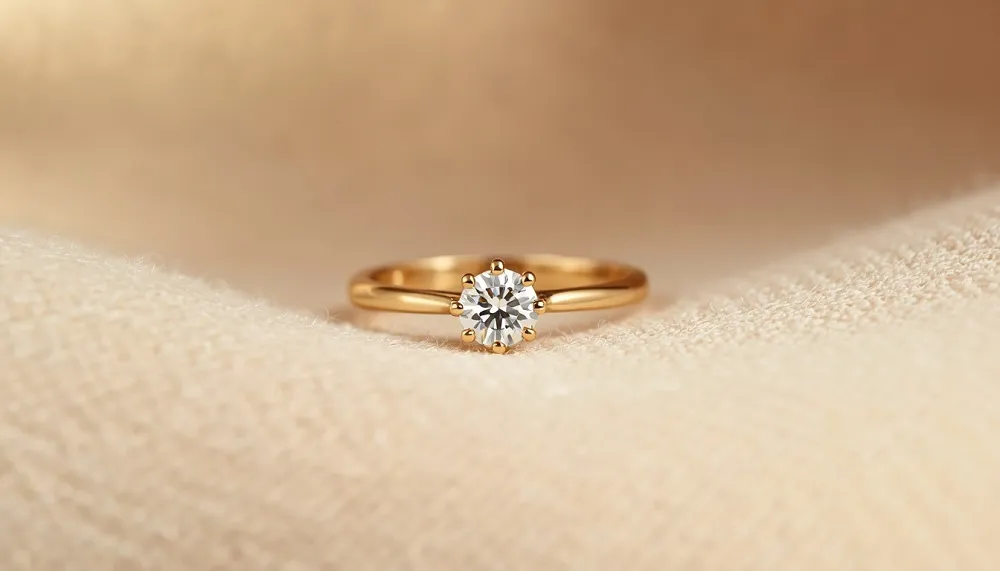
Skip 24ct gold for rings. It is too soft to safely hold a diamond or gemstone setting in place over years of wear, and the risk of bending or scratching is simply too high for a ring worn every day.
Which Gold Tarnishes the Least?
Pure gold does not tarnish, so as carat increases, resistance to tarnishing generally improves. 24ct gold, with almost no alloy present, keeps its colour indefinitely. 18ct gold tarnishes far less than 9ct, since there is less reactive alloy metal in the mix. 9ct gold is the most likely to dull or discolour over time, particularly if it comes into regular contact with soap, perfume, lotion or chlorinated water.
This does not mean 9ct gold looks bad quickly. With basic care, such as removing jewellery before swimming or applying skincare products, 9ct pieces can stay bright for years. For more detail on protecting gold and other metals around water, see our guide on wearing jewellery in the shower.
Gold and Sensitive Skin: Does Carat Matter?
Yes, carat can influence how your skin reacts to a piece. Higher alloy content in lower carat gold means more exposure to metals such as copper, nickel or zinc, which are the more common triggers for skin irritation. Some white gold alloys use nickel specifically, and nickel is known to cause reactions in a meaningful share of the population.
If you have sensitive skin, 18ct gold is generally the safer choice because it contains less alloy overall. For white gold specifically, look for nickel free alloys made with palladium instead, regardless of carat. If irritation is a recurring problem, it is worth asking your jeweller exactly which alloy metals are used before buying.
How to Check the Carat of Your Gold (Hallmarks)
In the UK, it is a legal requirement for gold jewellery over a certain weight to carry an official hallmark. This hallmark tells you exactly what you are buying, so it is worth knowing how to read it.
Look for these marks stamped somewhere on the piece, often on the inside of a ring band or the clasp of a chain:
- Fineness mark: the number that tells you the purity, such as 375 (9ct), 750 (18ct) or 999 (24ct)
- Sponsor’s mark: identifies the manufacturer or retailer
- Assay office mark: shows which UK assay office tested and verified the metal
- Date letter: an optional mark showing the year of hallmarking
If a piece of gold jewellery has no hallmark at all and weighs more than one gram, that is a red flag worth asking about before you buy.
9ct vs 18ct vs 24ct: Which Should You Buy?
There is no universally “best” carat. The right choice depends on how you plan to use the piece.
- Buy 9ct gold if you want something durable and affordable for daily wear, such as a wedding band, stacking rings, or jewellery you rarely take off.
- Buy 18ct gold if you want a richer colour, better resistance to tarnish, and you are buying a special occasion piece like an engagement ring or a gift meant to last for generations.
- Buy 24ct gold if you are purchasing coins or bars for investment purposes, or a ceremonial piece that will be stored carefully rather than worn regularly.
Think about your lifestyle first, then your budget, then the look you want. A piece you love but rarely wear is not as good a purchase as a slightly less dazzling piece that fits comfortably into your daily routine.
Caring for Your Gold Jewellery by Carat
Gold in any carat lasts longer with a few simple habits:
- Store pieces separately in a soft pouch or lined box to prevent scratching, especially important for 18ct and 24ct gold
- Remove jewellery before swimming, showering or applying lotion, perfume and hairspray
- Clean gently with warm water, mild soap and a soft cloth rather than harsh chemical cleaners
- Have prongs, clasps and settings checked periodically by a jeweller, particularly on softer, higher carat pieces
If you also wear other metals alongside your gold, our comparison of stainless steel and sterling silver jewellery explains how different materials hold up under similar daily conditions.
Frequently Asked Questions
Is 9ct gold considered real gold?
Yes. Any gold jewellery hallmarked 375 or higher is legally recognised as real gold in the UK. It simply contains a lower percentage of pure gold than 18ct or 24ct pieces.
Is 9ct or 18ct gold better for everyday wear?
9ct gold is generally better for daily wear because the higher alloy content makes it more resistant to scratches and knocks. 18ct gold can still be worn daily, but it needs slightly more careful handling.
Does 24ct gold scratch easily?
Yes, very easily. 24ct gold is extremely soft because it contains almost no hardening alloy, which is why it is rarely used for rings, bracelets or other jewellery worn regularly.
What is the difference between 9ct and 24ct gold in value?
24ct gold contains almost three times the pure gold content of 9ct gold by percentage, so it carries a significantly higher value per gram based on current gold market prices.
Does 9ct gold tarnish?
9ct gold can tarnish or dull over time, particularly with exposure to moisture, chlorine, perfume and skincare products. Regular cleaning and removing it before swimming or showering helps slow this down.
Sarah Whitmore is a UK-based jewellery writer with over seven years of experience covering precious metals, hallmarking and buying guides for independent jewellery brands.