
What Is the Best Way to Store Jewellery?
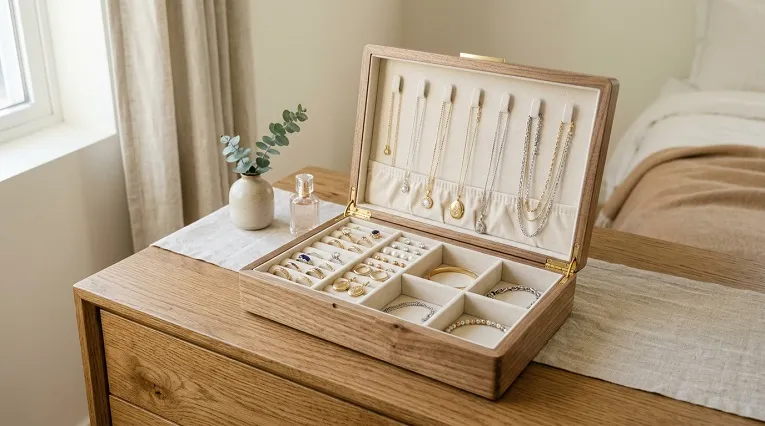
The best way to store jewellery is to keep each piece clean, dry, and separated in a soft-lined jewellery box or organizer. Store jewellery away from direct sunlight, humidity, and sudden temperature changes. Use individual compartments for rings, earrings, necklaces, bracelets, and gemstone jewellery to prevent scratches, tangles, and tarnish.
If you own silver jewellery, use anti-tarnish strips or pouches. If you own pearl jewellery, avoid airtight containers because pearls need a small amount of moisture to maintain their condition. Valuable jewellery should be stored in a secure location such as a home safe.
A simple storage routine can help your jewellery stay beautiful for years while reducing the risk of damage, loss, and costly repairs.
Why Proper Jewellery Storage Matters
Many people spend time choosing jewellery but give little thought to how it is stored. Unfortunately, improper storage is one of the most common reasons jewellery loses its appearance over time.
A tangled necklace, a scratched gemstone, or tarnished silver often has less to do with age and more to do with storage conditions.
How Jewellery Becomes Damaged
Jewellery is constantly exposed to factors that affect its condition:
- Humidity
- Air pollution
- Dust
- Body oils
- Cosmetics
- Friction from other jewellery pieces
- Heat and sunlight
When jewellery is tossed into a drawer or stored in a pile, harder materials can scratch softer ones. Diamonds, for example, are among the hardest natural materials and can scratch gold, silver, pearls, and many gemstones if stored together.
Necklaces often become tangled because chains move and wrap around each other during storage. Untangling them can weaken clasps and chain links.
Silver jewellery tarnishes when sulfur compounds in the air react with the metal. Gold jewellery may not tarnish easily, but it can still develop scratches and lose its shine when stored incorrectly.
The Financial Impact of Poor Storage
Improper jewellery storage can lead to:
- Professional polishing costs
- Stone replacement expenses
- Chain repairs
- Clasp repairs
- Reduced resale value
- Permanent gemstone damage
For heirloom jewellery or engagement rings, the emotional value may be even greater than the financial value.
Real-World Example
Imagine storing a diamond ring, a pearl necklace, and a silver bracelet together in one pouch.
Over several months:
- The diamond can scratch the silver.
- The silver may tarnish.
- The pearl surface can become damaged from rubbing against harder materials.
This type of damage is completely preventable with proper organization.
Key Takeaway
Good jewellery storage is not only about organization. It is about preserving appearance, protecting value, and extending the life of every piece in your collection.
The Golden Rules of Jewellery Storage
Whether you own five pieces of jewellery or five hundred, a few simple rules can prevent most storage-related problems.
Rule 1: Store Jewellery Separately
Each piece should have its own space.
This is especially important for:
- Diamond jewellery
- Gemstone jewellery
- Fine gold jewellery
- Pearls
- Delicate chains
Individual compartments reduce scratching, tangling, and wear.
A jewellery box with divided sections is often the easiest solution.
Rule 2: Always Store Jewellery Clean
Never place jewellery into storage immediately after wearing it.
Jewellery collects:
- Skin oils
- Lotions
- Perfume residue
- Makeup particles
- Sweat
Over time, these substances can dull metal finishes and affect gemstones.
Use a soft microfiber cloth to gently wipe jewellery before putting it away.
Rule 3: Keep Moisture Away
Moisture is one of the biggest threats to jewellery.
Excess humidity can:
- Accelerate silver tarnishing
- Encourage corrosion
- Damage some gemstones
- Affect plated jewellery
Store jewellery in a cool, dry area.
Avoid bathrooms, laundry rooms, and areas near windows.
Rule 4: Protect Jewellery From Heat and Sunlight
Long exposure to sunlight can affect certain gemstones.
Heat may cause:
- Color fading
- Drying of organic gems
- Damage to adhesives in some jewellery settings
Store jewellery away from direct sunlight whenever possible.
Rule 5: Use Soft-Lined Storage
The interior material of a jewellery box matters.
Good options include:
- Velvet
- Microfiber
- Suede-like fabric
- Soft felt
These materials help minimize scratches.
Avoid rough surfaces and hard plastic compartments without padding.
Rule 6: Control Chemical Exposure
Many household products can affect jewellery.
Common examples include:
- Hair spray
- Cleaning chemicals
- Perfume
- Chlorine
- Cosmetics
Store jewellery only after it is clean and completely dry.
Storage Checklist
Before storing jewellery, ask:
- Is it clean?
- Is it dry?
- Is it separated from other pieces?
- Is it protected from moisture?
- Is it protected from sunlight?
If the answer is yes to all five questions, your jewellery is already in much better condition than most collections.
How to Organize Jewellery by Type
One mistake many people make is organizing jewellery by where it fits rather than by what it is.
A better approach is organizing by category.
Different jewellery types have different storage needs.
Rings
Rings are relatively easy to store.
Use:
- Ring trays
- Ring rolls
- Individual ring slots
Avoid stacking rings together unless they are designed for stacking.
Diamond rings should always be separated from softer metals and gemstones.
Earrings
Stud earrings can become separated and lost.
Store earrings:
- In matching pairs
- On dedicated earring holders
- In divided compartments
This makes them easier to find and prevents damage.
Necklaces
Necklaces are among the most difficult jewellery items to organize.
Store them:
- Individually
- Flat when possible
- On hooks designed for jewellery
- In separate pouches during travel
Proper necklace organization saves time and prevents frustration.
Bracelets and Bangles
Bracelets can scratch each other when stacked together.
Store them:
- Flat
- In padded compartments
- On a bracelet stands when appropriate
Watches
Watches deserve dedicated storage.
Use:
- Watch boxes
- Watch rolls
- Soft watch cushions
This helps protect the crystal, case, and bracelet.
Brooches and Pins
Many people overlook brooch storage.
Store brooches:
- In fabric-lined compartments
- With pin mechanisms secured
- Away from delicate gemstones
Organizing Large Collections
If you own many jewellery pieces, create categories:
- Everyday jewellery
- Special occasion jewellery
- Heirloom jewellery
- Investment jewellery
- Travel jewellery
This system makes selecting pieces easier and reduces handling of valuable items.
Key Takeaway
Good organization is not just about appearance. It reduces wear, prevents damage, and makes your jewellery collection easier to enjoy.
How to Store Necklaces Without Tangling
Few jewellery problems are more frustrating than opening a jewellery box and finding a knot of tangled chains.
Fortunately, necklace tangling is one of the easiest problems to prevent.
Why Necklaces Tangle
Chains naturally shift and move during storage.
Thin chains are especially vulnerable because they:
- Twist easily
- Wrap around other chains
- Form tight knots
The longer the chain, the greater the risk.
Best Storage Methods for Necklaces
Individual Hooks
Wall-mounted jewellery organizers and necklace stands work well because gravity keeps chains straight.
This method is particularly useful for:
- Long chains
- Layering necklaces
- Statement necklaces
Flat Storage Compartments
If you prefer a jewellery box, choose one with long necklace sections.
Lay each necklace flat and fasten the clasp before storing it.
Travel Storage Tips
Travel is when most tangling occurs.
Before packing:
- Fasten every clasp.
- Place each necklace separately.
- Use a travel jewellery case.
- Avoid placing multiple chains in one pouch.
A simple trick is threading delicate chains through a drinking straw before packing. This helps prevent knots during transit.
Storing Pendant Necklaces
Pendant necklaces require additional care.
Ensure:
- The pendant lies flat.
- Chains are not twisted.
- Heavy pendants do not pull against delicate chains.
Storage Mistakes to Avoid
Avoid:
- Tossing chains into drawers
- Storing multiple chains together
- Leaving clasps open
- Overcrowding jewellery boxes
Summary
The best necklace storage method is simple:
- One necklace per compartment
- Clasp closed
- Chain laid flat or hung individually
Following these steps greatly reduces tangling and extends the life of delicate chains.
How to Store Rings and Earrings Safely
Rings and earrings are among the most frequently worn jewellery items. Because they are handled often, they are also among the easiest pieces to lose or damage.
A proper storage system helps protect gemstones, preserve metal finishes, and keep matching pieces together.
Best Storage Methods for Rings
Ring rolls and ring trays provide excellent protection.
Benefits include:
- Preventing scratches
- Keeping rings organized
- Reducing stone impact
- Making rings easy to locate
For engagement rings and diamond rings, individual slots are ideal.
Never place multiple diamond rings loose in a single compartment.
Even though diamonds are durable, they can scratch each other and nearby jewellery.
Best Storage Methods for Earrings
The biggest challenge with earrings is keeping pairs together.
Effective solutions include:
- Earring cards
- Dedicated earring organizers
- Jewellery boxes with earring sections
- Travel cases with earring holders
Store each pair together immediately after use.
This simple habit prevents mismatched earrings and lost backs.
Protecting Gemstone Settings
Check earrings and rings regularly.
Look for:
- Loose stones
- Bent prongs
- Damaged settings
- Missing backs
Finding a problem early can prevent a lost gemstone later.
Everyday Storage Tip
Create a designated place for frequently worn jewellery.
Many people remove jewellery at night and leave it on random surfaces.
Instead, keep a small ring dish or jewellery tray on your dresser.
This creates a consistent storage habit and lowers the risk of loss.
Key Takeaway
Rings and earrings last longer when they have dedicated storage spaces. Small organizational habits can prevent expensive repairs and help preserve jewellery for many years.
How to Store Bracelets and Bangles
Bracelets and bangles often receive less attention than rings and necklaces, but they can still suffer from scratches, dents, and wear if stored incorrectly.
The best storage method depends on the material, design, and frequency of use.
Store Bracelets Separately
Many bracelets contain polished metal surfaces that can scratch when they rub against other jewellery.
Store each bracelet:
- In an individual compartment
- In a soft pouch
- On a bracelet stand
- In a jewellery tray with dividers
This is especially important for gold and silver bracelets because these metals are softer than many people realize.
Protect Chain Bracelets
Chain bracelets can become tangled just like necklaces.
Before storing:
- Fasten the clasp.
- Lay the bracelet flat.
- Place it in its own compartment.
This simple habit reduces knotting and prevents stress on the links.
Caring for Bangles
Rigid bangles require enough space to avoid rubbing against each other.
If you own multiple bangles:
- Separate them with soft fabric
- Use padded storage rods
- Avoid overcrowding
Heavy stacking during storage may create small scratches that become noticeable over time.
Travel Tip
When traveling, place bracelets in individual soft pouches before putting them into a jewellery case.
This extra layer of protection helps prevent damage during transport.
Quick Summary
Bracelets and bangles last longer when they are stored individually, protected from friction, and kept away from overcrowded compartments.
How to Store Different Metals Properly
Not all jewellery materials react the same way to their environment.
Gold, silver, platinum, and stainless steel each have unique storage needs.
Understanding these differences helps prevent damage and keeps jewellery looking its best.
How to Store Gold Jewellery
Gold is one of the most popular jewellery metals because it resists corrosion and maintains its appearance for many years.
However, gold is not scratch-proof.
Why Gold Needs Special Care
Pure gold is relatively soft.
Most jewellery uses gold alloys to improve durability, but scratches can still occur when pieces rub together.
Best Storage Practices for Gold Jewellery
Store gold jewellery:
- In individual compartments
- In fabric-lined jewellery boxes
- Away from harder gemstones
- In a cool, dry location
Gold necklaces, bracelets, and rings should not be piled together.
Yellow Gold
Yellow gold generally requires simple protection from scratching and dust.
A lined jewellery box is usually sufficient.
White Gold
White gold often contains a rhodium coating.
Proper storage helps preserve the finish and reduces wear.
Avoid unnecessary friction between pieces.
Rose Gold
Rose gold contains copper alloys.
Store rose gold jewellery in dry conditions to maintain its appearance.
Long-Term Gold Storage
If you plan to store gold jewellery for months or years:
- Clean it first
- Dry it completely
- Use anti-tarnish storage materials if available
- Keep pieces separated
Practical Example
Many people place wedding bands and engagement rings in the same compartment.
While convenient, this can gradually create fine scratches.
Using separate slots offers much better protection.
Quick Summary
Gold jewellery should be stored clean, dry, and separated to prevent scratches and preserve its finish.
How to Store Silver Jewellery Without Tarnishing
Silver jewellery is beautiful, but it requires more attention than gold.
One of the biggest concerns is tarnish.
Why Silver Tarnishes
Silver reacts with sulfur compounds in the air.
This reaction creates a dark layer on the surface known as tarnish.
Humidity and air pollution can accelerate the process.
Best Storage Practices for Silver Jewellery
To slow tarnishing:
- Store silver separately
- Use anti-tarnish strips
- Limit air exposure
- Keep storage areas dry
Use Anti-Tarnish Materials
Anti-tarnish strips absorb airborne contaminants before they react with silver.
These strips are inexpensive and can help maintain silver’s appearance for longer periods.
Airtight Storage
Airtight pouches and containers can help reduce tarnishing.
However, ensure jewellery is completely dry before sealing it.
Trapped moisture can create other problems.
Avoid Bathroom Storage
Bathrooms often experience high humidity.
Even if silver appears fine initially, long-term exposure to moisture increases tarnish risk.
Cleaning Before Storage
Always clean silver gently before long-term storage.
Removing oils and residue helps slow tarnish formation.
Quick Summary
The best way to store silver jewellery is in a dry environment with anti-tarnish protection and limited air exposure.
How to Store Platinum Jewellery
Platinum is one of the most durable jewellery metals.
It is highly resistant to corrosion and does not tarnish like silver.
However, it still benefits from proper storage.
Common Platinum Storage Mistakes
Many people assume platinum cannot be scratched.
While durable, platinum can develop surface marks over time.
Best Storage Method
Store platinum jewellery:
- In separate compartments
- Away from diamonds
- In soft-lined storage
This helps maintain its polished appearance.
Long-Term Care
Platinum develops a natural surface texture called a patina over time.
Some owners appreciate this appearance, while others prefer regular polishing.
Proper storage reduces unnecessary wear and keeps platinum looking cleaner between professional maintenance appointments.
Quick Summary
Platinum jewellery should be stored separately to minimize scratches and preserve its finish.
How to Store Stainless Steel Jewellery
Stainless steel jewellery is known for durability and low maintenance.
It resists rust, corrosion, and tarnish better than many other materials.
Storage Recommendations
Store stainless steel jewellery:
- In dry locations
- In separate compartments
- Away from abrasive materials
Although stainless steel is durable, it can still develop scratches from contact with harder surfaces.
Travel Storage
Stainless steel jewellery travels well.
A soft pouch or travel organizer typically provides sufficient protection.
Quick Summary
Stainless steel jewellery requires less maintenance than precious metals, but organized storage still helps maintain its appearance.
How to Store Gemstone Jewellery Correctly
Gemstones vary significantly in hardness, durability, and sensitivity.
A storage method that works perfectly for diamonds may damage pearls or opals.
This is one area where many jewellery owners unintentionally make mistakes.
How to Store Diamond Jewellery
Diamonds are famous for their hardness.
This strength creates an important storage challenge.
Diamonds Can Scratch Other Jewellery
A diamond can scratch:
- Gold
- Silver
- Platinum
- Pearls
- Emeralds
- Opals
Because of this, diamond jewellery should always be stored separately.
Best Storage Method
Use:
- Individual ring slots
- Soft pouches
- Separate compartments
Never allow diamonds to rub against other jewellery pieces.
Quick Summary
Store diamond jewellery alone to protect both the diamond and surrounding jewellery.
How to Store Pearl Jewellery
Pearls are very different from diamonds.
They are organic gemstones and require special care.
Why Pearls Need Different Storage Conditions
Pearls contain moisture naturally.
Very dry environments may affect their appearance over time.
Avoid Airtight Containers
A common mistake is placing pearls in completely sealed containers.
Pearls benefit from a small amount of air circulation.
Best Storage Method
Store pearls:
- Flat when possible
- In soft fabric pouches
- Away from direct sunlight
- Away from excessive heat
Prevent Scratches
Pearls are relatively soft.
Store them separately from harder gemstones and metals.
Quick Summary
Pearls need gentle storage, moderate airflow, and protection from hard jewellery.
How to Store Opal Jewellery
Opals contain water within their structure.
This characteristic makes them more sensitive than many gemstones.
Storage Recommendations
Store opals:
- In stable temperatures
- Away from prolonged heat
- Away from direct sunlight
Rapid environmental changes may affect certain opals over time.
Protective Storage
Use:
- Soft-lined boxes
- Fabric pouches
- Individual compartments
Quick Summary
Opals prefer stable conditions and protection from excessive heat and dryness.
How to Store Emerald Jewellery
Emeralds often contain natural internal features called inclusions.
These characteristics are part of what makes emeralds unique.
Why Emeralds Need Extra Care
Strong impacts may affect emerald durability more than diamonds or sapphires.
Best Storage Practices
Store emerald jewellery:
- Separately
- In padded compartments
- Away from harder gemstones
Avoid overcrowded jewellery boxes where pieces can knock against one another.
Quick Summary
Emeralds benefit from gentle handling and individual storage compartments.
How to Store Ruby and Sapphire Jewellery
Rubies and sapphires are among the hardest coloured gemstones.
They are durable enough for daily wear but still deserve proper storage.
Best Storage Method
Store ruby and sapphire jewellery:
In separate compartments
In fabric-lined boxes
Away from diamond jewellery
While durable, surface scratches can still occur over time.
Long-Term Preservation
Keep these gemstones:
- Clean
- Dry
- Organized
Routine care helps maintain brilliance and overall appearance.
Summary
Rubies and sapphires are durable gemstones, but individual storage remains the safest option.
Best Jewellery Storage Solutions Compared
Choosing the right storage system makes a big difference in how long your jewellery stays in good condition. Many people focus only on “having a jewellery box,” but the real factor is how well that system controls friction, moisture, and organization.
Jewellery Boxes vs Jewellery Trays vs Hanging Organizers
There is no single best option for everyone. Each system works differently depending on your collection size and jewellery type.
Jewellery Boxes
A jewellery box is the most common option. It usually includes small compartments, ring rolls, and soft lining.
Best for:
- Rings
- Earrings
- Small chains
- Everyday jewellery
Advantages:
- Keeps items separated
- Reduces scratching
- Easy to store in drawers or closets
Limitations:
- Limited space for large collections
- Chains may still tangle if not placed carefully
A good jewellery box works best when each item has its own space.
Jewellery Trays
Trays are flat organizers with open compartments. They are often stackable.
Best for:
- Large collections
- Drawer organization systems
- People who rotate jewellery often
Advantages:
- Easy visibility
- Flexible arrangement
- Can be expanded
Limitations:
- Less protection from dust
- Not ideal for travel
Trays work well when combined with drawer storage.
Hanging Organizers
These are vertical storage systems with hooks and pockets.
Best for:
- Necklaces
- Long chains
- Lightweight jewellery
Advantages:
- Reduces tangling
- Saves space
- Easy access
Limitations:
- Not suitable for heavy items
- Exposure to air and dust
Hanging systems are helpful for preventing necklace knots.
Quick Comparison Table
| Storage Type | Best For | Protection Level | Space Use |
|---|---|---|---|
| Jewellery Box | Mixed jewellery | High | Medium |
| Jewellery Tray | Collections | Medium | High |
| Hanging Organizer | Necklaces | Low–Medium | Low |
Practical Insight
Many people mix all three systems. For example:
- Jewellery box for daily pieces
- Trays for storage
- Hanging organizer for necklaces
This combined setup usually gives the best long-term results.
What Size Jewellery Organizer Do You Need?
Most storage problems happen because people choose the wrong size organizer. Either it becomes overcrowded or wastes space.
Small Jewellery Collection
If you own fewer than 15–20 pieces:
- A compact jewellery box is enough
- Look for separate ring slots and earring sections
- Avoid oversized organizers
Small collections need structure, not volume.
Medium Jewellery Collection
If you own 20–60 pieces:
- Use a medium box or stacked tray system
- Separate by type (rings, necklaces, bracelets)
- Consider adding a small hanging organizer
This is the most common household situation.
Large Jewellery Collection
If you own more than 60 pieces:
- Use a multi-layer drawer system
- Combine trays + box + hanging storage
- Label sections for easy access
Large collections need organization logic, not just storage space.
Practical Mistake to Avoid
A common mistake is buying a “luxury-looking box” with poor internal layout. Even expensive boxes fail if compartments are too shallow or mixed.
How Moisture and Temperature Affect Jewellery
Environment plays a bigger role than most people realize.
Why Moisture Matters
Humidity can cause:
- Tarnish on silver
- Dull appearance in metals
- Weakening of string-based jewellery
Silver is especially sensitive because it reacts with air moisture and sulfur compounds.
Ideal Storage Conditions
Keep jewellery in:
- Dry environments
- Stable room temperature
- Away from bathrooms and kitchens
Avoid areas with constant temperature changes.
Temperature Fluctuations
Heat can:
- Loosen glue in gemstone settings
- Damage delicate materials like pearls
- Increase oxidation in metals
Cold temperatures are usually less harmful, but sudden changes can still create stress in materials.
Simple Home Solution
If you live in a humid area:
- Use silica gel packets in drawers
- Store jewellery in sealed pouches (for metals only)
- Keep boxes in air-conditioned rooms if possible
Where You Should Store Jewellery at Home
Location matters as much as the container itself.
Best Places
- Bedroom drawer (best option)
- Wardrobe safe compartment
- Dedicated jewellery cabinet
- Locked drawer system
These areas have stable temperature and low humidity.
Places to Avoid
- Bathroom shelves
- Kitchen drawers
- Near windows (sunlight exposure)
- Near heaters or vents
These areas cause rapid environmental changes that damage jewellery over time.
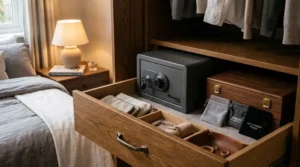
Security Consideration
If your jewellery has high value:
- Use a small safe
- Or store in a hidden compartment
Security and preservation should work together.
Long-Term Jewellery Storage Tips
If you are storing jewellery for months or years, normal storage is not enough.
Clean Before Storage
Always clean jewellery before long-term storage:
- Remove oils
- Remove dust
- Dry completely
Even small residues can cause long-term dullness.
Use Anti-Tarnish Materials
For silver items:
- Anti-tarnish strips
- Anti-tarnish cloth bags
These reduce chemical reactions in storage.
Separate Everything
Never store multiple pieces together long-term.
Even slight movement can create micro-scratches over time.
Jewellery Inventory and Care System
Many people forget what they own, which leads to poor storage habits.
Simple Tracking Method
Create a basic list:
- Item name
- Metal type
- Stone type
- Purchase date
- Storage location
This helps avoid damage from repeated handling.
Why It Matters
An inventory system:
- Reduces unnecessary handling
- Helps identify missing items
- Supports insurance documentation
Summary
- Choose storage based on collection size, not looks
- Control moisture and temperature for long-term safety
- Store jewellery in stable, dry areas of the home
- Separate items to prevent scratching
- Use combined storage systems for better organization
How to Store Jewellery Properly at Home
Jewellery stays beautiful for years when it is stored with care, not just placed in a box and forgotten. Most damage does not happen during wearing, but during storage. Scratches, tarnish, dullness, and broken chains often come from small storage mistakes repeated over time.
This section brings everything together in a simple, practical way so you can set up a system that actually works at home.
Simple Daily Jewellery Storage Routine
Most people only think about storage when they buy a jewellery box. But daily habits matter just as much.
After Wearing Jewellery
Follow this simple routine:
- Wipe jewellery gently with a soft cloth
- Check for moisture (especially after wearing in heat)
- Remove makeup, perfume, or lotion residue
- Store each item in its own space
Even 30 seconds of care prevents long-term damage.
Why This Matters
Lotions, sweat, and perfume can slowly:
- Dull metal surfaces
- Weaken string-based pieces
- Speed up tarnishing in silver
Small habits protect long-term shine.
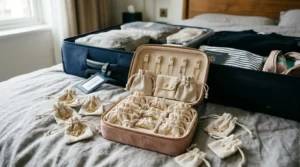
Travel Jewellery Storage Tips
Travel is one of the most risky times for jewellery damage.
Use a Dedicated Travel Case
A good travel case should have:
- Soft interior lining
- Separate compartments
- Secure zipper or closure
Pack Jewellery Separately
Never pack all jewellery in one pouch.
Instead:
- Necklaces in flat compartments
- Rings in ring slots
- Earrings in small boxes
Prevent Tangling
For necklaces:
- Thread them through a straw or roll them in soft cloth
- Fasten clasps before packing
This reduces knotting during movement.
Home Jewellery Storage Setup (Practical System)
A strong storage system is not expensive. It is organized.
Step 1: Categorize Your Jewellery
Separate into groups:
- Daily wear items
- Special occasion pieces
- Fine jewellery (gold, diamonds)
- Delicate pieces (pearls, opals)
Step 2: Assign Storage Zones
Create dedicated areas:
- Drawer 1: Daily jewellery
- Drawer 2: Metals (gold/silver)
- Box: Special pieces
- Soft pouch section: delicate items
Step 3: Avoid Mixing Materials
Never store:
- Silver with rubber or plastic (can speed tarnish)
- Pearls with hard gemstones
- Chains with loose items
Common Jewellery Storage Mistakes
Many storage problems come from simple habits.
Mistake 1: Storing Everything Together
This causes:
- Scratches
- Tangling
- Broken chains
Mistake 2: Using Plastic Bags Long-Term
Plastic can trap moisture and damage delicate metals over time.
Mistake 3: Bathroom Storage
Humidity in bathrooms increases:
- Tarnish
- Dullness
- Metal corrosion
Mistake 4: Overcrowded Boxes
When compartments are full:
- Jewellery rubs against each other
- Settings loosen slowly
- Chains tangle easily
Heirloom and High-Value Jewellery Storage
Some jewellery needs extra protection because of its emotional or financial value.
Best Storage Options
- Fire-resistant safe
- Bank safe deposit box
- Hidden locked drawer
Documentation Matters
Keep:
- Purchase receipts
- Photos of items
- Certificates (for diamonds or gemstones)
This helps for insurance and identification.
Jewellery Cleaning Before Storage
Cleaning is a step many people skip, but it is essential.
Basic Cleaning Method
- Use a soft microfiber cloth
- Gently remove fingerprints and oils
- Avoid harsh chemicals for home cleaning
Why Cleaning Helps
Clean jewellery:
- Stores better
- Tarnishes slower
- Maintains shine longer
Even invisible residue can cause long-term dullness.
Jewellery Storage for Different Lifestyles
Different people need different systems.
Minimal Jewellery Users
- One small jewellery box
- Simple separation (rings, earrings, chains)
- Easy access setup
Regular Jewellery Users
- Drawer + tray system
- Separate daily vs occasional wear
- Organized compartments
Collectors
- Multi-layer storage system
- Inventory list
- Dedicated safe or cabinet
Long-Term Jewellery Preservation Tips
If you want jewellery to last for years or generations, focus on consistency.
Keep Environment Stable
Avoid:
- Heat changes
- High humidity
- Direct sunlight
Rotate Usage
Wearing jewellery occasionally helps:
- Prevent long-term pressure on settings
- Keep metals active and clean
Regular Checks
Every few months:
- Check clasps
- Inspect stones
- Clean lightly
Quick Takeaways
- Store each jewellery piece separately
- Keep jewellery away from humidity and heat
- Clean before storing to prevent dullness
- Use different storage methods for different materials
- Avoid overcrowding compartments
- Protect high-value items in secure storage
- Build a simple, consistent storage routine
Frequently Asked Questions (FAQs)
1. What is the best way to store jewellery at home?
The best way is to store each piece separately in a dry, lined jewellery box with compartments. Keep items organized by type and material to avoid scratches and tangling.
2. Is it better to hang necklaces or store them flat?
Both methods work, but hanging prevents tangling for daily use. For long-term storage, flat compartments with separation offer better protection.
3. Can jewellery be stored in plastic bags?
Short-term storage is fine, but long-term use is not recommended because plastic can trap moisture and increase tarnishing, especially for silver.
4. How do I stop silver jewellery from tarnishing in storage?
Use anti-tarnish strips, store silver in dry conditions, and avoid exposure to air and humidity. Keeping pieces individually wrapped also helps.
5. Where should jewellery not be stored?
Avoid bathrooms, kitchens, windowsills, and any area with heat or humidity changes. These conditions speed up damage and dullness.
Conclusion
Proper jewellery storage is not about expensive boxes. It is about small, consistent habits that protect each piece from damage. When jewellery is stored correctly, it keeps its shine, structure, and value for years.
The key is simple: separate your pieces, control the environment, and handle them with care even when they are not being worn. Whether it is gold, silver, pearls, or gemstones, each material responds differently to storage conditions.
A thoughtful system saves time, reduces repair costs, and preserves both emotional and financial value. Once you set up the right structure at home, maintaining it becomes easy and natural.