
Quick answer: Solid gold is gold all the way through and costs the most. Gold filled has a thick layer of real gold mechanically bonded to a base metal, usually brass, and sits in the middle on both price and durability. Gold plated has the thinnest gold layer, applied by electroplating, and is the most affordable but the least long-lasting. If you want jewellery that lasts decades, choose solid gold or gold filled, and if you want trend pieces you’ll replace anyway, gold plated makes sense.
If you’ve ever picked up two gold necklaces that looked identical but were priced £20 apart, you already know how confusing this can get. The labels “solid gold,” “gold filled,” and “gold plated” sound close enough to be interchangeable. They aren’t. Each one describes a completely different amount of real gold, a different manufacturing process, and a different lifespan. This guide breaks down exactly what separates them, what each type actually costs in the UK, and how to work out which one suits the way you wear jewellery.
What Do These Terms Actually Mean?
Before comparing price and durability, it helps to know what’s physically happening to the metal in each case.
Solid Gold
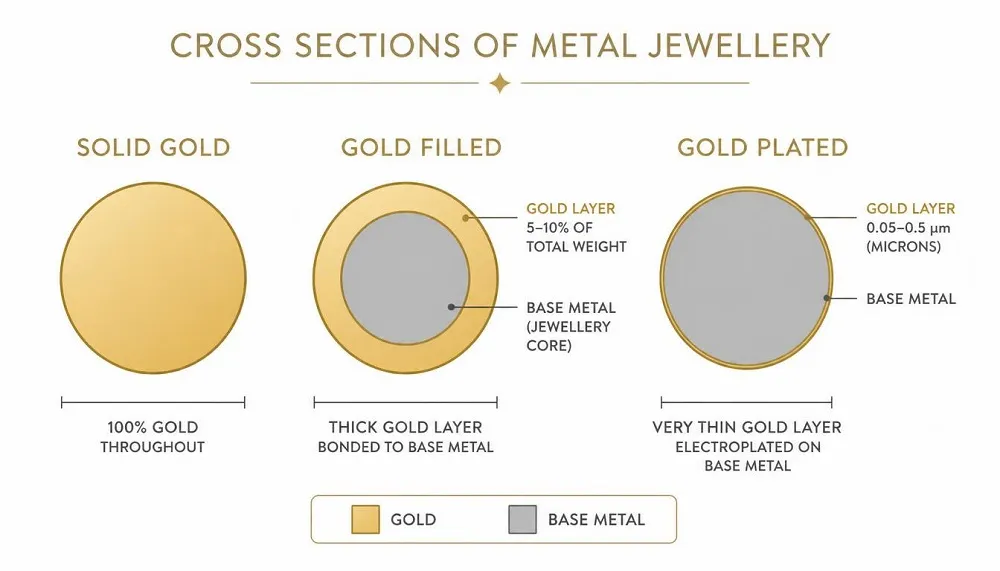
Solid gold jewellery is made from gold alloyed with other metals like copper, silver, or palladium, mixed evenly throughout the entire piece rather than applied as a coating. Pure 24-karat gold is too soft for everyday jewellery, so it’s blended down to 9k, 14k, 18k, or 22k depending on how much durability versus purity you want. There’s no outer layer to wear through because the gold runs the whole way through the metal. Scratch it, and you still see gold underneath.
Gold Filled
Gold filled jewellery is created by pressure bonding a solid layer of karat gold onto a base metal core, almost always brass. Heat and pressure fuse the two metals rather than using a chemical or electrical process. In the US, gold filled jewellery must legally contain at least 5% gold by weight, roughly 1/20th of the total piece. That’s a thick layer compared with plating, which is why gold filled pieces can often be worn daily for years before any fading shows.
Gold Plated
Gold plated jewellery starts with a base metal, typically brass, copper, or silver, then a very thin layer of gold is deposited on top using an electric current in a process called electroplating. That gold layer can be as thin as a few millionths of an inch. It looks identical to solid gold on day one, but because the coating is so thin, it wears through with regular contact, moisture, and friction from clothing or skin.
Where Gold Vermeil Fits In
Gold vermeil is technically a stricter type of gold plating. To legally be called vermeil, the base metal must be sterling silver (not brass or copper), and the gold layer must meet a minimum thickness, usually 2.5 microns, and be at least 10-karat gold. That makes vermeil a step above standard gold plating, though it still isn’t as durable as gold-filled.
Gold Content Comparison
Gold content is the single biggest factor separating these four options. Here’s how they stack up by percentage of gold and typical coating thickness.
| Type | Gold Content | Typical Thickness | Base Metal |
|---|---|---|---|
| Solid Gold | 37.5% to 91.6% (9k to 22k) | Gold throughout | None, it’s gold alloy |
| Gold Filled | Minimum 5% by weight | 5 to 10 microns | Brass |
| Gold Vermeil | Varies, must be 10k+ gold | Minimum 2.5 microns | Sterling silver |
| Gold Plated | Under 0.05% | 0.05 to 1 micron | Brass, copper, or silver |
Gold filled jewellery typically carries around 100 times more gold than standard gold plated jewellery. That single fact explains most of the price and durability gap between the two.
Solid Gold vs Gold Filled vs Gold Plated Price Comparison
Price tends to follow gold content fairly closely, though craftsmanship and brand also play a role. Here’s a realistic UK price range for a mid-sized item like a pendant necklace or a pair of hoop earrings.
| Type | Typical UK Price Range | Cost Per Wear (10-year use) |
|---|---|---|
| Gold Plated | £15 to £60 | Low upfront, but likely needs replacing within 1 to 3 years |
| Gold Vermeil | £40 to £120 | Moderate, usually lasts 3 to 5 years with care |
| Gold Filled | £50 to £180 | Good value if it lasts 10 to 30 years |
| Solid Gold (9k to 14k) | £150 and up | Highest upfront cost, but can last a lifetime and holds resale value |
If you’re only measuring the sticker price, gold plated wins every time. If you’re measuring cost per year of wear, gold filled or solid gold usually comes out ahead, since you’re not replacing the piece every couple of years.
Durability and Lifespan: How Long Does Each Last
Durability is where the differences become obvious in daily life, not just on paper.
Solid gold doesn’t wear away because there’s nothing to wear through. It can dull or scratch, but a jeweller can polish it back to looking new. With reasonable care, a solid gold piece can last several lifetimes, which is why so many antique gold pieces are still being worn today.
Gold filled jewellery holds up remarkably well for a non-solid option. Because the gold layer is pressure bonded rather than plated, it resists peeling and flaking. Many gold-filled pieces last 10 to 30 years before any fading appears, particularly if you avoid chlorine, harsh chemicals, and abrasive cleaning.
Gold plated jewellery has the shortest realistic lifespan. Depending on the thickness of the coating and how often the piece is worn, fading can begin anywhere from a few months to two or three years in. Sweat, lotion, perfume, and friction against clothing all speed up the process. Our full breakdown of care routines and what actually extends the life of plated pieces is worth a read if you already own gold plated jewellery: Gold Plated Jewellery Guide.
Is Gold Filled Real Gold?
Yes. The outer layer of gold filled jewellery is genuine karat gold, not an imitation or gold-toned alloy. What makes it different from solid gold is the construction, not the authenticity of the gold itself. A gold-filled piece has real gold bonded around a brass core, rather than gold running all the way through. So while it isn’t solid gold, it is genuinely gold on the surface you actually see and touch.
Gold Filled vs Gold Vermeil: Which Is Better
This is one of the more common points of confusion, since both sit in the mid-price range between plated and solid.
Gold vermeil tends to have a slightly more premium base, since sterling silver has intrinsic value on its own, unlike the brass used in gold-filled pieces. That makes vermeil a reasonable choice if you like the idea of a precious metal base beneath the gold.
Gold filled generally wins on pure longevity. The pressure-bonded gold layer is thicker and more resistant to wear than the plated layer used on vermeil, even though vermeil’s minimum thickness requirements are stricter than standard plating. If your priority is a piece that survives daily wear without fading, gold filled is usually the safer bet. If you prefer the weight, feel, and resale value of a silver base, vermeil is worth considering instead.
How to Tell What You’re Buying
Manufacturers are required to stamp jewellery with a mark indicating what it’s made from, though not every seller does this correctly, so it helps to know what to look for.
- Solid gold is stamped with a karat number such as 9k, 14k, 18k, or a fineness number like 375, 585, or 750.
- Gold filled is usually marked GF, sometimes alongside the karat and fraction, such as 1/20 14K GF.
- Gold vermeil should be marked “vermeil” or occasionally GV, and the base should test as sterling silver (925).
- Gold-plated pieces are often stamped GP, EP, or HGE (heavy gold electroplate), though cheaper pieces sometimes carry no stamp at all.
If a piece has no stamp whatsoever and is priced very low, it’s safest to assume it’s plated rather than filled or solid. When in doubt, a jeweller can test the metal for you in a few minutes using an acid test or an electronic gold tester.
Care and Maintenance for Each Type
Each type needs a slightly different approach if you want it to last as long as possible.
For solid gold, occasional cleaning with mild soap and a soft cloth is enough. It can be worn daily, though it’s worth removing it for heavy manual work, gym sessions, or swimming in chlorinated water.
For gold-filled jewellery, keep it away from harsh chemicals, chlorine, and abrasive cleaning tools. A soft polishing cloth is usually all that’s needed. It’s more forgiving than plated jewellery but still benefits from being removed before showering or swimming, something we cover in more detail in our guide on wearing jewellery in the shower.
For gold-plated pieces, care matters most, since the thin gold layer is the first thing to go. Avoid perfume and lotion contact, remove it before sleeping, showering, or exercising, and store it separately from other jewellery to prevent scratching. If you swim regularly, our guide to wearing jewellery in the pool explains exactly how chlorine affects plated finishes.
Skin Sensitivity and Allergies
If you have a nickel allergy or generally sensitive skin, gold content matters more than you might expect. Solid gold, particularly at 14k and above, is the least likely to cause a reaction, since there’s little exposed base metal. Gold-filled jewellery is also a solid choice for sensitive skin, since the thick gold layer keeps the brass core from making direct contact. Gold plated jewellery carries the highest risk of irritation, since the thin coating wears away quickly and exposes the base metal underneath, which can turn skin green or cause a reaction in people sensitive to nickel or copper.
Which One Should You Buy?
The right choice depends less on which type is “best” overall and more on how and how often you plan to wear the piece.
Best for Everyday Wear
Solid gold or gold filled are the strongest options if you want something you can wear most days without worrying about fading. Gold filled offers nearly the same everyday durability as solid gold at a lower price point, making it a practical middle ground.
Best for Budget and Trend Pieces
Gold plated is a sensible choice for statement pieces you’ll only wear occasionally, or trend-led designs you expect to rotate out within a year or two anyway. There’s no point paying solid gold prices for a piece you’ll retire once the trend moves on.
Best for Investment or Heirloom Pieces
Solid gold is the only option that retains meaningful resale and heirloom value over time. Gold-filled and gold-plated pieces have little to no resale value once the base metal is factored in, since refining out the small amount of gold usually costs more than it’s worth.
Common Mistakes When Buying Gold Jewellery
A few habits lead to disappointment more often than anything else.
Assuming a low price with no explanation means good value. If a “solid gold” piece is priced like plated jewellery, it almost certainly isn’t solid gold.
Judging quality by appearance alone. Plated and filled pieces can look identical to solid gold when new. The stamp and the price are far more reliable indicators than how a piece looks in a photo.
Wearing plated jewellery in the shower or pool out of habit. This is the single fastest way to strip a thin gold coating, often within weeks rather than years.
Skipping the karat stamp check. Always look inside the band, on the clasp, or on the earring post before buying, particularly for secondhand pieces.
Frequently Asked Questions
What is the difference between gold filled and gold plated?
Gold filled has a thick layer of gold, at least 5% by weight, mechanically bonded to a base metal. Gold plated has a much thinner layer, often under 0.05%, applied through electroplating, and gold filled lasts significantly longer as a result.
Solid gold vs gold filled, which should I choose?
Choose solid gold if value retention and lifetime durability matter most and budget allows. Choose gold filled if you want a similar everyday look and long lifespan at a lower price point.
Is 14k gold filled better than 14k gold plated?
Yes. Both may use 14 karat gold for the outer layer, but the gold filled version has a far thicker coating, so it resists fading for much longer than a 14k plated piece.
Does gold filled jewellery tarnish?
Gold filled jewellery resists tarnishing well because the gold layer is thick enough to prevent the base metal from reacting with air and moisture. It’s not entirely immune, but tarnishing is rare compared with plated jewellery.
Can gold plated jewellery be re-plated?
Yes, most gold plated jewellery can be sent to a jeweller for re-plating once the coating wears through. This restores the appearance but doesn’t add long-term value, since the base metal underneath stays the same.
Final Verdict
There’s no single “best” option here, only the option that fits your budget and how you wear jewellery. Solid gold is the right call for pieces you want to keep for decades or pass down. Gold filled is the strongest middle ground, offering near solid-gold durability at a fraction of the price. Gold plated suits trend pieces and occasional wear, as long as you accept that the finish won’t last forever. Once you know what each label actually means, choosing between them comes down to being honest about how long you want the piece to last.
Emma Hartley is a UK-based jewellery writer with over eight years of experience covering fine and fashion jewellery, metal quality, and buying guides for everyday shoppers.