
Can You Wear a Bracelet in the Shower?
Quick answer: Most bracelets should come off before you shower. Solid gold, titanium, platinum and good quality stainless steel can usually handle it. Sterling silver, gold-plated pieces, leather, copper and gemstone bracelets cannot. The safest habit is to take your bracelet off first, every time, regardless of material.
Bracelets get more daily wear and tear than almost any other piece of jewellery. They knock against taps, tangle in flannels, catch on towels and sit directly under the spray for the whole length of your shower. If you have ever wondered whether your favourite bracelet can survive that routine, this guide walks through every common material and a few specific brands people ask about most.
Why Bracelets Face More Risk in the Shower Than Other Jewellery
A ring sits still on your finger. A bracelet moves constantly, and that movement is exactly what causes trouble in water.
Clasps open and close hundreds of times a year, and each time water gets into the hinge, it has a chance to sit there and start a reaction. Charm bracelets trap soap and shampoo between the links and the charms, so residue builds up somewhere you cannot easily reach with a cloth. Chain bracelets can also catch on shower fixtures, loofahs or your own hair, which puts pressure on the weakest point, usually the clasp or a jump ring.
None of this means bracelets are fragile. It simply means the risks are slightly different from a ring or a pair of studs, and worth understanding on their own terms.
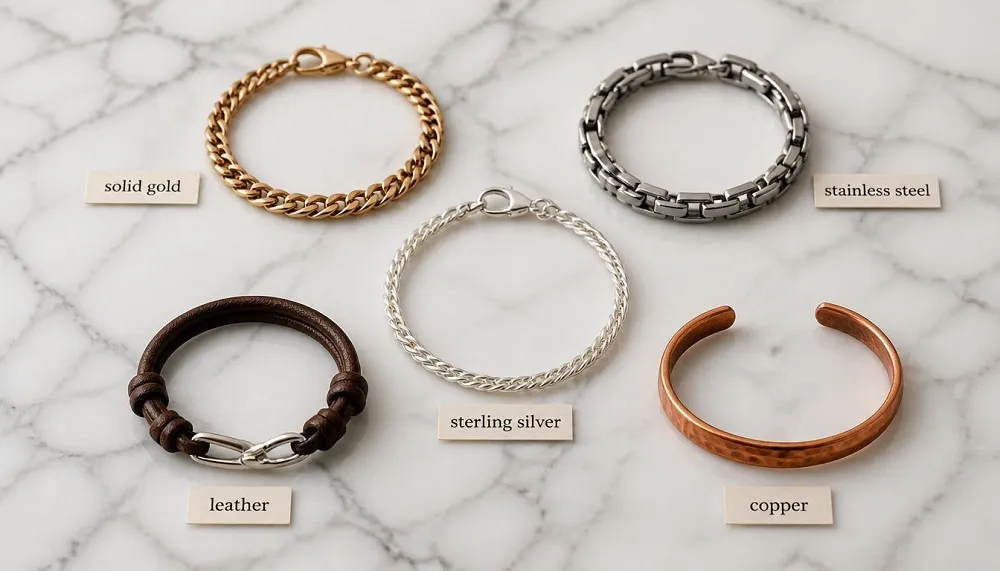
Bracelet Material Guide: What Can Handle the Shower
Solid Gold Bracelets (9k, 14k, 18k, 22k)
Solid gold does not rust, corrode or react with water in any serious way. Pure gold is one of the least reactive metals there is, which is part of why it has held its value for thousands of years.
That said, karat matters. 22k and 18k gold contain very little alloy metal, so they resist tarnish extremely well but are also softer and can scratch more easily against taps or jewellery. 14k and 9k gold contain more alloy metal such as copper or silver, which makes them tougher but slightly more prone to a dull film building up over time from soap and mineral deposits.
In practice, any solid gold bracelet can survive an occasional shower without lasting damage. Frequent showering will still dull its shine faster than if you left it in a drawer, so a quick wipe with a soft cloth afterwards keeps it looking its best.
Gold-Plated and Gold Vermeil Bracelets
This is where most damage happens. Gold-plated jewellery has a thin layer of real gold, sometimes thinner than a human hair, sitting on top of a base metal like brass or copper. Daily water exposure wears that layer down far faster than normal wear would.
Once the gold rubs away, the base metal shows through. That often looks patchy or discoloured, and it can occasionally cause skin irritation on people with sensitive skin. Gold vermeil is a step up, since it uses a thicker gold layer over sterling silver, but it still is not shower safe. Take gold-plated and vermeil bracelets off before every shower, without exception.
Sterling Silver 925 Bracelets
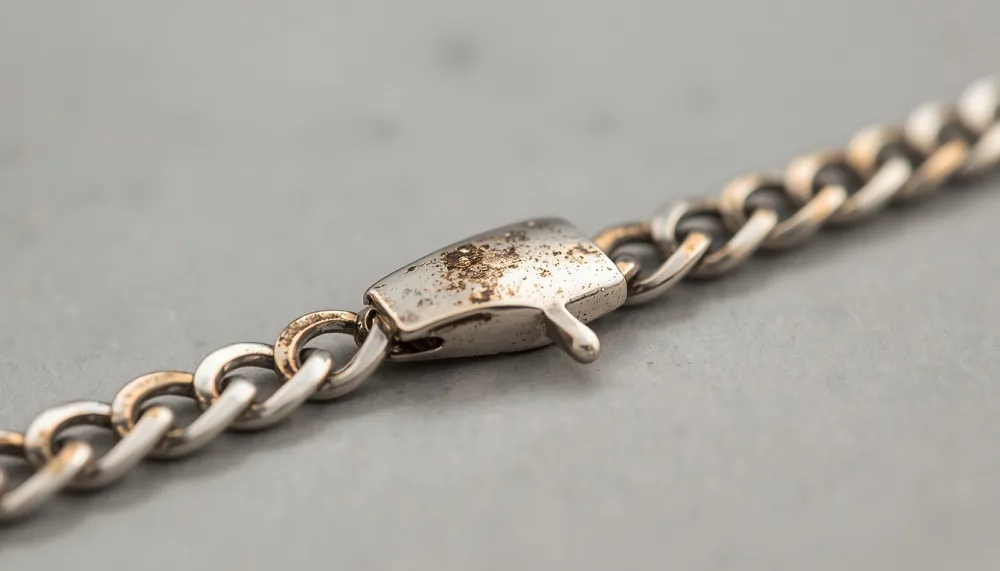
Sterling silver contains 92.5% pure silver, and that remaining 7.5% is usually copper. Copper reacts with sulphur compounds in the air and in water, which is exactly why silver tarnishes and slowly turns yellow, then grey, then black.
Water on its own is not the biggest problem. The bigger issue is what travels with the water, meaning soap, shampoo, conditioner and hard water minerals. All of these accelerate tarnishing. If you want to keep a silver bracelet looking bright, remove it before you shower, and check our guide on how to clean sterling silver jewellery if it has already started to dull.
Stainless Steel Bracelets
Good quality stainless steel, particularly 316L grade, is one of the few materials genuinely built for daily water contact. It resists rust and tarnish far better than silver or plated metals, which makes it a sensible choice if you never want to think about taking a bracelet off.
The one thing to watch is chlorine and salt water rather than shower water itself. Occasional showers cause no meaningful damage, but swimming in a pool or the sea every day without rinsing afterwards will eventually affect the surface finish. For a closer look at how it compares with silver, read our stainless steel vs sterling silver comparison.
Titanium and Platinum Bracelets
Both of these sit at the top of the durability list. Titanium is extremely resistant to corrosion, lightweight, and biocompatible, which makes it popular for people with metal sensitivities. Platinum is naturally dense and barely reacts with anything, though it can pick up soap residue over time like any metal.
Neither will tarnish or rust from ordinary shower use. The only downside with either is cost, since both sit at the premium end of the jewellery market.
Leather Bracelets
Leather is porous, which means it absorbs water rather than shedding it. Repeated soaking causes the material to stiffen, crack, discolour or in some cases develop mould, particularly if it stays damp after the shower rather than drying fully.
There is no safe amount of regular shower exposure for leather. If a leather bracelet gets wet by accident, pat it dry immediately with a soft cloth and let it air dry away from direct heat.
Copper and Copper Magnetic Bracelets
Copper oxidises quickly when it meets moisture, which produces a greenish patina and can leave a temporary green mark on the skin. That mark is harmless and washes off, but it is a clear sign the metal is reacting.
Magnetic copper bracelets carry an extra consideration. The magnets are usually held in place with an adhesive or a resin coating, and repeated exposure to hot water and steam can weaken that bond over time, occasionally leading to a loose or missing magnet. Some sellers market these bracelets around circulation or arthritis relief. It is worth noting that no strong clinical evidence currently supports magnetic or copper bracelets as a treatment for joint pain, so any benefit reported by wearers should be treated as anecdotal rather than medical fact. Whatever the reason you wear one, take it off before showering to protect both the finish and the magnets.
Jade and Gemstone Bracelets
Jade is a relatively hard stone, but the metal or cord fittings holding it together are usually not. Beaded jade bracelets are often strung on elastic or thread that weakens with repeated soaking, which can eventually snap the whole piece.
Softer gemstones such as opal, turquoise, pearl and amber are far more vulnerable than jade and can be permanently dulled or damaged by soap and heat. As a general rule, any bracelet built around natural stones or beads is safest left in a dish by the sink rather than worn into the shower.
Specific Bracelet Types People Ask About
Can You Wear a Pandora Bracelet in the Shower?
Pandora bracelets are typically sterling silver, Pandora Rose, or 14k gold, sometimes finished with gold plating known as Pandora Shine. That mix of materials means the same rules above apply directly. Silver and plated finishes will tarnish or wear faster with regular shower contact, while solid gold pieces cope better but still benefit from being removed. Pandora’s own care advice recommends taking jewellery off before bathing, and that guidance holds up against the materials used.
Can You Wear a Pandora Charm Bracelet in the Shower?
Charm bracelets add an extra complication, because water and soap can collect in the small gaps between charms and the chain. Enamel-coated charms are particularly at risk, since steam and repeated splashing can cause the enamel coating to lift or peel over time. If you do shower with charms on by accident, rinse thoroughly and dry each charm individually rather than just wiping the surface.
Can You Wear a Nomination Bracelet in the Shower?
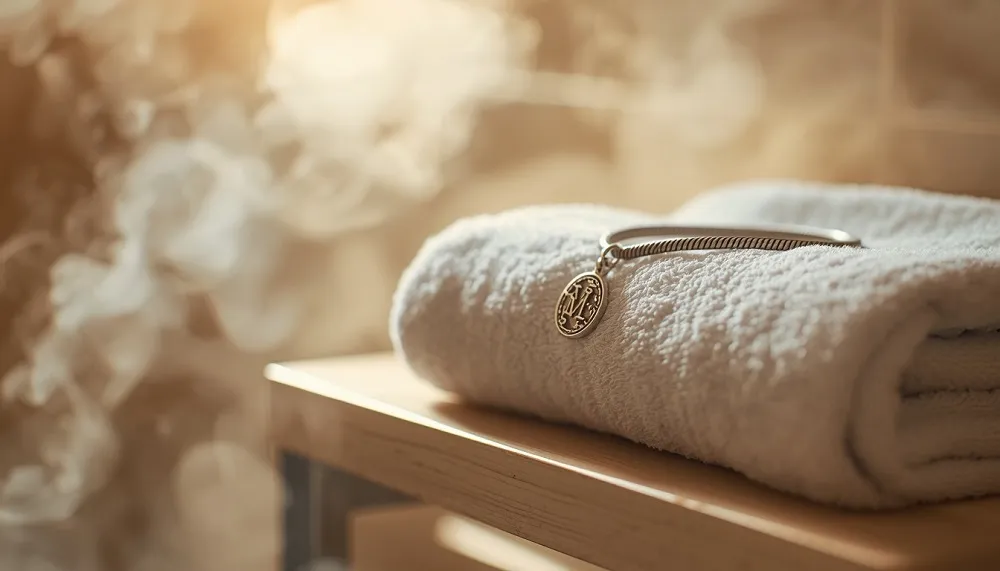
Nomination bracelets are usually stainless steel links combined with 18k gold or enamel-detailed composable charms. The steel base copes well with water, but the gold and enamel elements do not, so the safest approach is the same as any mixed-material bracelet: remove it before showering to protect the more delicate sections.
Can You Wear a Tennis Bracelet in the Shower?
Diamond tennis bracelets should stay out of the shower. Diamonds themselves are extremely hard and water resistant, but the prongs and setting holding each stone are usually gold, platinum or silver, and repeated water exposure can loosen these small connection points over time. A loose prong is how stones are lost, so this is one bracelet worth being especially careful with.
Can You Wear a Silver Bracelet in the Shower?
If it is sterling silver, no, for the tarnishing reasons already covered. If it is a silver-coloured stainless steel or titanium piece rather than genuine silver, it will usually be fine. Check the hallmark or ask your jeweller if you are unsure which one you own, since the two can look identical at a glance.
What Actually Happens When You Shower With a Bracelet On
Three things tend to happen, often at the same time. Tarnishing speeds up on silver and copper because heat and moisture accelerate the chemical reaction that causes it. Plating wears down on gold-plated and vermeil pieces because friction from soap, your hands and the shower spray gradually rubs the thin gold layer away. Clasps and connectors weaken slightly with repeated water contact, which over months and years increases the chance of a bracelet slipping off unnoticed.
None of this happens after one shower. It is the accumulation over weeks and months that causes visible damage, which is exactly why a quick daily habit of removing your bracelet makes such a noticeable difference over time.
If You Forgot to Take It Off: Aftercare Steps
Accidents happen, and one shower will not ruin most bracelets. If you do forget, rinse the bracelet under clean, lukewarm water to remove any soap or shampoo residue. Pat it dry immediately with a soft, lint-free cloth, paying particular attention to clasps, hinges and the gaps around charms. Leave it somewhere to air dry fully before putting it back in a jewellery box, since storing anything damp encourages tarnish and, for leather, encourages mould.
Best Bracelets for Showering Every Day
If you genuinely do not want to think about removing jewellery each morning, a few materials are built for that lifestyle. Good quality stainless steel and titanium bracelets handle daily water exposure with almost no maintenance. Solid gold, particularly 14k or 18k, is the next best option if you prefer a warmer tone. Platinum performs just as well but sits at a higher price point. Anything plated, silver, leather, copper or gemstone based should still come off, however tempting it is to leave it on.
Can You Shower With Earrings After a New Piercing?
This question comes up alongside bracelet care often enough to be worth a mention. Most piercers recommend keeping the starter earring in during showers, since new piercings generally need eight weeks to twelve months to fully heal depending on placement, and removing the earring too early risks the hole closing or trapping bacteria. Rinse the area gently with clean water and avoid direct contact with shampoo or conditioner where possible, then pat the area dry rather than rubbing it. Follow your piercer’s specific aftercare instructions above any general guidance, since healing times and advice can vary by studio.
Quick Reference Table
| Material | Shower Safe? | Main Risk |
|---|---|---|
| Solid gold (14k, 18k, 22k) | Mostly yes | Gradual dulling from soap residue |
| Gold-plated / vermeil | No | Plating wears through quickly |
| Sterling silver 925 | No | Tarnishing from moisture and chemicals |
| Stainless steel | Yes | Chlorine and salt water only |
| Titanium | Yes | Minimal risk |
| Platinum | Yes | Soap residue buildup |
| Leather | No | Absorbs water, can crack or mould |
| Copper / copper magnetic | No | Oxidises, magnets may loosen |
| Jade / gemstone | No | Elastic cord and settings weaken |
| Diamond tennis bracelet | No | Prongs and settings can loosen |
Frequently Asked Questions
Can you wear stainless steel in the shower?
Yes. Good quality stainless steel, especially 316L grade, resists rust and tarnish and copes well with daily water exposure.
Can you shower with sterling silver 925?
It is not recommended. Sterling silver tarnishes when exposed to moisture, soap and shampoo, and repeated showering speeds this up.
Can you wear 18k gold in the shower?
Occasionally, yes. Solid 18k gold resists tarnish well, though frequent showering will still dull its shine over time.
Can you wear 22k gold in the shower?
Solid 22k gold copes well with water, but its softness means it can scratch more easily against taps and fixtures.
Can you shower with gold-plated jewellery?
No. The thin gold layer wears away quickly with water and soap exposure, exposing the base metal underneath.
Can you wear a leather bracelet in the shower?
No. Leather absorbs water and can stiffen, crack or develop mould if it stays wet.
Author Bio
Sarah Mitchell is a UK-based jewellery writer with 8 years of experience covering jewellery care, materials and buying guides for everyday wearers.