
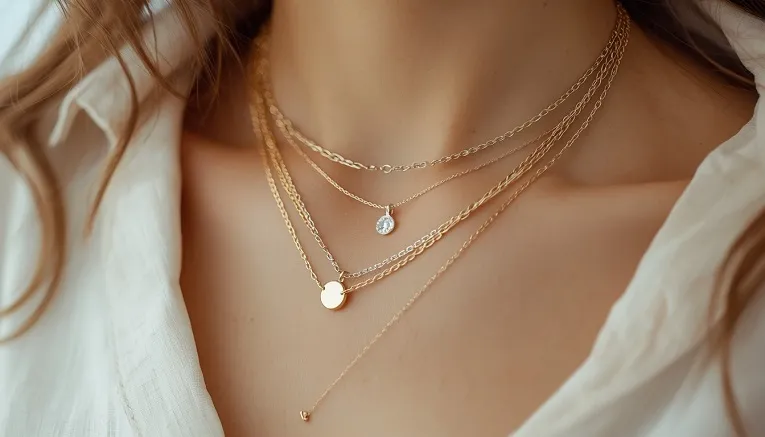
How to Layer Necklaces: The Complete Guide to Necklace Stacking
The easiest way to layer necklaces is to wear two or three necklaces with at least 2 inches (5 cm) between each length, mix different chain styles, and choose one pendant or statement piece as the focal point. Matching your necklace stack to your neckline also helps create a balanced, tangle-free look.
There is something quietly satisfying about a well-built necklace stack. It takes an outfit from finished to considered, and it does it without you needing to buy a single new piece of clothing. Yet ask ten people how to layer necklaces properly, and you will get ten different answers, most of which end with a tangled knot of chains and a sigh of frustration.
This guide sets out exactly how to layer necklaces so they sit beautifully, resist tangling, and suit your neckline, whatever your personal style. Whether you are building your very first stack or refining a collection you have been adding to for years, you will find the practical detail here rather than vague style advice.
What Is Necklace Layering?
Necklace layering, sometimes called necklace stacking, is the practice of wearing two or more necklaces together at different lengths to create depth and visual interest around the neckline. Rather than a single pendant doing all the work, layering lets several pieces, each with its own length and character, sit together in a way that feels curated rather than accidental.
The appeal is practical as much as aesthetic. Once you understand the basic rules, you can build endless combinations from a handful of chains and pendants, getting far more mileage from a small jewellery collection than a single statement piece ever could.
The 3 Golden Rules of Necklace Layering
Nearly every layering mistake comes down to breaking one of three simple rules. Get these right and the rest of your stack falls into place.
Rule 1: Vary your lengths. Each necklace needs its own space on your neckline. Necklaces of a similar length will compete for the same spot, tangle more easily, and blur into one shape rather than reading as separate pieces.
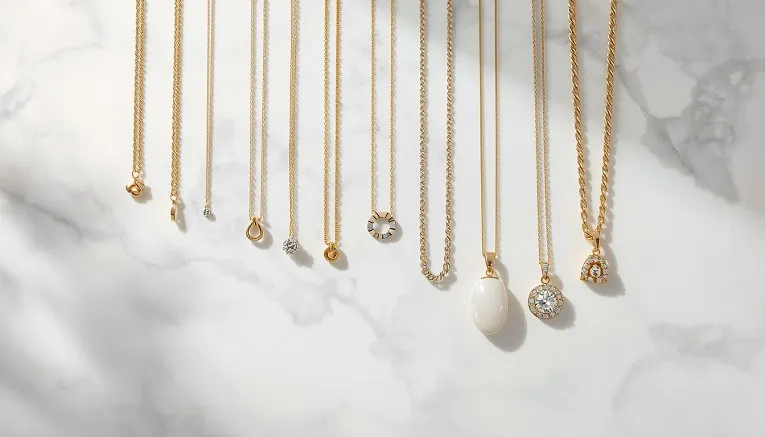
Rule 2: Mix textures and chain styles. A stack made entirely of identical fine chains looks flat. Combining a delicate cable chain with something textured, like a curb or belcher link, gives the eye somewhere to travel.
Rule 3: Choose one focal point. Every good stack has a hero piece, whether that is a bold pendant, a chunky chain, or a single sparkling charm. The remaining necklaces should support that focal point rather than compete with it.
Image alt text: Three golden rules of necklace layering illustrated with chain examples Image file name: necklace-layering-golden-rules.jpg
Necklace Length Guide: Chart and What Each Length Suits
Length is the single most important factor in successful layering, so it is worth understanding exactly where each standard length sits before you start combining pieces.
| Length Name | Inches | Centimetres | Where It Sits | Best Paired With |
|---|---|---|---|---|
| Choker | 14 to 16in | 35 to 40cm | Base of the neck | A slightly longer pendant chain |
| Princess (collarbone) | 17 to 19in | 43 to 48cm | On or just below the collarbone | Chokers above, matinee below |
| Matinee | 20 to 24in | 50 to 60cm | Between the collarbone and bust | A statement pendant or charm |
| Opera (rope) | 28 to 36in | 70 to 90cm | Below the bust | Doubled up or worn long as an anchor piece |
As a general guide, aim for at least 2 inches (roughly 5cm) of difference between each necklace in your stack. This spacing gives every piece its own visible lane and is one of the simplest ways to prevent tangling before it starts.
How Many Necklaces Should You Wear?
There is no single correct number, but there are patterns that consistently work well.
The rule of three (and when odd numbers help). Three necklaces of different lengths is the easiest starting point for beginners. Odd numbers tend to look more considered than even numbers, since they avoid a symmetrical, matched-pair effect that can read as accidental rather than styled.
When less is more. Two necklaces, one shorter and one longer, is often all a minimalist look needs, particularly for daytime or office wear.
When you have gone too far. If you find yourself squinting to pick out individual pieces, or your stack feels heavy rather than light, that is usually the sign to remove one necklace rather than add another. A cluttered neckline undoes the effortless quality that makes layering appealing in the first place.
How Many Necklaces Should You Wear?
| Style | Number of Necklaces | Best Chains |
|---|---|---|
| Minimalist | 2 | Fine chains |
| Classic | 3 | Cable + Pendant + Rope |
| Trendy | 4 | Paperclip + Coin + Tennis + Pendant |
| Statement | 3 | Chunky + Pendant + Fine |
| Boho | 4–5 | Charms + Mixed Textures |
How to Layer Necklaces Without Them Tangling
Tangling is the single biggest complaint about necklace layering, and it is almost always solvable with a few simple habits.
Vary length and weight. Necklaces of a similar length and similar weight are the most likely to tangle, since they hang at the same point and move together. Choosing a genuine spread of lengths, as outlined in the chart above, does most of the work for you.
Use necklace spacers. These small connector clasps attach to the back of two or more chains and hold them a fixed distance apart at the clasp, preventing them from sliding together at the nape of your neck.
Put necklaces on in the right order. Fasten your shortest, lightest chain first, then layer heavier or longer pieces on top. A light chain left loose on top of others is far more likely to slip and knot.
Store necklaces properly. A jewellery tray with separate compartments, a hanging jewellery tree, or simply keeping chains in individual pouches will save you far more time than untangling knots each morning.
Quick fix for a tangled chain. Lay the necklace flat on a hard surface, add a drop of baby oil or a similar lubricant to the knot, and gently work it loose with a needle or fine pin, easing rather than pulling.
Caring for Layered Necklaces
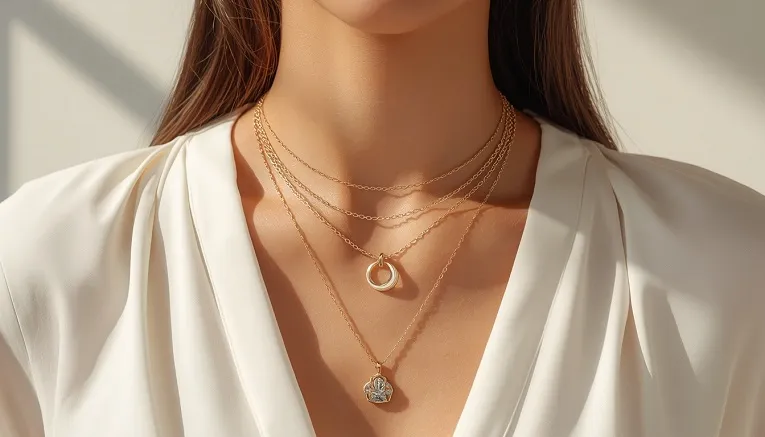
Because layered necklaces rub against one another more than single chains, they benefit from regular cleaning and careful storage. Wipe each chain with a soft jewellery cloth after wearing, avoid perfume directly on plated pieces, and store necklaces separately or on a hanging organiser to reduce scratches and knots.
How to Layer Necklaces That Are the Same Length
Not everyone owns a full range of lengths, and sometimes the necklaces you most want to wear together happen to match. In that case, length is not your only tool.
Lean on texture and thickness instead. Pairing a fine, delicate chain with a chunkier or more textured piece of the same length still creates enough visual separation to avoid a flat, doubled-up look.
Add a spacer or short extender. Attaching a short extender chain to one of the two identical-length pieces effectively creates the length difference you need without buying a new necklace.
Let one piece sit slightly forward. A pendant or charm on one of the two chains will naturally draw it slightly lower or more forward, giving the eye a clear point of difference even when the base chain lengths match.
Choosing Chain Styles That Layer Well Together
Once your lengths are sorted, chain style is what gives a stack its character.
| Chain Style | Look | Best Layered With |
|---|---|---|
| Cable or box chain | Delicate, understated | Textured or statement chains |
| Belcher or curb chain | Subtle texture, classic | Fine chains or a single pendant |
| Paperclip chain | Contemporary, flat-link | Rounder link styles for contrast |
| Rope chain | Twisted, catches the light | Simple chains as a supporting piece |
| Cuban or tennis chain | Bold, statement | One or two fine chains only |
A useful starting formula is one delicate chain, one textured chain, and one pendant chain, which naturally satisfies both the length and texture rules above.
Best Necklace Layering Combinations
| Style | Combination |
|---|---|
| Everyday Minimalist | 16″ choker + 18″ cable chain + 20″ pendant |
| Office Look | 16″ chain + 18″ small pendant |
| Casual Weekend | Paperclip chain + coin pendant + rope chain |
| Evening Wear | Tennis necklace + pendant + opera chain |
| Boho Style | Mixed charms + layered chains + natural stones |
Adding a Pendant or Charm to Your Stack
A pendant gives a stack a natural focal point and a sense of personality.
Where a pendant should sit. As a general rule, a pendant works best on the middle or longest chain in your stack, letting it hang below the shorter layers rather than competing with them for space.
Personal touches. Birthstone necklaces, initial pendants, and zodiac charms are popular ways to add meaning to a stack, and they double as a talking point without disrupting the overall balance of lengths and textures.
Image alt text: Gold pendant necklace layered as the focal point of a necklace stack Image file name: pendant-necklace-focal-point-layering.jpg
Mixing Metals: Gold, Silver, and Rose Gold Together
Mixing metals was once considered a styling mistake. That thinking has changed considerably, and a mixed-metal stack can look just as polished as a single-tone one when done with a little care.
When to keep one metal tone. Sticking to one metal, whether that is gold, silver, or rose gold, is the simplest way to guarantee a cohesive look and is a good default for beginners.
How to mix metals successfully. If you want to combine tones, keep the chain styles similar across the different metals, limit yourself to two tones rather than three, and let one metal act as the dominant base with the other used sparingly, such as on a single pendant.
Necklace Layering by Neckline
Your neckline has a bigger impact on your finished stack than most people realise.
| Neckline | Recommended Length Combination |
|---|---|
| V-neck or plunging | Longer pendant chains that follow the V shape |
| Crew neck or high neck | Choker plus one slightly longer chain |
| Off-shoulder or strapless | Multiple mid-length chains, since the neckline itself is already the focal point |
| Turtleneck or roll neck | Longer, statement chains worn over the top of the fabric |
Matching your stack to your neckline, rather than choosing lengths at random, is one of the quickest ways to make a layered look feel deliberate rather than thrown together.
Layering Necklaces for Different Face Shapes
Although the neckline has the biggest influence, your face shape also affects how a layered necklace stack looks. Longer pendant necklaces can visually elongate round faces, while shorter layered chains often suit longer face shapes by adding width. Oval faces can wear almost any combination comfortably, whereas heart-shaped faces often benefit from shorter layers that balance a narrower chin.
Necklace Layering for Everyday Wear vs the Office
The same layering principles apply whether you are dressing for a casual day or a professional setting, but the scale changes.
Effortless everyday stacking. For casual wear, three or more pieces in a mix of lengths and textures works well, and this is where you can experiment most freely with statement pendants or chunkier chains.
Keeping it professional for work. For the office, two necklaces is usually enough. A simple collarbone-length chain paired with a slightly shorter, more delicate piece reads as polished without feeling like too much for a formal setting.
How to Layer Necklaces: Men’s Styling
Necklace layering is not exclusive to womenswear, and the same core rules apply for a men’s stack.
Chain and pendant combinations. A plain curb or box chain paired with a single pendant, such as a bar, coin, or symbol charm, is a straightforward way to start layering without it looking overdone.
Lengths and thicknesses that work best. Slightly longer lengths, typically in the 20 to 24 inch matinee range, tend to sit better with a man’s neckline and clothing than shorter choker lengths. Combining one thicker chain with one finer chain gives the same textural contrast that works so well in womenswear.
Minimalist vs Chunky Necklace Layering
There is no single correct style of layered necklace, and the same rules can produce very different results depending on your preference.
Minimalist layering relies on fine chains, small pendants, and a maximum of two or three subtle pieces, keeping the overall look quiet and refined.
Maximalist layering embraces bolder chains, mixed textures, and sometimes four or more pieces at once, favouring impact over restraint.
Neither approach is more correct than the other. The golden rules of length, texture, and focal point apply equally to both, just at different volumes.
Which Necklace Materials Layer Best?
- Sterling Silver
- Gold Vermeil
- Solid Gold
- Stainless Steel
- Gold Plated
Then recommend which combinations work together.
Necklace Layering for Every Season
- Summer: Lightweight chains work best with open necklines.
- Winter: Longer necklaces layer better over knitwear and jumpers.
- Autumn: Mixed textures complement heavier fabrics.
- Spring: Delicate layered chains suit lighter outfits.
Common Necklace Layering Mistakes to Avoid
A few small missteps account for most disappointing layered looks.
Wearing pieces too similar in length
This is the single most common mistake, and the quickest to fix using the length guide above.
Overcrowding the neckline
More necklaces is not always better. If the stack starts to feel heavy or the individual pieces are no longer distinguishable, remove one.
Ignoring your outfit’s neckline
A stack chosen without reference to what you are wearing can look mismatched, however well the necklaces work together on their own.
Buying Necklaces for Layering
When buying necklaces specifically for layering, look for adjustable extension chains, lightweight designs, and different chain textures rather than purchasing three necklaces that all look identical. Many jewellers also sell pre-matched necklace sets designed to layer without tangling.
Frequently Asked Questions
What is the trick for layering necklaces?
The main trick is varying the length of each necklace by at least 2 inches, which prevents tangling and lets every piece stand out on its own.
What is the rule for layering necklaces?
There is no strict rule, but a helpful guideline is to combine different lengths, mix at least one textured chain with a delicate one, and choose a single focal point such as a pendant or statement chain.
How many necklaces should you wear at once?
Most people find two to three necklaces the easiest starting point, with odd numbers generally looking more considered than even numbers.
How do you layer necklaces without tangling?
Choose varied lengths, fasten lighter chains first, consider a necklace spacer, and store your necklaces separately rather than in a single tangled pile.
Can you mix metals when layering necklaces?
Yes. Keeping chain styles similar and limiting yourself to two metal tones, with one dominant, is the easiest way to mix metals without the look feeling chaotic.
How do you layer necklaces that are the same length?
Use contrasting textures or thicknesses, or add a short extender chain to one piece, to create enough separation even when the base lengths match.
Can you layer chunky necklaces?
Yes. Pair one chunky chain with one or two finer necklaces to create contrast and avoid a heavy appearance.
What necklace length is best for layering?
Most necklace stacks start with a 16-inch chain, followed by an 18-inch necklace and a 20-inch pendant, leaving around 2 inches between each layer.
Should all layered necklaces match?
No. Mixing chain styles, textures, and even metal colours can create a more interesting and balanced necklace stack when done thoughtfully.
Final Thoughts: Building Your Own Necklace Stack
Necklace layering rewards patience more than any single purchase. Start with two or three pieces that already work with your existing wardrobe, get comfortable with the golden rules of length, texture, and focal point, and add new pieces gradually as you learn what suits you.
Ready to start building your own stack? Explore our necklace collection for lengths and styles designed to layer beautifully together, or browse our layered necklace sets for ready-made combinations that take the guesswork out of getting started.
Written by the Chic Fashion Jewellery style team, dedicated to helping you build a jewellery collection that works as hard as your wardrobe does. For more styling advice, browse our full style guide collection.