
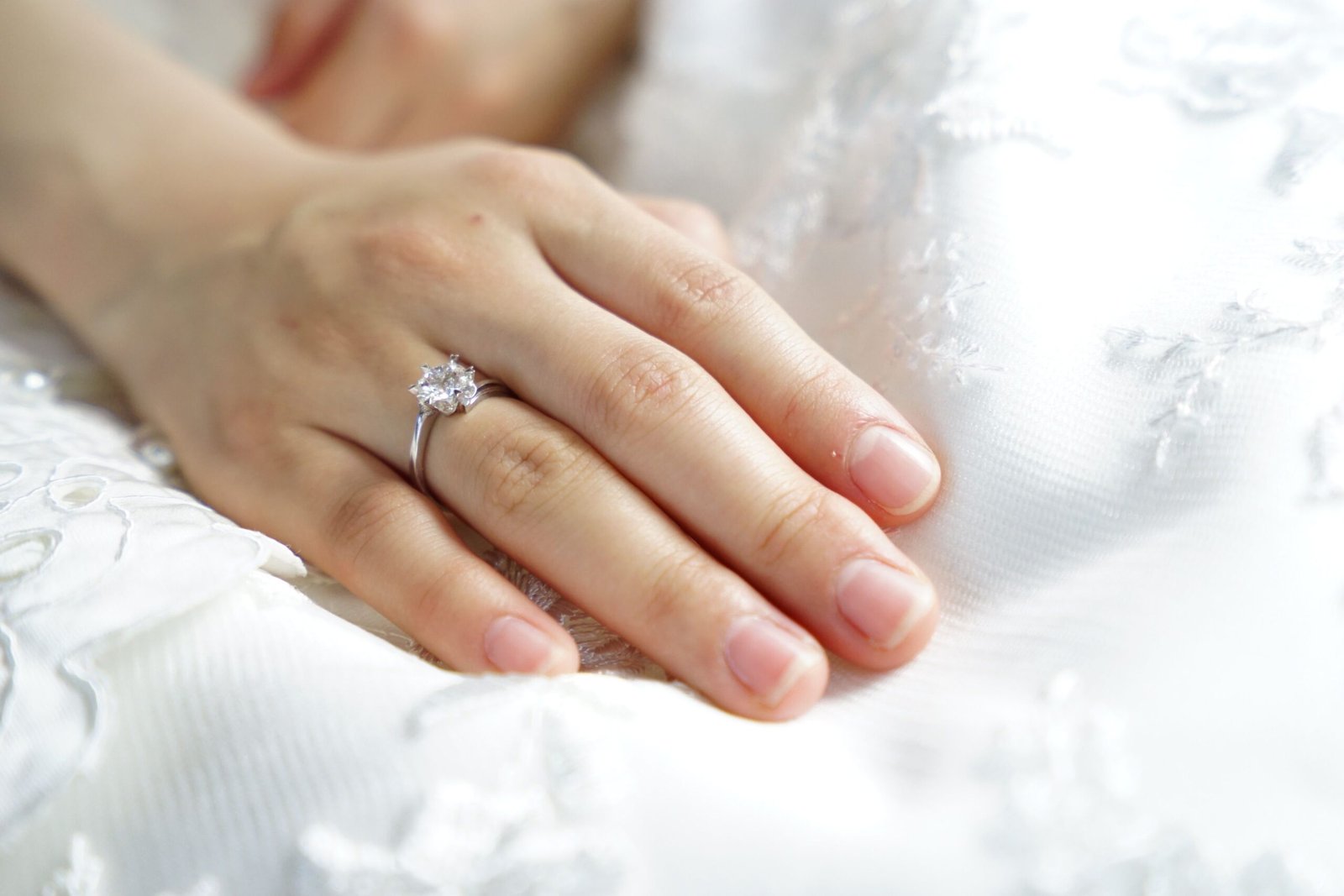
Quick answer: Moissanite and diamond look similar at first glance but are chemically different stones. Diamond is pure carbon and rated 10 on the Mohs hardness scale, the hardest natural material on earth. Moissanite is silicon carbide, rated 9.25, still extremely durable but slightly softer. Moissanite typically costs 5 to 15 percent of an equivalent natural diamond, has more fire and rainbow flash, while diamond has a more classic white sparkle and holds resale value considerably better.
Choosing between moissanite and diamond for a ring is one of the more common questions couples face once they start budgeting for an engagement ring. Both stones are durable, both are genuinely beautiful, and both work in any setting. The right choice depends on what actually matters most to you, sparkle style, budget, or long term resale value, rather than one stone being objectively better than the other.
This guide compares moissanite and diamond across hardness, appearance, price, origin and care, so you can decide with confidence.
What Is Moissanite?
Moissanite is a gemstone made of silicon carbide. It was first discovered in 1893 by French chemist Henri Moissan, who found tiny natural crystals inside a meteorite fragment in Arizona. Natural moissanite is exceptionally rare, so almost all moissanite sold today is created in a laboratory. It has been sold as a diamond alternative since the late 1990s and has grown considerably in popularity over the past decade, particularly among buyers prioritising budget and ethical sourcing.
Hardness and Durability
| Property | Diamond | Moissanite |
|---|---|---|
| Mohs hardness | 10 (hardest natural material) | 9.25 |
| Scratch resistance | Only another diamond can scratch it | Can be scratched by a diamond, resistant to nearly everything else |
| Everyday wear | Excellent, no special precautions needed | Excellent, suitable for daily wear including rings |
Both stones are more than durable enough for daily wear, including in a ring, which sees more impact than any other jewellery type. The half point difference in hardness rarely matters in practice, since both sit far above materials that commonly cause scratches in everyday life.
Appearance and Sparkle
This is where the two stones genuinely differ. Moissanite has a higher refractive index than diamond, meaning it bends light more, and significantly higher dispersion, meaning it splits light into more visible rainbow flashes, an effect gemmologists call fire. Diamond produces a crisper, whiter sparkle with less colour flash, often described as more classic or restrained. Under bright direct light, particularly sunlight, moissanite’s rainbow effect becomes more noticeable than diamond’s, which some buyers love and others find slightly too showy for an everyday ring.
Older moissanite sometimes showed a faint grey or green tint in larger sizes, though modern moissanite production has largely resolved this, with most colourless grade stones now very difficult to distinguish from diamond without specialist equipment.
Price Comparison
Price is the single biggest practical difference between the two stones. Moissanite typically costs between 5 and 15 percent of an equivalent natural diamond, and around 25 to 40 percent of an equivalent lab grown diamond, for a similar size and visual quality. This means a couple working with a modest budget can afford a considerably larger moissanite than the diamond they could otherwise stretch to.
Resale Value
Diamonds hold resale value meaningfully better than moissanite. A natural diamond retains a portion of its original value on the secondary market, while moissanite retains only a small fraction of its purchase price, similar to most lab created or simulated gemstones. If long term investment value matters to you, this is a significant factor in diamond’s favour. If the ring is being bought purely to wear and enjoy rather than as a store of value, this factor matters considerably less.
Origin and Ethical Sourcing
Since natural moissanite is almost never used commercially, nearly all moissanite on the market is lab created, which sidesteps the ethical sourcing concerns sometimes associated with natural diamond mining. Diamonds can be either natural or lab grown. A lab grown diamond is chemically identical to a natural one but is produced in a controlled facility, offering a middle ground for buyers who want the properties of a genuine diamond without the sourcing concerns of natural mining. If ethical sourcing is your primary concern rather than price, a lab grown diamond and moissanite both address it, though for different reasons.
Caring for Moissanite vs Diamond
Both stones can be cleaned the same way: warm water, a few drops of mild dish soap, and a soft toothbrush, followed by a thorough dry with a lint-free cloth. Neither stone requires special chemical treatment. Ultrasonic cleaners are generally safe for both, provided the setting itself is secure, since the concern in most cases is the metal prongs rather than the stone.
Which Should You Choose?
| Priority | Better Choice |
|---|---|
| Maximum budget stretch | Moissanite |
| Classic, understated sparkle | Diamond |
| Long term resale value | Diamond |
| Maximum brilliance and rainbow fire | Moissanite |
| Traditional expectation | Diamond |
| Ethical sourcing on a budget | Moissanite |
Frequently Asked Questions
Can jewellers tell the difference between moissanite and diamond?
Yes, with specialist equipment such as a diamond tester, which measures thermal and electrical conductivity. To the naked eye, particularly in smaller sizes, the difference is often very difficult to spot.
Is moissanite a fake diamond?
No. Moissanite is a genuine, distinct gemstone with its own chemical composition, silicon carbide rather than carbon. It is not intended to be a fake diamond but a different stone entirely.
Does moissanite lose its sparkle over time?
No, moissanite retains its brilliance permanently, provided it is cleaned regularly to remove everyday oil and residue buildup, the same as any gemstone.
Is moissanite more or less expensive than a lab grown diamond?
Moissanite is generally less expensive than a lab grown diamond of comparable size and quality, typically costing 25 to 40 percent of the equivalent lab grown diamond price.
Can you wear moissanite every day?
Yes. At 9.25 on the Mohs hardness scale, moissanite is durable enough for daily wear, including in an engagement ring or everyday fashion ring.
Final Thoughts
Neither moissanite nor diamond is objectively the better stone. Diamond offers tradition, resale value and a more restrained sparkle, while moissanite offers exceptional brilliance and considerably more stone for the same budget. If you are still deciding on the setting itself, our guide on choosing the perfect diamond engagement ring covers cut, clarity and carat in detail, and our coloured diamond jewellery guide is worth a read if you are considering a fancy colour stone instead.