
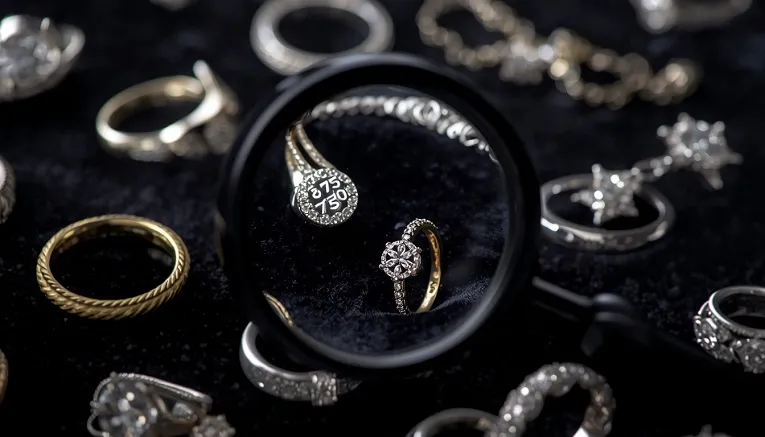
Quick answer: The fastest way to tell if jewellery is real is to check for a hallmark first, then confirm what you find with a magnet test, a weight check, a water test and a close visual inspection. No single test proves authenticity on its own. Combine two or three of them, and take anything valuable to a professional or a UK Assay Office if you are still unsure.
You have just picked up a ring from an old jewellery box, spotted a bargain on a marketplace app, or been handed a gift and quietly wondered whether it is the real thing. It is one of the most common questions jewellery owners ask, and it is rarely as simple as looking at a piece and knowing straight away.
This guide walks through the tests you can do at home, in plain language, without a jeweller’s toolkit. It covers gold, silver and diamonds separately, explains which tests are genuinely useful, and tells you what to do when the result is still not clear.
Why It Matters Whether Jewellery Is Real
Fake jewellery has become far more common than most people expect, and it is not just a car boot sale problem anymore. Online marketplaces make it easy for sellers to post professional-looking photos for items that turn out to be brass or copper with a thin plated finish. Industry estimates suggest a meaningful share of online gold listings may not match their description, and thousands of counterfeit gold items are thought to enter the UK market every year.
The financial side is obvious. Paying gold or sterling silver prices for a base metal alloy means losing money the moment you find out. There is also a safety angle that gets less attention. Cheap alloys used in counterfeit jewellery sometimes contain nickel, lead or cadmium, and pieces that sit against your skin can cause irritation over time. Knowing what you are wearing is not just about value, it is about comfort too.
Why This Matters for Fashion Jewellery Buyers Specifically
If you shop with us, you already know that fashion jewellery is honest about what it is: gold plated, vermeil, sterling silver or costume metal, sold at a fair price for what it contains. This guide is not really about second guessing your fashion jewellery. It is for the other pieces in your collection, the inherited ring, the online purchase that felt slightly off, or the gift where you never quite found out what it was made from. Knowing how to check gives you confidence either way.
Quick Answer: 5 Ways to Tell If Jewellery Is Real
- Check for a hallmark. A genuine UK hallmark is your strongest single clue.
- Try the magnet test. Gold, silver and platinum are not magnetic.
- Check the weight. Precious metals feel notably heavier than base metal alloys.
- Try the water test. Real gold sinks and does not react with water.
- Inspect the piece closely. Look for wear, discolouration and craftsmanship quality.
Each of these is explained in full below, along with what it can and cannot tell you.
Check the Hallmark First
A hallmark is the closest thing jewellery has to an official identity card. It is an independent stamp applied by one of the UK’s Assay Offices to confirm the metal content of a piece, and it is your quickest and most reliable clue to whether something is genuine gold, silver, platinum or palladium.
Look inside a ring band, on the back of a pendant, near a bracelet or necklace clasp, or on the post of an earring. Good lighting makes a real difference, and a phone camera zoomed in close often works just as well as a jeweller’s loupe for spotting the mark.
For a full breakdown of every mark, what each one means and how to read antique hallmarks, our complete guide to UK jewellery hallmarks covers this in far more depth than we will here. The short version is below.
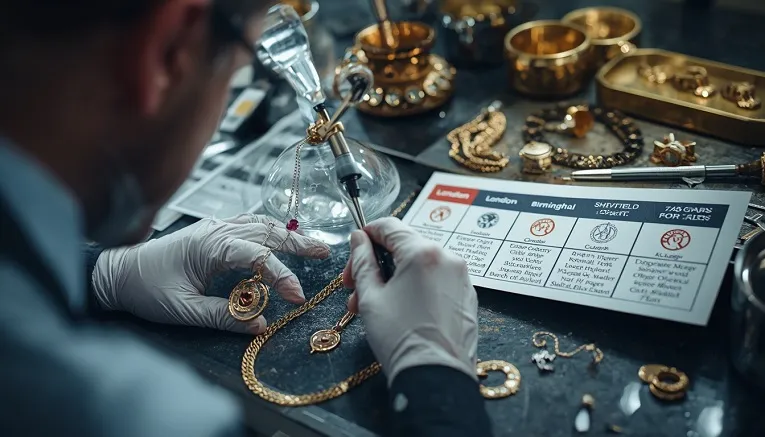
Common UK Fineness Stamps to Recognise
| Metal | Stamp | Meaning |
|---|---|---|
| Gold | 375 | 9 carat, 37.5% pure gold |
| Gold | 585 | 14 carat, 58.5% pure gold |
| Gold | 750 | 18 carat, 75% pure gold |
| Gold | 916 | 22 carat, 91.6% pure gold |
| Silver | 925 | Sterling silver, 92.5% pure silver |
| Silver | 958 | Britannia silver, 95.8% pure silver |
| Platinum | 850 to 950 | Platinum, 85% to 95% pure |
Signs a Hallmark Might Not Be Genuine
A crisp, evenly struck stamp with a matching assay office symbol is a good sign. Be more cautious if you see any of the following.
- A number on its own with no assay office symbol or sponsor’s mark nearby
- A stamp that looks shallow, blurry or printed rather than physically punched into the metal
- A hallmark on the clasp that does not match the metal colour of the rest of the piece
None of these signs alone proves a piece is fake, since genuine marks can wear down over decades. If you have doubts about a higher value item, a UK Assay Office or a qualified jeweller can test it properly.
How to Tell If Gold Is Real at Home
If your question is specifically how to tell if jewellery is real gold, these are the checks worth trying, in order of usefulness.
The Magnet Test
Gold is not magnetic. Hold a strong magnet, ideally a rare earth one, close to the piece. If it pulls towards the magnet with any real force, there is a good chance it contains iron or steel rather than solid gold.
This test has one important limitation. Some counterfeit alloys are also non-magnetic, so passing this test does not confirm a piece is genuine gold on its own. It only rules out a specific category of obvious fake.
The Water Float Test
Featured answer: To identify gold at home with water, drop the piece gently into a glass of still water. Genuine gold is dense and will sink straight to the bottom without floating, and it will not react, fizz, rust or discolour after sitting in the water for a few minutes.
Here is the full method.
- Fill a glass with plain, room temperature water.
- Drop the piece in gently rather than dropping it from a height, to avoid damage.
- Watch what happens. Real gold sinks quickly and rests on the bottom.
- Leave it for a few minutes, then remove and dry it. Genuine gold should show no rust, discolouration or change in appearance.
If the piece floats, or if you notice rust spots or a colour change after soaking, that points towards a base metal core rather than solid gold. As with every home test, treat this as one useful clue rather than final proof, particularly since hollow gold pieces can behave differently in water due to trapped air.
Can You Test Gold with a Lighter?
Featured answer: No, testing gold with a lighter is not a safe or reliable method and we do not recommend it. While it is true that solid gold will not blacken or melt under an ordinary lighter flame, the test can permanently damage plated jewellery by causing the surface to bubble, blister or peel, and some heat resistant base metals can pass the test without actually being gold.
Videos showing this test have circulated widely online, which is why it appears as a genuine search question. The reasoning makes sense on the surface: pure gold has a very high melting point and will not change under a normal flame, so a piece that darkens or blisters likely contains something other than solid gold.
The problem is what happens to plated jewellery. If the item is gold plated rather than solid, heat can cause the thin layer to bubble or lift away from the base metal underneath, ruining a piece that might otherwise have simply needed cleaning. There is also a fume risk from heating unknown alloys indoors. The hallmark, weight and water tests give you useful information without any risk of damage, so save the flame test for a professional with proper equipment, if you need it at all.
Weight and Feel
Gold is one of the densest metals commonly used in jewellery, so a genuine piece should feel noticeably heavy for its size. If you own another piece you know is real gold, hold both side by side. A hollow gold chain can feel lighter than expected, so this test works best as a comparison rather than a fixed rule.
There is also a texture clue worth knowing. Real gold has a soft, almost oily smoothness when a chain slides through your fingers, because it is a naturally soft metal. Cheaper alloys often feel slightly scratchy or tinny by comparison, and the difference becomes easier to notice once you have felt it on a piece you trust.
For more detail on how gold purity affects colour, weight and price, our guide to 9ct vs 18ct vs 24ct gold explains the trade offs between the different standards.
How to Tell If Silver Is Real at Home
If your worry is specifically how to know if jewellery is real silver, the checks are similar to gold but with a few silver specific clues worth knowing.
The 925 Stamp and What It Should Look Like
Genuine sterling silver should carry a 925 stamp, sometimes shown alongside the word Sterling. On UK made pieces this often sits beside one of the four assay office symbols. Our guide to what sterling silver actually is explains the 92.5% purity standard in more depth.
Tarnish Behaviour as a Clue
Genuine sterling silver tarnishes over time because of the small percentage of copper mixed into the alloy. This tarnish is predictable and appears as a gradual, even darkening rather than patchy discolouration. Silver plated pieces tend to wear unevenly, with the plating thinning at contact points and a different coloured base metal showing through.
If you already own a piece and want to bring the shine back rather than test it further, our full guide to cleaning sterling silver jewellery at home walks through safe methods step by step.
The Green or Black Skin Mark Test
If a ring or necklace leaves a green or black mark on your skin after a few hours of wear, this is a reasonably strong sign that the piece contains a significant amount of base metal, most often copper reacting with skin oils and moisture. Genuine solid sterling silver can occasionally cause mild discolouration too, but a strong, consistent green or black mark is more typical of silver plated copper or brass.
Gold vs Silver: Quick Comparison
| Test | Real Gold | Real Silver | Fake or Plated |
|---|---|---|---|
| Magnet | No reaction | No reaction | May be attracted |
| Water | Sinks, no reaction | Sinks | May float or discolour |
| Skin contact | Rarely marks skin | Occasionally, mildly | Green or black mark common |
| Hallmark | 375, 585, 750 or 916 | 925 or 958 | Often missing or unclear |
| Feel | Heavy, smooth, oily slide | Solid, cool to touch | Often light or tinny |
How to Tell If a Diamond Is Real
Diamond testing works differently to metal testing, since you are checking a gemstone rather than an alloy. These home methods give you a reasonable first impression, though a professional gemmologist is the only way to be fully certain.
The Fog or Breath Test
Featured answer: To test a diamond with your breath, hold the stone close to your mouth and breathe on it, the way you would fog up a mirror. A real diamond disperses heat so quickly that the fog clears almost instantly. If the fog lingers for a couple of seconds or longer, the stone may be a simulant such as cubic zirconia.
This is a quick, harmless test you can try in seconds, though it is best used as an early clue rather than a final answer.
The Torch or Light Test
Shine a small torch directly into the stone and look at how the light behaves inside it. A genuine diamond typically shows a mix of white brilliance with grey and dark shadow areas, because of how efficiently it refracts light. Intense rainbow flashes throughout the stone, similar to a prism, are more typical of cubic zirconia or moissanite.
A related check is the transparency test. Place the stone flat side down over a printed letter. If you can read the text clearly through the top, it is more likely to be glass or a lower quality simulant, since a well cut diamond bends light too heavily for text underneath to stay sharp.
Visual Inspection with a Loupe
Natural diamonds almost always contain tiny internal features called inclusions, formed as the stone developed underground. A stone that looks perfectly clear under magnification is worth treating with a little more suspicion, particularly in a lower priced piece. Also check the edges. Diamond is extremely hard, so cut edges should look sharp and crisp rather than soft or rounded.
If your household diamond piece needs a clean rather than a test, our guide to cleaning a diamond ring at home has a safe method that will not affect the setting.
Is Your Designer or Fashion Brand Jewellery Real?
Designer names add another layer to the authenticity question, since you are checking both the materials and the brand markings. Two of the most searched brands are covered briefly below, with general guidance rather than a full authentication service.
How to Tell If Tiffany Jewellery Is Real
Genuine Tiffany pieces are known for exceptionally clean craftsmanship. Look closely at solder joints and chain links, which should appear smooth and continuous with no visible seam. Check the purity stamp too, since Tiffany marks silver pieces clearly with Sterling or 925, and gold pieces with the correct carat stamp. Uneven spacing in engraved text, or a stamp that does not sit neatly aligned with the piece, are common signs of a counterfeit.
How to Tell If Vivienne Westwood Jewellery Is Real
Most Vivienne Westwood jewellery is gold plated brass rather than solid gold, which is normal and does not make a piece fake. Some smaller pieces use genuine 925 sterling silver instead. The way to tell which you have is the same hallmark check covered earlier: a 925 stamp with a maker’s mark points to sterling silver, while a gold toned piece with no metal hallmark is typically brass with a gold plated finish, exactly how the brand intends it to be sold.
When a Test Result Is Unclear
Home tests are useful as a first line of defence, but none are completely conclusive on their own. If a piece fails one test but passes another, or if you are dealing with something of real sentimental or financial value, it is worth having it checked properly.
A UK Assay Office can test metal content directly, and many local jewellers offer authentication using tools like electronic gold testers, which are far more accurate than anything achievable at home. This is worth doing before selling, insuring or resizing a valuable piece.
If skin reactions are part of what prompted your concern in the first place, our guide to hypoallergenic jewellery explains which metals are safest for sensitive skin, regardless of whether a piece turns out to be solid precious metal or not.
How Professional Jewellers Test Jewellery
Professional jewellers use specialist equipment that provides far more accurate results than home tests. Common methods include electronic gold testers, XRF (X-ray fluorescence) analysers, acid testing, diamond testers and metal conductivity meters. These tools identify the metal composition without relying on visual inspection alone and are recommended for valuable jewellery before selling, insuring or repairing it.
How to Avoid Buying Fake Jewellery in the First Place
Prevention is easier than detection. A few habits make a real difference when buying second hand or online.
- Ask sellers for close up, well lit photographs of the hallmark specifically, not just the overall piece
- Be cautious of prices that sit well below the current scrap value of the metal, one of the clearest warning signs of a fake
- Buy from established sellers with clear return policies where possible
- If you are comparing plated and solid options rather than worrying about a fake, our guides to gold plated jewellery, solid gold vs gold filled vs gold plated and gold vermeil jewellery explain what you are paying for at each price point
Our guide to the best jewellery sales in the UK also covers spotting genuine value versus inflated discount pricing.
Jewellery Tests to Avoid
Although the internet is full of DIY jewellery testing videos, several popular methods can permanently damage valuable jewellery. Avoid using bleach, harsh household chemicals, sandpaper, knives, or acid testing kits unless you know exactly what you are doing. Likewise, heating jewellery with a lighter or torch can damage gold plating, loosen gemstones and weaken adhesives used in some settings. If a piece has sentimental or financial value, professional testing is always the safest option.
Common Fake Jewellery Stamps
Some counterfeit jewellery carries misleading stamps such as GP (gold plated), GEP (gold electroplated), HGE (heavy gold electroplate), GF (gold filled) or simply “18K” without an official UK hallmark. These markings describe the finish rather than confirming the metal is solid gold. Always look for a proper UK hallmark when buying precious metal jewellery.
Frequently Asked Questions
How can you tell if jewellery is real gold at home?
Check for a hallmark first, ideally 375, 585, 750 or 916. Then try the magnet test, since real gold is not magnetic, and the water test, since real gold sinks and does not react. Combine these with a weight check for the most reliable result.
How to identify gold at home with water?
Drop the piece into a glass of still water. Genuine gold sinks immediately and shows no rust or colour change after a few minutes. Floating or discolouration suggests a base metal core rather than solid gold.
How to Tell if Pandora Jewellery Is Real
Genuine Pandora sterling silver jewellery carries ALE and 925 hallmarks together with clean engraving and high-quality finishing. Uneven lettering, poor polishing or missing hallmarks may indicate a counterfeit item.
Can you test gold with a lighter?
We do not recommend it. Solid gold will not blacken under an ordinary flame, but the test can permanently damage plated jewellery and does not give a reliable result for heat resistant fake alloys. The hallmark, water and magnet tests are safer and more informative.
Can a Diamond Scratch Glass?
Many people believe scratching glass proves a diamond is real, but this is not a reliable test. Several diamond simulants, including moissanite, are also hard enough to scratch glass, while attempting the test can chip the stone or damage the jewellery setting. Professional diamond testers provide a much safer and more accurate result.
Does real gold turn your skin green?
No, solid gold does not typically cause green skin marks. A green or black mark is a stronger sign that a piece is plated or made from a base metal alloy such as brass or copper reacting with skin moisture.
How do you know if jewellery is real silver?
Look for a 925 or 958 stamp, ideally alongside a sponsor’s mark. Genuine sterling silver tarnishes gradually and evenly over time, while silver plated pieces tend to wear unevenly at contact points, revealing a different coloured metal underneath.
How to tell if a diamond is real at home?
Try breathing on the stone. Real diamonds clear the fog almost instantly due to how efficiently they disperse heat, while fog lingering for a couple of seconds suggests a simulant. A torch test and close visual inspection for natural inclusions add further clues.
Is Vivienne Westwood jewellery real gold or plated?
Most Vivienne Westwood pieces are gold plated brass, with some smaller items made from genuine 925 sterling silver. Check the hallmark to see which you have, since both are genuine products from the brand.
Does Fake Jewellery Rust?
Many counterfeit jewellery pieces contain iron or steel beneath a thin plated layer. Once the plating wears away, moisture can cause rust to develop. Genuine gold, sterling silver and platinum do not rust, although sterling silver can naturally tarnish over time.
What does 925 mean on jewellery?
925 means the item contains 92.5% pure silver, meeting the legal sterling silver standard in the UK. This mark appears on solid sterling silver items and also on gold vermeil pieces, since vermeil is built on a sterling silver base.
Final Thoughts
Telling real jewellery from fake rarely comes down to one single test. The hallmark is your strongest starting point, and a magnet, water or weight check adds useful confirmation from there. For gemstones, the fog test and a close look under magnification give you a sensible first impression without any risk to the piece.
None of these methods replace a professional opinion for anything genuinely valuable, but for everyday peace of mind, whether you have inherited a jewellery box or bought something online that feels slightly off, these are the checks worth trying first.
For more on the metals covered in this guide, browse our full Gold and Silver collections and guides.
Written by the Chic Fashion Jewellery team, who research and review gold, silver and fashion jewellery across the UK market to help readers buy and wear jewellery with confidence. For questions about metal purity, testing or jewellery care, get in touch via our Contact Us page.