
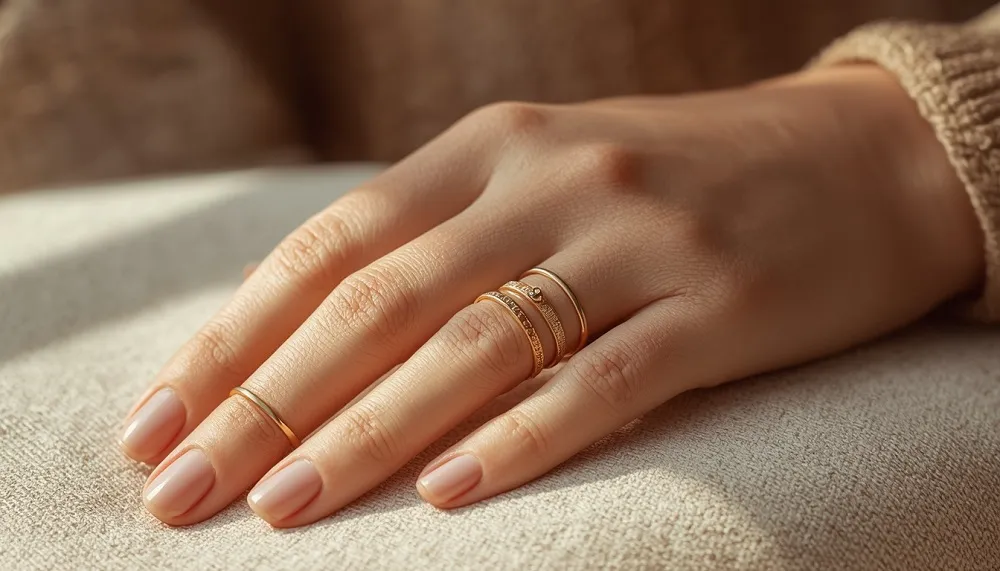
Ring stacking looks effortless when it’s done well. Get it wrong, and a handful of lovely rings can end up looking cluttered instead of styled. The difference usually comes down to a few simple choices: which ring anchors the look, how you mix metals, and how you vary width and texture. This guide covers everything you need to build a stack that actually works, from your very first ring to a full, considered collection.
What Does Ring Stacking Actually Mean?
Ring stacking means wearing several rings together, either layered on one finger or spread across your hand, so they work as a single styled look rather than separate pieces. It’s different from simply owning a lot of rings. A true stack has some kind of thread running through it, whether that’s a shared metal tone, a consistent width, or a deliberate mix of textures.
The trend has grown because it’s flexible. You can build a stack slowly over years, adding a ring for each birthday or milestone, or put one together in an afternoon using pieces you already own. Either way, the goal is the same: a hand that looks put together, not overloaded.
Choosing Your Starting Ring
Every good stack needs a starting point. This is the ring you build everything else around, so it’s worth choosing deliberately rather than just grabbing whatever is nearest.
Building Around an Engagement Ring
If you wear an engagement ring, it’s usually the natural centrepiece. Its size, stone shape, and metal colour set the tone for the rest of the stack. A classic solitaire pairs well with a plain wedding band worn snugly against it, then one or two thinner bands added on either side. A halo or vintage-style ring already has plenty of visual detail, so keep the supporting rings simpler to avoid overwhelming the design. If you’re still shopping for an engagement ring and want to think ahead to how it will stack, our Hatton Garden jewellery guide is a useful starting point for comparing styles and settings.
Starting From Scratch With No Centrepiece
Without an engagement ring in the mix, pick any ring you already love and treat it as the anchor. A signet ring, a birthstone piece, or a slightly wider band all work well as a starting point because they have enough presence to build around. From there, add thinner bands gradually rather than buying a full stack at once. This lets you check that each new piece actually earns its place.
How to Mix Metals Without It Looking Messy
Mixed metal stacks look modern and personal, but they can tip into messy fast if the mix feels accidental rather than intentional.
Which Metal Combinations Work Best
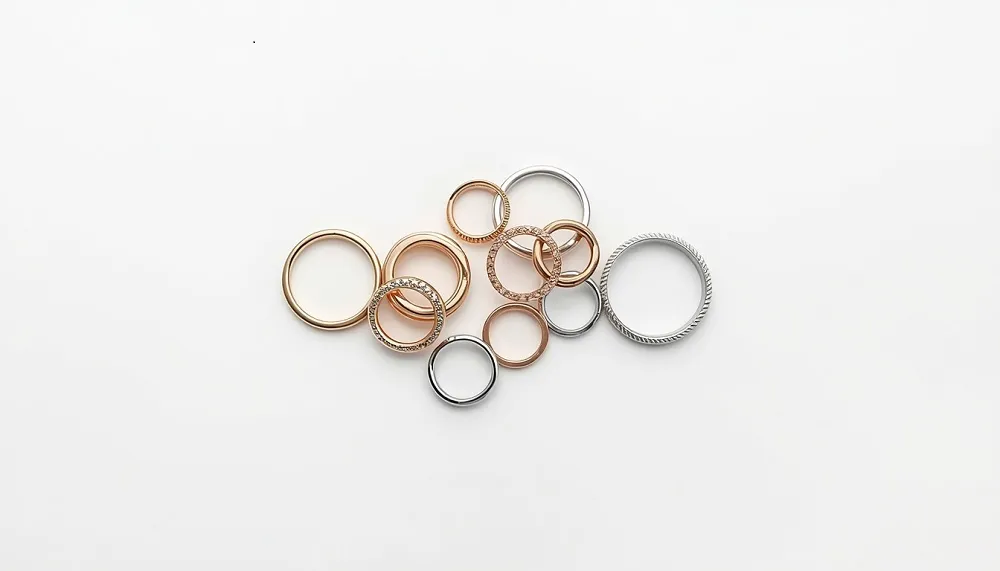
The safest approach is picking one dominant metal and adding a second as an accent, rather than mixing three or more in equal amounts. Yellow gold and rose gold sit close together in tone, so they blend easily. White gold, platinum, and sterling silver share a cool, bright finish that pairs naturally. Mixing warm gold with cool silver tones creates more contrast, which can look striking, but works best when one metal clearly leads and the other appears in smaller amounts, such as one thin silver band among several gold pieces.
Why Metal Hardness Matters for Stacking
This is the detail most style guides skip entirely, and it matters more than people realise. Different metals have different hardness ratings, and softer metals scratch more easily against harder ones. Platinum is harder than most gold alloys, and stacking a softer 18k gold band directly against a platinum band can leave the gold noticeably scratched over time. Sterling silver is softer again, so wearing it pressed tightly against gold or platinum daily will show wear on the silver first. This doesn’t mean you should avoid mixing metals. It means it’s worth expecting some surface wear on the softer piece and having it polished occasionally, rather than being surprised by it later. If you want a deeper look at how different metals hold up against each other, our guide on stainless steel vs sterling silver jewellery covers durability in more detail.
Varying Width and Texture for Visual Balance
A stack made entirely of identical thin bands can look flat, while one made only of wide statement rings can look heavy and overwhelming. The most flattering stacks mix at least two of the following: band width, surface texture, and stone detail.
Try pairing a wider, smooth band with one or two slim, textured rings, such as a hammered or twisted design. A row of pavé diamonds next to a plain polished band adds contrast without competing for attention. If every ring in your stack is trying to be the star, none of them will stand out. Pick one piece to lead, whether that’s your engagement ring, a signet, or a coloured gemstone ring, and let the rest support it.
How Many Rings Should You Stack?
There’s no fixed number, but most well-balanced stacks fall between two and five rings across one hand. Going much beyond that on a single finger tends to affect comfort as much as appearance, since the rings sit higher and can feel bulky against each other when you bend your fingers.
A simple guideline used by many stylists is to leave at least one finger completely bare. This gives the eye somewhere to rest and stops the whole hand from feeling busy. If you love wearing a lot of rings, spreading them across several fingers rather than piling them all onto one tends to look more considered.
Finger-by-Finger Placement Ideas
Different fingers suit different roles within a stack, and knowing this makes building one much easier. Each finger also carries its own traditional symbolism, which our ring finger meanings guide covers in full if you want to place your stack with that in mind.
Ring Finger
This is the traditional home for an engagement ring and wedding band, so it often carries the most visual weight in a stack. If you’re not wearing bridal jewellery here, it still works well as a stack’s centrepiece finger, since it’s the most visible when your hand is resting.
Middle and Index Fingers
These fingers suit slightly bolder, standalone pieces, such as a statement ring or a signet, since they’re not typically layered with multiple bands. A single striking ring here balances a busier stack on the ring finger without competing with it.
Pinky and Thumb
Both are excellent for texture and personality. A slim band or two on the pinky adds a finishing touch without overpowering the hand. Thumb rings, often slightly wider and more casual, work well as a single statement piece rather than part of a dense stack.
Getting the Sizing Right for Multiple Rings
Wearing several rings on one finger changes how they fit compared to wearing a single ring. Rings that sit snugly on their own can feel tight once two or three are pushed together, particularly around the knuckle. If you’re planning a permanent stack of two or more rings on the same finger, it’s worth having them fitted together rather than sized individually, ideally by trying them on stacked at a jeweller before buying.
Wider bands also behave differently to thin ones. A wide band needs slightly more room than a thin band of the same numerical size, since it covers more of the knuckle as your finger bends. If your stack includes a mix of wide and thin pieces, check the fit of the widest ring first, then build the rest of the stack around that sizing.
Budget-Friendly Ways to Build a Stack
You don’t need fine jewellery prices to build a good-looking stack. Thin sterling silver or gold-plated bands are an affordable way to add width variation and texture without a large outlay, and they mix well with one or two higher-quality pieces you already own. Our gold-plated jewellery guide covers how to choose plated pieces that hold up well with regular wear, which matters more once a ring is part of a daily stack rather than worn occasionally.
A practical approach is to invest in one or two pieces you’ll keep for years, such as a solid gold band or a meaningful gemstone ring, then fill in the rest of the stack with lower-cost pieces you can swap out as your style changes.
Common Ring Stacking Mistakes to Avoid
The most frequent mistake is treating every ring as equally important, which leaves a stack with no clear focal point and a cluttered feel. Another common issue is ignoring proportion, pairing several delicate rings with one oversized statement piece so the statement ring looks isolated rather than integrated.
Overlooking comfort is another one worth flagging. A stack that looks beautiful in photos but pinches or catches on clothing throughout the day won’t get worn for long. Finally, mixing too many metals in equal amounts, three or more colours with no clear lead tone, tends to look chaotic rather than curated. Pick a dominant metal and treat any others as accents.
How to Look After a Ring Stack
Preventing Scratches Between Rings
Where possible, arrange harder metals so they don’t sit directly against much softer ones for extended periods. A thin buffer band between a platinum piece and a softer gold band can reduce direct contact and slow surface wear. It’s also worth accepting that some patina and light wear on softer metals is normal with daily stacking, rather than a sign anything has gone wrong.
Cleaning Rings You Wear Together
Take stacked rings apart to clean them individually. The points where rings touch each other collect oils and residue fastest, and that’s often the area that tarnishes or dulls first if it’s never separated and cleaned properly. Our guide to cleaning sterling silver jewellery has a full method for tarnish removal that works well for stacking rings specifically.
Ring Stacking Ideas for Different Occasions
For everyday wear, keep the stack light: two or three thin bands plus your engagement ring, if you wear one, is comfortable enough to forget about by midday. For evening or special occasions, this is the moment to add a statement piece or a gemstone ring you’d normally save for later, layering it in among your everyday bands for extra sparkle. For workwear, particularly in hands-on roles, simpler and fewer rings reduce the risk of scratching or catching, so save denser stacks for days with less physical activity.
Frequently Asked Questions
How many rings can you stack on one finger?
Most comfortable stacks use two to three rings per finger, though this depends on band width and your finger’s shape. Wider bands take up more room, so fewer of them will fit comfortably together.
Can you mix silver and gold rings in a stack?
Yes, mixing warm and cool metal tones is a popular and flattering look. Choose one metal to lead the stack and use the other as a smaller accent for the most balanced result.
Does stacking rings damage them?
Softer metals can develop surface scratches from constant contact with harder metals over time. This is normal wear rather than damage, and occasional polishing keeps softer pieces looking their best.
Should stacked rings be the same size?
Not necessarily, but if you’re planning to wear two or more rings permanently on the same finger, it helps to try them on together and size them as a set rather than individually.
What’s the easiest way to start a ring stack?
Begin with one ring you already love and add a single thin band next to it. Wear that combination for a while before adding more, so you can judge what actually feels comfortable and looks right on your hand.
Ring stacking rewards a bit of patience. Start with one meaningful piece, build slowly, and let width, texture, and metal tone do the work rather than the number of rings on your hand. A considered stack of three will always look better than a rushed stack of eight.
About the author
Rachel Ainsworth is a UK-based jewellery writer with 7 years of experience covering fine and fashion jewellery styling, ring care, and buying guides for everyday wear.