
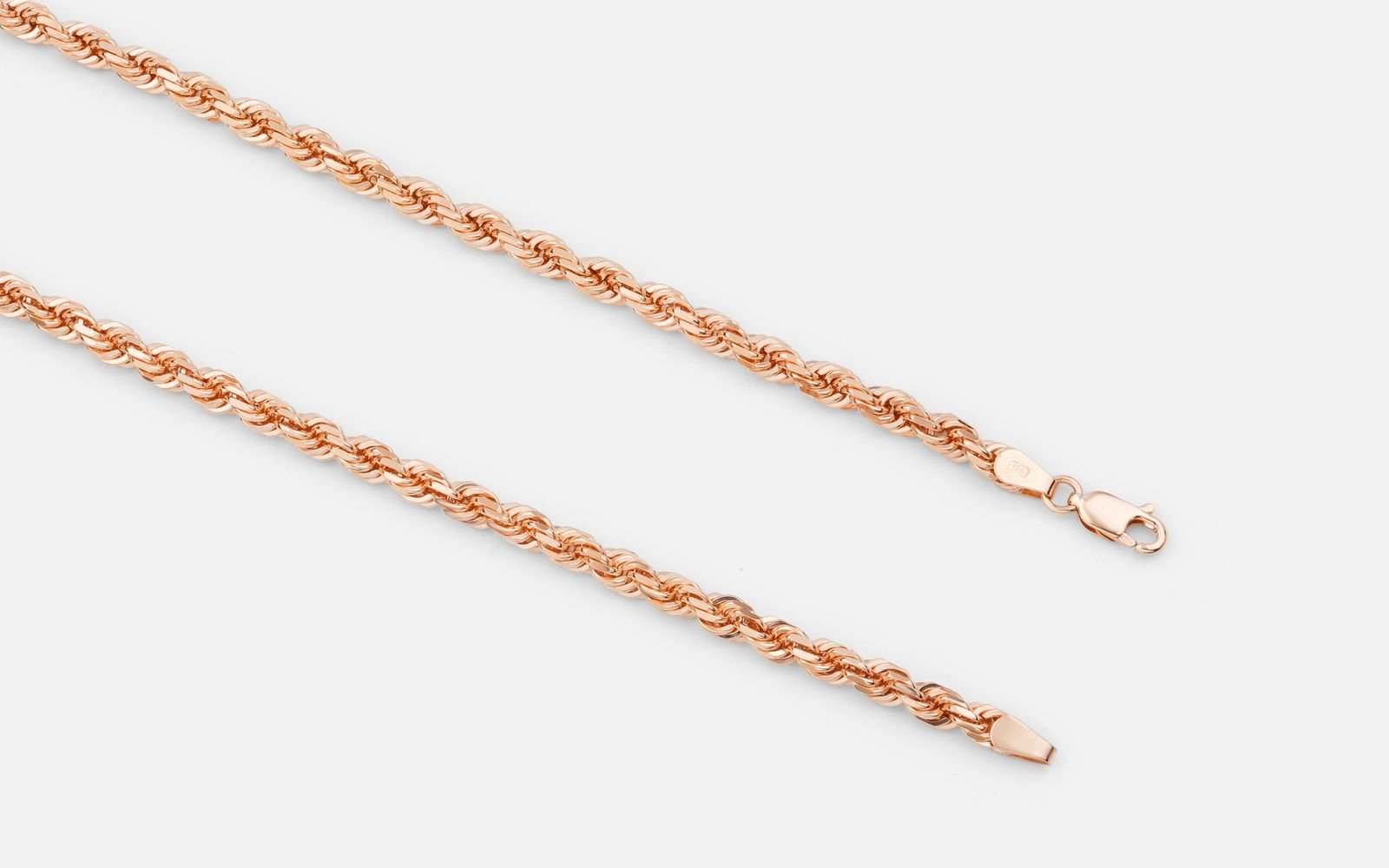
Quick answer: The most common chain bracelet types are curb, cuban link, figaro, box, rope, snake and cable, each named for its link shape, the same construction used in necklace chains but sized for the wrist. Curb, cuban link and box chains are the strongest and hold up best to daily knocks. Rope and snake chains lean more decorative and need slightly gentler handling.
A chain bracelet takes more daily impact than almost any other piece of jewellery, since the wrist bumps against desks, door frames and countless other surfaces throughout an ordinary day. That makes choosing the right link type matter more here than with a necklace.
This guide covers the most common chain bracelet types, which ones hold up best to daily wear, and how to choose based on your lifestyle.
The Main Chain Types Explained
| Chain Type | Look | Durability | Best For |
|---|---|---|---|
| Curb | Flattened, interlocking links lying flush | Very strong | Daily wear, active lifestyles |
| Cuban link | Bold, thick, flattened links | Very strong | Statement pieces, daily wear |
| Box | Square links, smooth and geometric | Very strong | Layering, everyday wear |
| Figaro | Pattern of short links plus one longer link | Good | Classic, versatile daily wear |
| Cable | Uniform oval links | Good | Simple, everyday styling |
| Rope | Twisted, textured, catches the light | Moderate, prone to kinking | Occasional wear |
| Snake | Smooth, plate-linked, tangle-resistant | Good | Daily wear, minimal snagging |
Why Bracelet Durability Matters More Than Necklace Durability
A necklace mostly rests against fabric and skin, but a bracelet constantly knocks against hard surfaces throughout the day, from typing on a keyboard to carrying bags or leaning on a table. Curb, cuban link and box chains handle this kind of repeated impact considerably better than more delicate designs, since their interlocking or flattened construction resists bending out of shape.
Choosing a Chain Bracelet for Daily Wear
If you plan to wear the bracelet every day without much thought, curb and box chains are the safest choices. Both resist twisting under repeated knocks and rarely need repair even after years of regular use. Figaro and cable chains work well too, offering a slightly more delicate look while still holding up reasonably well to daily activity.
The More Delicate Options
Rope chains have a distinctive twisted texture that catches the light beautifully but is more prone to kinking than flatter link styles, particularly if the bracelet gets caught on clothing or a bag strap. A sharp kink in a rope chain often becomes permanent, so this style suits occasional wear better than an everyday piece worn without much thought. Snake chains, despite their smooth, delicate appearance, actually resist tangling and catching quite well, making them a reasonable middle ground for daily wear.
Matching Chain Bracelets for Stacking
Chain bracelets are one of the easiest styles to stack together, since their flat profile means they layer without adding much bulk to the wrist. A curb chain as an anchor, paired with a thinner box or cable chain, gives a stack visual contrast without competing textures. Mixing a solid chain with a beaded or textured bracelet also works well, using the chain as the more structured element in the stack.
Chain Thickness for Bracelets
Bracelet chains are generally worn thinner than necklace chains of the same link type, since a bracelet sits closer to view and does not need to support a pendant’s weight. A 1.5 to 2mm chain works well for a delicate, everyday bracelet, while anything above 4mm starts to read as a statement piece rather than a subtle daily accessory. As with necklaces, solid links consistently outlast hollow ones, and most breaks happen at the clasp rather than along the chain itself.
Caring for Chain Bracelets
Clean solid gold or silver chain bracelets with warm water and a soft toothbrush, paying attention to the gaps between links where dirt from daily activity collects fastest. Remove chain bracelets before activities likely to cause impact, such as sports or heavy lifting, since repeated knocking is what most commonly causes a chain to bend or a clasp to weaken over time. Store bracelets flat or hanging separately to prevent fine chains like rope or snake styles from tangling with other jewellery.
Frequently Asked Questions
What is the strongest chain bracelet type?
Curb, cuban link and box chains are generally the strongest, thanks to their interlocking or flattened link construction that resists bending under the repeated knocks a bracelet takes throughout the day.
Why does my chain bracelet keep bending out of shape?
More delicate styles like rope chains are prone to kinking from everyday impact. Switching to a curb or box chain, both built to resist this kind of bending, usually solves the problem.
Are chain bracelets good for stacking?
Yes. Their flat profile means multiple chain bracelets can layer together without adding much bulk, making them one of the easier styles to combine with other pieces.
What thickness should a chain bracelet be?
Around 1.5 to 2mm suits a delicate, everyday bracelet, while anything above 4mm reads more as a statement piece for occasional wear.
Can chain bracelets be repaired if they break?
Most breaks in sturdier chains like curb or box can be repaired straightforwardly by a jeweller. Deep kinks in delicate rope chains are considerably harder to fix.
Final Thoughts
A chain bracelet takes more daily wear than most jewellery, so choosing a durable link type matters more here than almost anywhere else in your collection. Curb, cuban link and box chains offer the most everyday resilience, while rope and snake styles lean more decorative. If you are building out a bracelet stack, our bracelet stacking guide is worth reading, and our necklace chain types guide covers the same link styles for a matching necklace.