
Women’s Jewellery: The Complete UK Guide to Choosing, Wearing and Buying It Well
Standing in front of a jewellery display, or scrolling through yet another online shop, it’s easy to feel a bit lost. Gold or silver. Delicate or bold. Real gems or fashion pieces. Women’s jewellery covers such a wide range of styles, metals and price points that narrowing it down can feel like its own small project.
This guide walks through the whole category in plain terms: the main types of jewellery, how metals differ, how to pick pieces that suit your skin tone and lifestyle, what things should cost, and how to buy with confidence, whether you’re building your own collection or choosing a gift for someone else.
What Counts as Women’s Jewellery?
Women’s jewellery is any decorative piece worn on the body, typically made from metal, gemstones or other materials, and designed to complement an outfit or mark an occasion. It spans everything from a simple pair of stud earrings worn daily to a statement necklace saved for special events.
The main categories at a glance
- Necklaces and pendants worn around the neck, ranging from short chokers to long layering chains
- Earrings including studs, hoops and drop styles
- Rings worn on any finger, from simple bands to gemstone-set pieces
- Bracelets and bangles worn on the wrist, either as single pieces or stacked
- Anklets worn around the ankle, popular for warmer months
- Brooches pinned to clothing, less common day-to-day but useful for formal wear
Each category comes in fashion jewellery, demi-fine jewellery and fine jewellery versions, which affects both price and how the piece should be cared for. That distinction matters more than most people realise, so we’ll come back to it shortly.
Types of Women’s Jewellery and How to Choose Each One
Necklaces
A necklace is often the first thing people notice, so length and neckline matter as much as the design itself. A choker or short pendant suits crew necks and off-the-shoulder tops well, while a longer chain works better with V-necks or open collars, where it has room to sit properly. If you tend to wear one necklace at a time, a mid-length pendant around 18 inches is the most versatile starting point, since it works with most necklines without competing with the outfit.
Earrings
Earrings do more heavy lifting for a “put together” look than almost any other piece, partly because they sit close to the face. Small studs suit office wear and everyday tasks where you don’t want jewellery catching on things. Hoops add a bit more presence without feeling too formal, and drop or dangle earrings tend to work best for evenings out or when your hair is worn up.
Rings
Rings are the trickiest category to buy correctly, particularly as a gift, because sizing genuinely varies from person to person. If you’re shopping for yourself, get measured at a jeweller or use a printable ring sizer at home, and remember that fingers can swell slightly in warm weather, so aim for a size that’s comfortable rather than snug.
Bracelets and Bangles
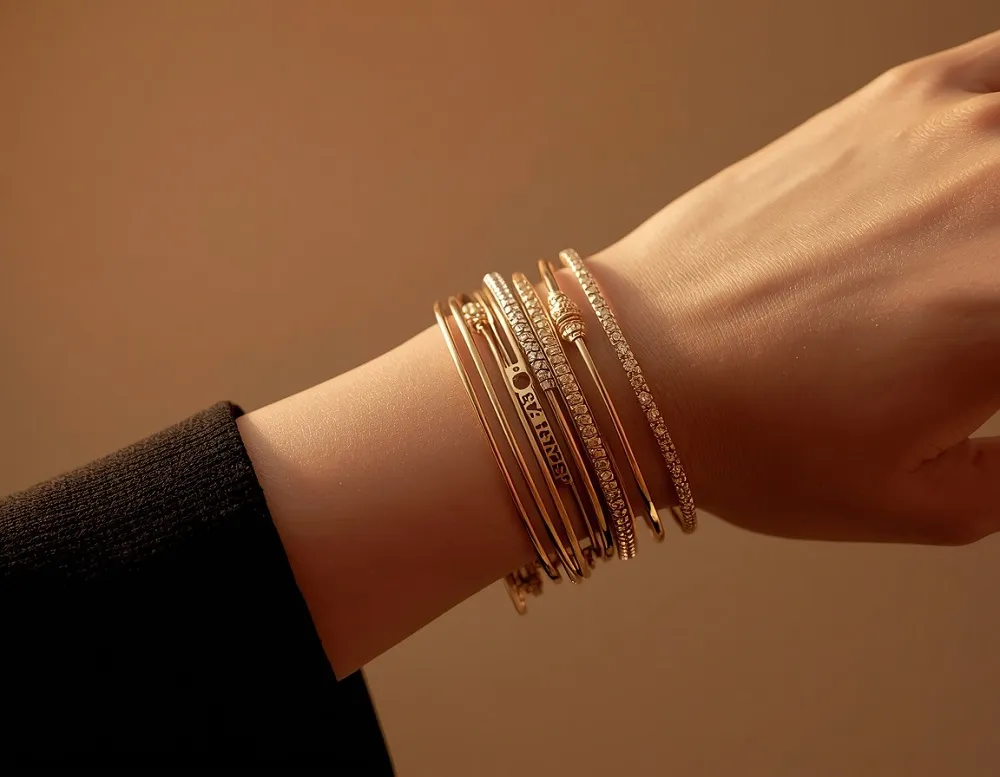
Bracelets sit somewhere between subtle and statement depending on width and how many you wear together. A single fine chain bracelet reads as understated, while a stack of two or three bangles has more visual weight. If you work with your hands often, a bangle that doesn’t dangle charms or chains tends to hold up better day to day.
Anklets and Brooches
Anklets have become more popular again for summer, worn with sandals or bare ankles, and generally sit best in a delicate chain style. Brooches are less common in everyday rotation but remain useful for pinning scarves, adding detail to coats, or dressing up formal outfits.
Understanding Jewellery Metals and Materials
Metal choice affects price, appearance and how well a piece lasts, so it’s worth understanding the basics before you buy.
Gold, gold-plated and gold vermeil
Solid gold is the most durable and long-lasting option but also the most expensive. Gold-plated jewellery has a thin layer of gold over a base metal, which keeps the price low but means the colour can wear away over time, especially with daily contact and moisture. Gold vermeil sits in between: it’s sterling silver coated with a thicker layer of gold than standard plating, giving it more durability while staying more affordable than solid gold. We’ve covered this comparison in full in our gold vermeil jewellery guide, and if you want the complete picture on gold pieces generally, our gold jewellery guide covers types, pricing and buying tips in depth.
Sterling silver and stainless steel
Sterling silver is a classic, affordable choice that can tarnish over time, particularly with exposure to moisture, perfume or air. Stainless steel resists tarnishing much better and holds up well to daily wear, which makes it a practical option for jewellery worn constantly, such as everyday rings or bracelets.
Choosing hypoallergenic options
If you or the person you’re buying for has sensitive skin, look for hypoallergenic jewellery made from materials such as surgical steel, titanium or solid gold, all of which are far less likely to cause a reaction than cheaper alloys. Our hypoallergenic jewellery guide goes into more detail on the safest materials if this is a concern.
How to Choose Jewellery for Your Skin Tone
Metal colour can either lift or flatten your natural colouring, and undertone is a useful shortcut for working out which suits you best.
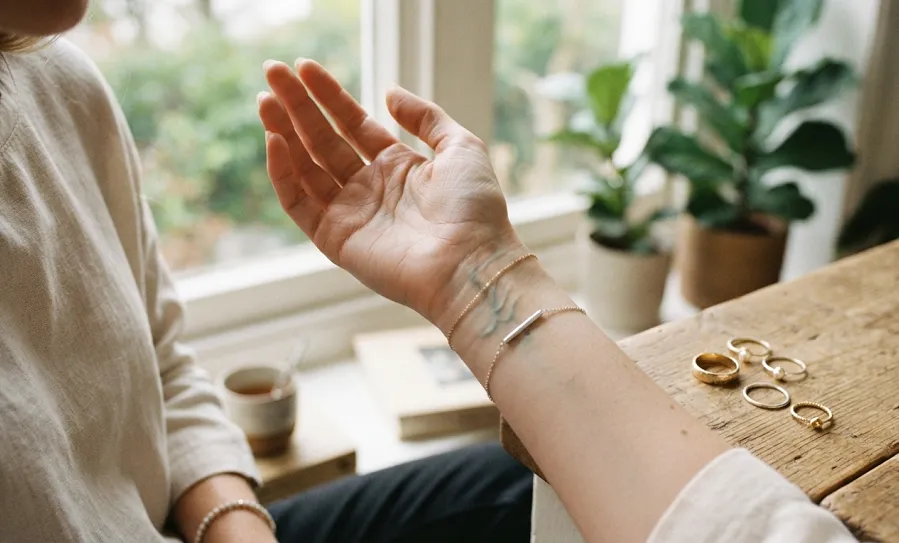
If the veins on the inside of your wrist look more blue or purple, you likely have a cool undertone, and silver, white gold or platinum tend to look most natural. If your veins appear more green, you likely have a warm undertone, and yellow gold or rose gold usually suits better. If you genuinely can’t tell, or both look fine, you probably have a neutral undertone, which means most metals will work and mixing gold with silver is a safe, current option rather than a mistake.
Fashion, Demi-Fine and Fine Jewellery: What’s the Difference?
Fashion jewellery is made from base metals and costume materials, is generally the most affordable, and is designed to follow trends rather than last decades. It’s a sensible choice for pieces you expect to update often.
Demi-fine jewellery uses materials like gold vermeil or sterling silver with genuine gemstones, offering better durability and quality than fashion jewellery without the price tag of fine jewellery. It suits people who want pieces to last a few years and hold their appearance with reasonable care.
Fine jewellery is made from solid precious metals such as 9 to 18 carat gold, platinum or sterling silver, often set with genuine gemstones, and is built to last a lifetime with proper care. It carries a higher price but retains value and durability that fashion and demi-fine pieces simply can’t match.
As a rough guide, choose fashion jewellery for trend pieces you’ll wear for a season or two, demi-fine for everyday staples you want to look good for years, and fine jewellery for pieces with sentimental weight, such as engagement rings or anniversary gifts.
Building a Women’s Jewellery Wardrobe: The Essentials
If you’re starting from scratch or filling gaps in an existing collection, a handful of pieces cover most situations:
- A simple pendant necklace for everyday wear
- A pair of small stud earrings for daily use
- A pair of hoops or drops for evenings and dressier days
- One or two stacking rings
- A bracelet or bangle that works both casually and smartly
From there, statement pieces and trend items can be added around this base without needing to replace it each season.
How to Choose Women’s Jewellery for Different Occasions
Everyday and work jewellery
For daily wear, smaller and more durable pieces make the most sense. Stud earrings, a slim ring and a delicate necklace won’t catch on clothing or draw unwanted attention in professional settings, and materials like stainless steel or gold vermeil hold up better to constant wear than delicate fashion pieces.
Wedding and formal jewellery
Weddings, whether as a guest or the bride, tend to call for jewellery that photographs well without overpowering the outfit. Pearl or diamond studs, a delicate bracelet, and a simple pendant are safe, elegant choices that won’t compete with a formal dress or suit.
Evening and statement jewellery
Evening events give more room to experiment. Drop earrings, a cocktail ring or a bold cuff can carry an outfit on their own, so it usually works best to pick one statement piece rather than several competing for attention at once.
How to Layer and Stack Jewellery
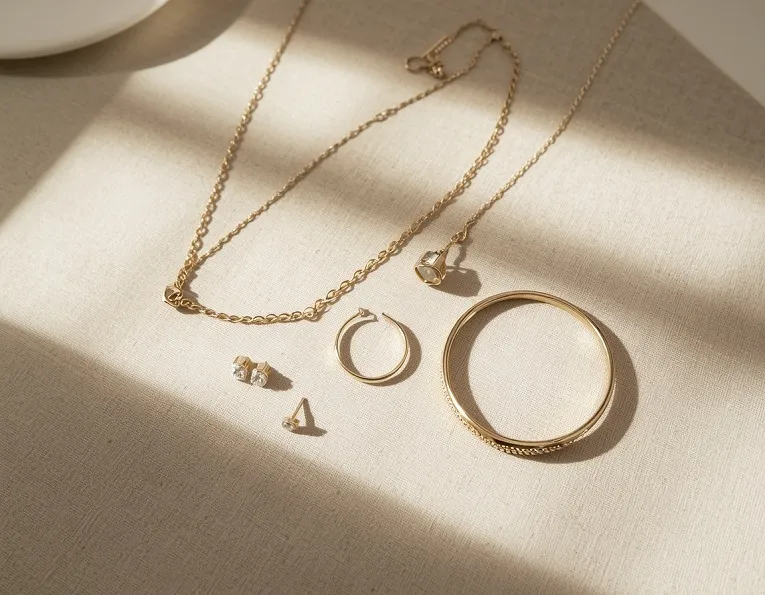
Layering necklaces and stacking rings or bracelets has become one of the more popular ways to wear jewellery, and it’s easier to get right than it looks. For necklaces, vary the lengths so each chain is visible rather than overlapping, and try to keep a consistent metal tone unless you’re deliberately mixing gold and silver. For rings, mix textures and widths rather than wearing identical bands, and leave at least one finger bare so the stack doesn’t look accidental. The same logic applies to bracelets: a few different widths and textures on one wrist tends to look more considered than several identical pieces.
Buying Women’s Jewellery as a Gift
Getting the size right
Necklaces and bracelets are relatively forgiving gifts, since most come with adjustable clasps or standard lengths that suit most people. Rings are the exception. If you don’t already know the size, a common trick is to borrow a ring the person already wears on the relevant finger and take it to a jeweller to be measured, or compare it against a printable sizing chart at home.
What to do if it’s not quite right
Check the retailer’s returns policy before buying, particularly for rings and earrings. Many UK jewellers offer free resizing on rings within a set period, while earrings are often non-returnable for hygiene reasons once opened, so it’s worth choosing studs in a versatile size and style if you’re at all unsure.
Where to Buy Women’s Jewellery in the UK
The UK market ranges from high street multiples to independent and online-only brands. Larger retailers such as department stores and jewellery chains tend to offer a wide range of fine and fashion jewellery with the reassurance of physical stores for sizing and returns. Independent and direct-to-consumer brands often focus on a specific style, such as minimalist demi-fine pieces or personalised jewellery, and can be a good source for something more distinctive than mainstream ranges. Whichever route you choose, check for clear material information, a returns policy that covers rings and sizing, and reviews that mention how pieces wear over time rather than just how they look on arrival.
Current Women’s Jewellery Trends
A few directions are shaping what’s popular in women’s jewellery right now. Chunky chain necklaces and bracelets continue to sit alongside more delicate layering pieces, giving people room to wear either depending on the occasion. Mixed metal styling, once considered a mismatch, is now a deliberate choice, particularly in stacked rings and layered necklaces. Coloured gemstones, both precious and semi-precious, are appearing more often outside of traditional fine jewellery, adding personality to demi-fine pieces. Personalised jewellery, including initial pendants and engraved bands, remains consistently popular for gifting, since it adds sentimental value without needing a large budget.
Caring for Your Jewellery Collection
How you care for jewellery depends heavily on the material. Sterling silver benefits from regular polishing and should be stored away from air and moisture when not worn, ideally in an airtight bag or lined box. Our guide to cleaning silver jewellery at home covers safe methods step by step. Gold and gold vermeil pieces should be kept away from perfume, lotion and chlorine, all of which can wear away plating or dull the finish over time. As a general habit, put jewellery on last when getting dressed and take it off first when you get home, which limits its exposure to the products and friction that cause most damage.
Frequently Asked Questions
What jewellery should every woman own?
A simple pendant necklace, a pair of everyday stud earrings, one versatile ring and a bracelet that suits both casual and smart outfits form a solid, flexible base.
What metal suits my skin tone?
Cool undertones generally suit silver, white gold or platinum, while warm undertones tend to suit yellow or rose gold. Neutral undertones can wear most metals comfortably, including mixed metal pieces.
How much should I spend on jewellery?
This depends entirely on how often you’ll wear a piece and how long you want it to last. Fashion jewellery suits trend pieces worn for a season, demi-fine suits everyday staples, and fine jewellery suits pieces meant to last a lifetime.
What’s the difference between fashion and fine jewellery?
Fashion jewellery uses base metals and costume materials at a lower price point, while fine jewellery uses solid precious metals and genuine gemstones and is built to last considerably longer.
What jewellery is appropriate for the office?
Small stud earrings, a slim ring and a delicate necklace tend to work best, since they’re less likely to catch on clothing or feel distracting during the working day.
How do I choose jewellery as a gift?
Necklaces and bracelets are the safest gifting choices since sizing is more forgiving. For rings, try to establish the size in advance, and always check the seller’s returns policy before buying.
Final Thoughts
Choosing women’s jewellery doesn’t need to be complicated once you understand the basics: which types suit your lifestyle, which metals suit your skin tone and budget, and how to size things correctly when buying for yourself or someone else. Start with a few versatile essentials, add statement pieces as you find them, and look after what you already own so it keeps looking its best for years to come.
Sarah Mitchell is a UK-based jewellery writer with 8 years of experience covering fashion and fine jewellery trends, materials and buying guides for independent retailers.