
Gold-Plated vs Sterling Silver Jewellery: Which Is Right for You?
If you have ever stood in front of a jewellery display trying to decide between a warm gold piece and a cool silver one, you already know how confusing this choice can be. Both look beautiful in the store. Both come with a price tag that feels reasonable. But six months later, one of them might still look brand new while the other has lost its shine completely.
This guide walks you through everything you actually need to know before you buy: how each metal is made, how long they really last, which one is safer for sensitive skin, and which one makes more sense for your budget and lifestyle. No sales pitch, just the facts you need to make a confident choice.
Quick Answer: Gold-Plated vs Sterling Silver at a Glance
If you want the short version first, here it is.
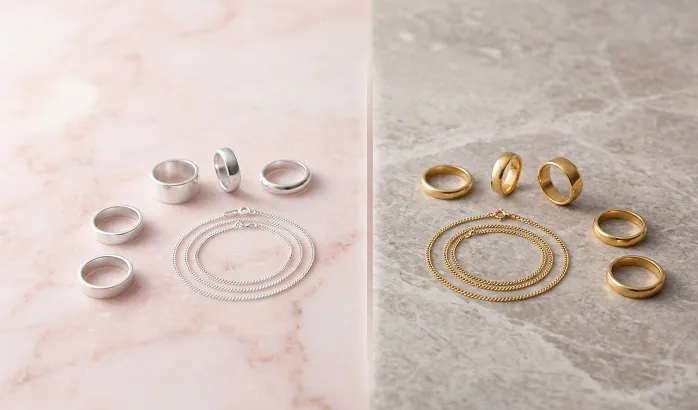
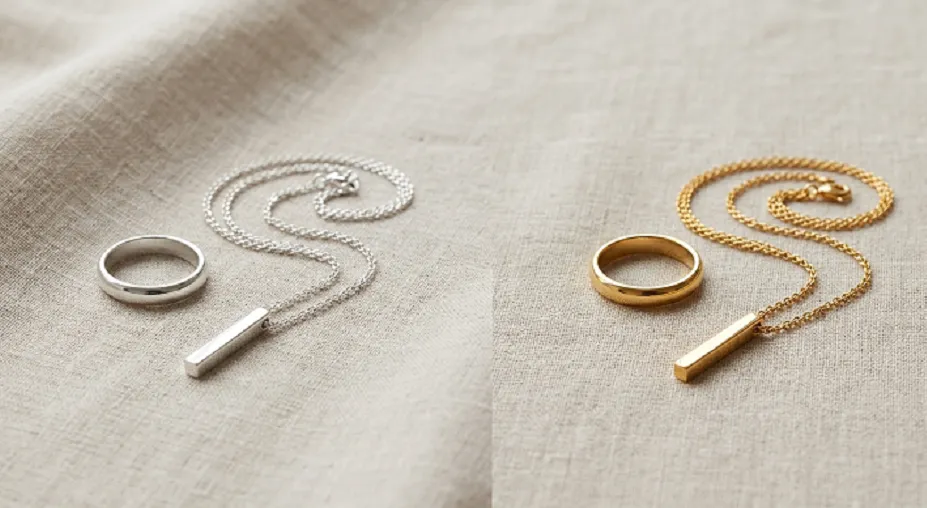
Sterling silver is a solid precious metal alloy. It costs a bit more upfront, but it can last a lifetime with basic care. Gold-plated jewellery is a base metal with a thin layer of gold on top. It costs less and gives you that gold look immediately, but the gold layer will eventually wear away.
| Factor | Sterling Silver | Gold-Plated |
|---|---|---|
| What it’s made of | 92.5% pure silver, 7.5% other metals | Base metal (brass, copper, or steel) coated in gold |
| Typical lifespan | Years to decades with care | Months to a few years, depending on plating quality |
| Skin reactions | Rare, generally safe | Possible, especially with nickel-based base metals |
| Upfront cost | Moderate | Low |
| Long-term value | Holds intrinsic value (it’s real silver) | Little to no resale value |
| Best for | Daily wear, long-term pieces, gifts meant to last | Trend pieces, occasional wear, budget styling |
If you want jewellery you can wear daily for years, lean toward sterling silver. If you want to try a trend without spending much, gold-plated is a smart, low-risk choice.
Quick Winner Comparison
| Category | Winner |
|---|---|
| Durability | Sterling Silver |
| Affordability | Gold-Plated |
| Sensitive Skin | Sterling Silver |
| Trendy Styles | Gold-Plated |
| Long-Term Value | Sterling Silver |
| Luxury Appearance | Tie |
| Everyday Wear | Sterling Silver |
What Is Sterling Silver Jewellery?
Sterling silver is not pure silver. Pure silver is actually too soft to hold its shape in a ring or bracelet, so jewellers mix it with other metals, usually copper, to make it strong enough for everyday wear.
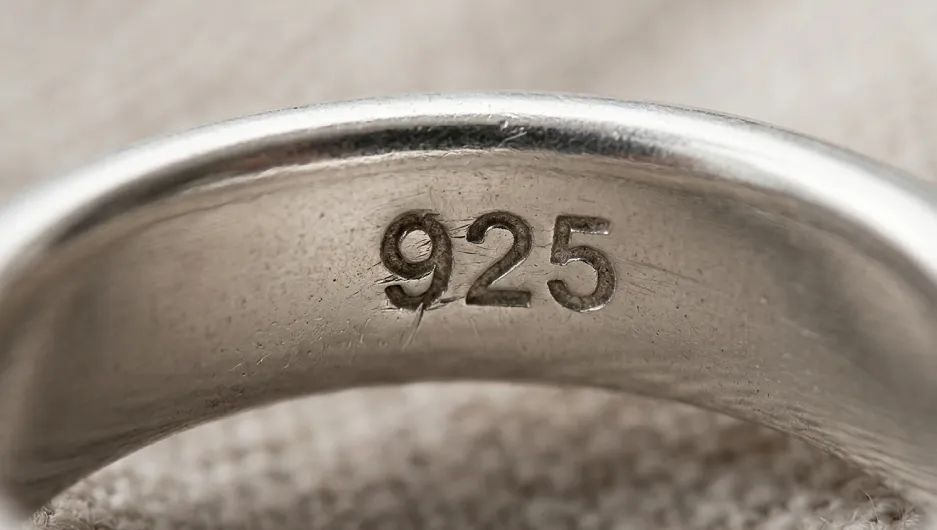
That is where the number “925” comes from. It means the piece is 92.5% pure silver and 7.5% other metal. You will see this stamped somewhere on the piece, often on the inside of a ring band or the clasp of a necklace. If a piece is marketed as silver jewellery but does not carry this stamp, that is worth asking about before you buy.
This composition is what gives sterling silver its strength and its bright, cool-toned shine. It is also why sterling silver is considered a precious metal in its own right, not just a coating. The silver itself has real value, separate from the craftsmanship of the piece.
One thing people are often surprised to learn is that sterling silver does not stay shiny forever without any change. It tarnishes. This is a natural chemical reaction between the copper in the alloy and sulfur compounds in the air, not a sign of poor quality. A quick polish with a soft cloth brings the shine right back.
What Is Gold-Plated Jewellery?
Gold-plated jewellery starts as a completely different metal, usually brass, copper, or stainless steel. A jeweller then runs an electric current through a gold solution, which causes a thin layer of gold to bond to the surface of the piece. This process is called electroplating.
The result looks like solid gold from the moment you put it on. Same color, same shine, often the same weight in your hand. The difference only shows up over time.
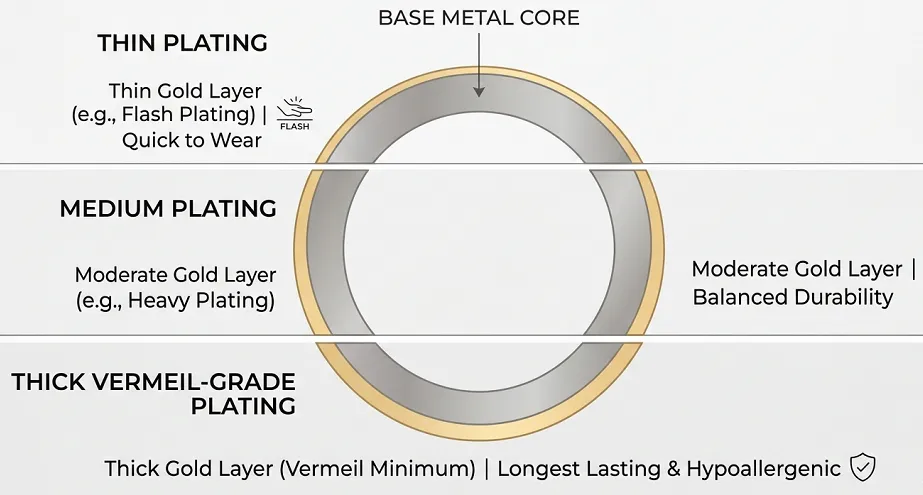
Two things determine how long that gold layer survives: the base metal underneath and the thickness of the gold coating. A thicker gold layer over a higher quality base metal will outlast a thin gold wash over cheap brass by a wide margin. Most retail listings do not tell you the thickness, which is honestly one of the biggest blind spots for shoppers in this category.
Gold-plated jewellery is popular for a simple reason. It gives you the visual impact of gold for a fraction of the price, which makes it ideal for trying new styles, building a trend-forward collection, or buying multiple pieces without a big budget commitment.
Gold-Plated, Gold Vermeil, Gold-Filled, Solid Gold: Knowing the Difference
This is the part most guides skip, and it is exactly where shoppers get confused or misled.
Gold Vermeil
Gold vermeil is a specific, regulated type of gold plating. In the United States, the Federal Trade Commission requires that vermeil be made with a sterling silver base (not brass or copper) coated in gold that is at least 10 karats and at least 2.5 microns thick. That thickness requirement matters a lot. It is roughly five times thicker than standard gold plating, which means vermeil typically lasts significantly longer before it fades.
Gold-Filled Jewellery
Gold-filled sits between plated and solid gold, and almost nobody talks about it. Instead of an electroplated layer, gold-filled jewellery has a much thicker layer of gold mechanically bonded to a base metal using heat and pressure. The gold layer must legally make up at least 5% of the total weight of the piece. This makes gold-filled jewellery far more durable than standard gold plating, often lasting 10 to 30 years with reasonable care, while still costing much less than solid gold.
Solid Gold
Solid gold is gold all the way through, mixed with other metals only to adjust karat purity (24K, 18K, 14K, and so on). There is no coating to wear off because there is nothing underneath it. This is also why it costs significantly more.
Quick Decoder for Reading Product Listings
When you see these terms on a product page, here is what they actually mean:
- “Gold plated” alone, with no other detail, usually means a thin standard layer over an unspecified base metal
- “Gold vermeil” means sterling silver base with a thicker, regulated gold layer
- “Gold filled” or “Gold-filled” means a thick, mechanically bonded gold layer over a base metal
- “Solid gold” or a karat number alone (14K, 18K) means gold throughout
If a listing only says “gold plated” with no mention of micron thickness or base metal, it is reasonable to assume it is on the lower end of durability.
Durability and Lifespan: Head-to-Head
This is usually the deciding factor for most buyers, so let’s get specific.
How Sterling Silver Ages
Sterling silver does not wear away. What changes is its surface. Tarnish builds up gradually from exposure to air, moisture, and sulfur compounds (these are naturally present in some foods, rubber, and even certain paper products). The metal underneath stays fully intact. A piece that looks dull after a year of daily wear can be polished back to looking new in a few minutes. This is the core advantage of sterling silver: the damage is cosmetic and reversible, not structural.
How Gold Plating Wears
Gold plating fades because the gold layer is physically thin enough to rub off through friction, contact with skin oils, lotion, and repeated handling. Once the gold layer wears through in a spot, usually at points of contact like the inside of a ring or the back of an earring post, the base metal underneath becomes visible. This cannot be polished away because the gold is genuinely gone, not just dulled.
The Micron Number Sellers Rarely Mention
Gold plating thickness is measured in microns. Here is a practical breakdown:
- Under 0.5 microns: very thin, often fades within a few months of regular wear
- 0.5 to 1.5 microns: standard fashion jewellery plating, typically lasts 6 months to 2 years
- 2.5 microns and above: vermeil-grade or premium plating, can last several years with care
If a seller cannot tell you the micron thickness, that is a useful signal in itself. Quality brands that invest in thicker plating tend to list it as a selling point.
Skin Sensitivity and Allergies
If you have ever had a ring turn your finger green or an earring make your ear itch, this section matters to you directly.
Why Some Gold-Plated Jewellery Causes Reactions
The reaction usually has nothing to do with the gold itself. It comes from the base metal underneath, particularly when that base metal contains nickel. Nickel is a common allergen, and once the thin gold layer wears down even slightly, skin can come into direct contact with the nickel underneath. This is the most common cause of the “cheap jewellery turned my skin green” experience.
Is Sterling Silver Hypoallergenic?
Sterling silver is generally well tolerated by most people, including many with sensitive skin. It is not nickel by nature, though some lower-quality sterling silver blends do use small amounts of nickel in the alloy mix, so it is not automatically guaranteed to be nickel-free. If you have a known nickel allergy, look specifically for jewellery labeled “nickel-free” rather than assuming all sterling silver qualifies.
How to Identify Skin-Safe Pieces
A few practical habits help here. Look for products that explicitly state “nickel-free” or “hypoallergenic” rather than assuming based on metal type alone. For gold-plated pieces, ask or check whether the base metal is brass, copper, or stainless steel, since stainless steel tends to be more skin-friendly than brass for sensitive wearers. If you are unsure how your skin will react to a new piece, wear it for a short period first rather than all day right away.
Price and Value Comparison
Upfront Cost
Gold-plated jewellery almost always wins here. Because only a small amount of actual gold is used, prices stay low, often a fraction of what an equivalent sterling silver piece costs, and a tiny fraction of solid gold. Sterling silver costs more upfront because you are paying for an actual precious metal, not just a coating.
Cost Per Year of Wear
This is a more useful way to think about value than sticker price alone. A sterling silver piece that costs more initially but lasts 10 years works out to a low annual cost. A gold-plated piece that costs less but needs replacing every year because the plating fades can end up costing more over time if you keep buying replacements. Neither option is automatically the “smarter” choice. It depends on whether you actually want one long-term piece or enjoy rotating through trend pieces regularly.
Resale and Scrap Value
Sterling silver retains real value because it contains an actual precious metal. Even well-worn sterling silver pieces typically hold some scrap value based on current silver prices. Gold-plated jewellery has essentially no resale value, since the base metal underneath is not precious and the gold layer is too thin to be worth extracting. If you think of jewellery as a small long-term asset as well as an accessory, this is worth factoring in.
Appearance and Style
Sterling silver has a bright, cool, white-toned shine. It tends to suit cooler skin undertones particularly well and gives a clean, modern, minimalist look. Gold, whether plated or solid, has a warm yellow or rose tone that complements warmer undertones and reads as more classic or luxurious in many contexts.
That said, this is genuinely a matter of personal taste more than a hard rule. Plenty of people with cool undertones love gold, and plenty of people with warm undertones love silver. The better question is usually what you are drawn to and what makes you feel good wearing it.
Mixing metals, wearing silver and gold pieces together, used to be considered a styling mistake. That rule has mostly disappeared. Layered necklaces and stacked rings in mixed metals are common now, and there is no real downside to wearing both as long as the pieces themselves feel intentional together.
Best Choice by Use Case
Rather than picking a single “winner,” it helps to match the metal to how you actually plan to use it.
For daily wear: Sterling silver tends to hold up better to constant friction from clothing, bags, and daily tasks. If you want one piece you barely think about removing, this is usually the safer long-term choice.
For gifting and special occasions: Either can work well, but sterling silver (especially gold vermeil if you want that gold look) signals a bit more lasting value for a meaningful gift.
For trend pieces: Gold-plated jewellery is genuinely a smart choice here. If you are buying something to match a specific outfit or trend that might not last past a season, there is no reason to spend more on a piece meant to be temporary anyway.
For active lifestyles, gyms, or frequent swimming: Both metals benefit from being removed before water exposure, chlorine, and heavy sweat, but gold plating degrades noticeably faster under these conditions since moisture accelerates wear on the thin gold layer.
Which Is Better for Everyday Wear?
For most people, sterling silver is the better choice for everyday wear. Because the metal is solid all the way through, it can withstand daily friction, occasional knocks, and regular cleaning without losing its core appearance. While sterling silver may tarnish over time, tarnish can be removed easily.
Gold-plated jewellery is better suited to occasional wear. Daily exposure to skin oils, moisture, clothing friction, and cosmetics gradually wears away the gold layer. Once the plating has worn through, the underlying metal becomes visible and the piece may require replating.
If you want jewellery that you can wear regularly for years, sterling silver generally provides a better long-term experience.
How to Care for Sterling Silver Jewellery
Good care is simple and does not take much time.
Store pieces in an airtight bag or a lined jewellery box when not wearing them, since limiting air exposure slows tarnishing. Use a dedicated silver-polishing cloth to restore its shine, and do so every few weeks if you wear the piece often. Take jewellery off before swimming, showering, or applying lotion and perfume, since chemicals in these products speed up tarnish. Interestingly, wearing sterling silver regularly can actually help, since the natural oils in your skin create a light barrier that slows tarnish buildup compared to pieces left untouched in a drawer for months.
How to Care for Gold-Plated Jewellery
Gold plating needs a gentler approach since there is no “polishing it back” once the layer wears through.
Put your jewellery on last when getting ready, after applying lotion, perfume, and hairspray, and take it off first when undressing. This single habit alone meaningfully extends plating life. Clean gently using a soft, dry cloth rather than any liquid cleaner or ultrasonic cleaner, which can strip plating faster. Store pieces separately, not tangled together in a drawer, since metal-on-metal contact can scratch and wear the gold layer. Avoid wearing gold-plated pieces during workouts, swimming, or in humid conditions when possible.
Can Gold Plating Be Redone?
Yes, in many cases. Some jewellers offer re-plating services, particularly for pieces with sentimental value or higher original cost. This usually costs a fraction of buying solid gold and can restore a faded piece to looking new. It is generally only worth doing for pieces you genuinely want to keep long-term, since the service cost can sometimes approach what a new piece would cost for inexpensive fashion jewellery.
How to Spot Quality Before You Buy
A little label-reading goes a long way here.
Check for the actual hallmark stamp on sterling silver pieces (look for “925,” “S925,” or “sterling”). If a listing claims sterling silver but shows no stamp in photos, ask the seller directly. For gold-plated pieces, ask about the base metal and the gold thickness in microns if it is not listed, since reputable sellers will usually know and share this information readily. Be cautious of listings that use the word “gold” prominently without clarifying whether it means solid gold, vermeil, filled, or plated, since this ambiguity is sometimes intentional. Reviews mentioning how a piece looks after several months of wear are often more useful than reviews focused only on first impressions.
Sustainability and Ethical Considerations
This angle gets little attention, but it is becoming more relevant to shoppers.
Recycled sterling silver is increasingly available and reduces the environmental impact of new mining. Some jewellery brands now specify when their silver is recycled, which is worth looking for if this matters to you. From a sustainability standpoint, thicker, longer-lasting gold plating (or vermeil) is generally a better choice than ultra-thin fast-fashion plating, simply because pieces that last longer get replaced less often, reducing overall consumption and waste over time. Buying fewer, better-made pieces tends to be the more sustainable approach regardless of which metal you choose.
Regional Note: Hallmarking Standards
If you are buying silver jewellery in South Asia, including India and Pakistan, it is worth knowing that hallmarking standards can differ from Western markets. In India, the Bureau of Indian Standards (BIS) oversees silver hallmarking, and certified pieces carry a BIS hallmark in addition to the 925 purity mark. When buying locally from smaller retailers or online marketplaces, look for this certification specifically, since it offers an added layer of verification beyond the basic 925 stamp alone.
Frequently Asked Questions
Is gold-plated jewellery worth buying?
Yes, for the right purpose. It is a smart, low-cost way to wear trend pieces or try new styles without a big investment, as long as you understand the gold layer will fade over time.
Does sterling silver turn skin green?
Genuine, properly made sterling silver rarely turns skin green. That reaction is more commonly associated with lower-quality alloys or gold-plated pieces where the base metal has been exposed.
How long does gold plating last?
This depends heavily on thickness and how often the piece is worn. Standard plating typically lasts 6 months to 2 years with regular wear, while thicker plating or vermeil can last several years.
Can gold-plated jewellery get wet?
Brief contact is usually fine, but prolonged exposure to water, chlorine, and sweat speeds up wear on the gold layer significantly. It is best to remove gold-plated pieces before swimming or showering.
Is gold vermeil better than gold-plated?
Generally, yes, in terms of durability. Vermeil requires a sterling silver base and a thicker, regulated gold layer, which means it typically lasts longer than standard gold plating over brass or other base metals.
Which is better for sensitive skin?
Sterling silver is usually the safer choice, though looking for nickel-free labeling matters for both metals if you have a known sensitivity.
Is 925 sterling silver real silver?
Yes. The “925” refers to 92.5% pure silver content, with the remaining 7.5% being other metals (typically copper) added for strength. It is recognized as a genuine precious metal alloy.
Can you re-plate gold jewellery?
Yes, many jewellers offer this service. It is usually worthwhile for pieces with sentimental or higher original value.
Buyer’s Checklist Before Choosing
Before purchasing either sterling silver or gold-plated jewellery, ask yourself:
- Do I want a piece for everyday wear or occasional use?
- Do I have sensitive skin?
- How important is long-term durability?
- Am I buying a timeless piece or following a trend?
- Does the seller disclose the base metal and plating thickness?
- Is there a 925 hallmark on sterling silver pieces?
- Will I be willing to follow jewellery care instructions?
Answering these questions can help you choose the material that best fits your lifestyle and budget.
Final Verdict: Which Should You Choose?
There is no single right answer here, only the right answer for how you actually plan to wear the piece.
Choose sterling silver if you want jewellery that lasts for years, you have sensitive skin, or you care about a piece holding real, lasting value. Choose gold-plated jewellery if you want the gold look on a tight budget, you are buying a trend piece you expect to wear for a season, or you simply enjoy rotating styles often without a big financial commitment.
Many people end up owning both, and that is genuinely the practical answer for most jewellery collections. Sterling silver for the pieces you want to keep forever, gold-plated for the pieces you want to enjoy right now.
Quick Takeaways
- Sterling silver is 92.5% pure silver and holds real intrinsic value, while gold-plated jewellery is a base metal with a thin gold coating that will eventually wear off
- Gold vermeil and gold-filled jewellery are more durable middle-ground options that most buyers don’t know to look for
- Gold plating thickness, measured in microns, is the single biggest factor in how long plated jewellery lasts, and most sellers don’t list it
- Sterling silver tarnish is cosmetic and reversible with polishing, while worn gold plating cannot be restored without re-plating
- Skin reactions usually come from the base metal under plated jewellery, particularly nickel, rather than from the gold itself
- Sterling silver costs more upfront but typically offers better value over time and retains resale value, unlike gold-plated pieces
- Checking for a 925 hallmark and asking about plating thickness or base metal are the two most useful steps before buying either type