
Can You Wear Jewellery in the Shower? The Complete Metal and Gemstone Guide
Most of us have stood under the water with a ring still on our finger, wondering if we just made a mistake. It happens to nearly everyone. You forget to take off your necklace, or you simply don’t want the hassle of removing your earrings every single morning. So here’s the honest answer.
The Quick Answer
Some jewellery handles the shower just fine. Some do not. Solid gold, platinum, titanium, and good quality stainless steel can usually survive regular showers without much trouble. Sterling silver, gold-plated pieces, and most natural gemstones are a different story. Water, heat, and the chemicals in soap and shampoo speed up tarnishing, wear down thin metal coatings, and dull the shine on delicate stones.
If you only remember one rule, make it this one: the more “pure” or simple the material, the safer it usually is in water. The more layered, plated, or porous it is, the more careful you need to be.
When It’s Fine to Leave Jewellery On
You can generally keep wearing solid gold rings, platinum bands, titanium pieces, and stainless steel jewellery through a quick daily shower. These metals don’t react much with water, so they hold up to years of contact without serious damage.
When You Should Always Take It Off
Take off anything gold-plated, gold-filled, or made of sterling silver before you shower. Do the same with pearls, opals, turquoise, and any jewellery with glued-in stones. These pieces are far more sensitive to moisture, heat, and the chemicals found in everyday bath products.
Quick Reference Table: Is Your Jewellery Shower Safe?
| Material | Shower Safe? | Why |
|---|---|---|
| Solid gold (14k, 18k, 24k) | Yes | Doesn’t react with water or oxygen |
| Gold-plated | No | The thin gold layer wears off quickly |
| Gold-filled | Mostly | Thicker layer than plating, but daily showers shorten its life |
| Gold vermeil | No | Sterling silver base tarnishes under the gold layer |
| Sterling silver | No | Tarnishes from moisture and sulfur exposure |
| Platinum | Yes | Highly resistant to corrosion |
| Stainless steel (316L) | Yes | Built to resist rust and water damage |
| Titanium | Yes | Naturally water and corrosion resistant |
| Brass or mixed alloy | No | Oxidizes quickly, may leave green marks on skin |
| Diamond | Yes (check setting) | Stone is extremely hard, but soap film dulls sparkle |
| Sapphire, ruby, moissanite | Yes | Very hard, water resistant stones |
| Pearl, opal | No | Soft, porous, easily damaged by water and chemicals |
| Turquoise, lapis lazuli, malachite | No | Porous stones absorb water and soap |
Can You Wear Jewellery in the Shower? Quick Summary
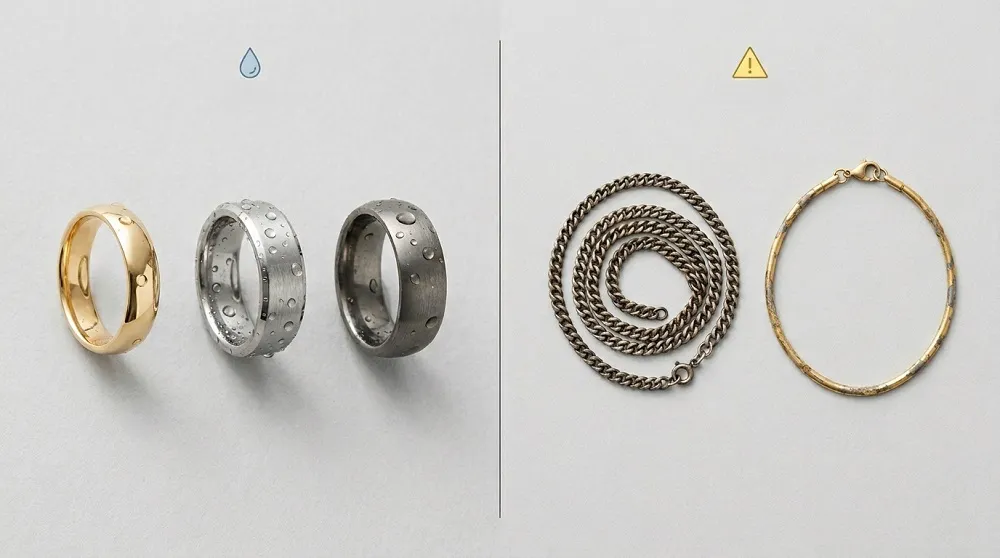
- Safe: Solid gold, platinum, titanium, and stainless steel.
- Usually Safe: Diamonds, sapphires, rubies, and moissanite.
- Use Caution: Gold-filled jewellery and harder semi-precious stones.
- Avoid: Gold-plated jewellery, sterling silver, pearls, opals, turquoise, lapis lazuli, and costume jewellery.
As a general rule, removing jewellery before showering is the safest option because it prevents soap buildup, tarnish, coating wear, and accidental loss.
Why Jewellery Reacts to Water in the First Place
Water by itself is not the enemy. It’s everything that comes with it. Tap water contains minerals. Shower products contain chemicals. And your skin adds natural oils and sweat to the mix. Put all of that together with metal, and a chemical reaction starts.
Sterling silver, for example, reacts with sulfur compounds in the air and water, which is exactly why it tarnishes over time, turning dull yellow or even black. This isn’t dirt. It’s a real chemical change happening on the surface of the metal. Gold doesn’t have this problem because pure gold barely reacts with anything, which is part of why it has stayed valuable for thousands of years.
Hot Water and Steam vs. Plain Water Exposure
Hot showers make things worse than a quick splash of cool water would. Heat speeds up chemical reactions, including the ones that cause tarnish. Steam adds humidity that lingers on jewellery long after you’ve stepped out, giving tarnish-causing reactions more time to work. If you’re someone who takes long, hot showers, your jewellery is under more stress than that of someone who showers quickly with lukewarm water.
How Soap, Shampoo, and Conditioner Residue Causes Dulling
Soap and shampoo are designed to lift oils and dirt away. Unfortunately, they don’t know the difference between the oil on your skin and the natural shine on your jewellery. Residue from these products settles into the small grooves of rings, the links of chains, and the surface of gemstones. Over weeks and months, this buildup makes jewellery look cloudy and less vibrant, even if the metal itself isn’t damaged.
Can You Shower With Gold Jewellery?
Gold is the most asked-about metal for a good reason. It’s common, it’s valuable, and the rules change a lot depending on what kind of gold you actually have.
Solid Gold (14k, 18k, 24k)
Solid gold is one of the safest metals to shower with. It does not rust, corrode, or react with water in any meaningful way. The only real downside is that repeated water exposure can slowly dull its shine, simply from mineral buildup and soap residue, not from damage to the metal itself. A quick wipe with a soft cloth restores the shine.
Gold-Plated Jewellery
This is where most damage happens. Gold-plated jewellery has a thin layer of real gold, sometimes thinner than a human hair, sitting on top of a base metal like brass or copper. Daily water exposure wears this layer down faster than you’d expect. Once the gold rubs away, the base metal underneath shows through, and it often looks discolored or causes skin irritation. Take this off before every shower.
Gold-Filled Jewellery
Gold-filled jewellery sits in the middle. It has a much thicker layer of gold, pressure-bonded to the base metal, so it holds up far better than plating. It can usually survive occasional water contact, but daily showers over months or years will still wear it down eventually. If you want to extend its life, give it a break from water when you can.
Gold Vermeil
Vermeil looks like solid gold but is actually a thicker gold layer over a sterling silver base. The silver underneath can still tarnish, which sometimes shows through the gold over time. Treat vermeil more like silver than solid gold when it comes to water exposure.
How to Tell Which Type of Gold You Own
Check the inside of the band or the clasp for a stamp. Solid gold is usually marked 10k, 14k, 18k, or 24k. Plated or filled pieces are often marked GP (gold plated), GF (gold filled), or simply have no karat stamp at all. If there’s no stamp and the jewellery was inexpensive, it’s safer to assume it’s plated and remove it before showering.
Can You Shower With Silver Jewellery?
Sterling Silver (925) and Why It Tarnishes Faster
Sterling silver is 92.5 percent pure silver mixed with other metals for strength. That small percentage of other metals is exactly what makes it react with sulfur in the air and water, causing it to tarnish faster than gold or platinum. A single shower won’t ruin a piece, but regular exposure speeds up the process noticeably. If you wear silver every day, keep a polishing cloth nearby and give it a quick clean once tarnish starts to show.
Rhodium-Plated Silver
Many sterling silver pieces, especially white gold style rings, are coated in rhodium to give them extra shine and protection. This coating wears off with repeated water and chemical exposure, just like gold plating does. Once it wears thin, the silver underneath becomes more visible and tarnishes faster.
Can You Shower With Platinum Jewellery?
Platinum is one of the most water-friendly metals available. It’s dense, naturally resistant to corrosion, and doesn’t tarnish the way silver does. Showering with platinum jewellery occasionally won’t hurt it. The only thing to watch for is soap buildup, which can make the surface look slightly hazy over time. A simple rinse and dry afterward keeps it looking sharp.
Budget-Friendly and Everyday Metals: Stainless Steel, Titanium, and Brass
Stainless Steel (316L / Surgical Steel)
Stainless steel, especially the 316L grade used in higher-quality jewellery, is built for water exposure. It’s the same grade used in surgical tools and marine equipment, which tells you something about how well it handles moisture. It won’t rust under normal shower conditions and resists tarnish far better than silver or plated metals.
Titanium
Titanium is another strong choice for daily wear. It’s lightweight, naturally resistant to corrosion, and doesn’t react with water or most chemicals. It’s a popular choice for people with sensitive skin, since it rarely causes irritation.
Brass, Copper, and Mixed Alloys (Costume/Fashion Jewellery)
Cheap fashion jewellery is usually where problems start. Brass and copper oxidize quickly when wet, and that reaction often leaves a greenish mark on skin. If your jewellery isn’t marked with a specific metal type and feels lightweight or inexpensive, it’s probably an alloy that should stay dry.
Materials That Come Closest to True Waterproof
| Material | Shower Safe | Tarnish Risk | Daily Wear Rating |
|---|---|---|---|
| Solid Gold | Yes | Very Low | Excellent |
| Platinum | Yes | Very Low | Excellent |
| Titanium | Yes | Extremely Low | Excellent |
| Stainless Steel | Yes | Low | Excellent |
| Sterling Silver | No | Moderate | Fair |
| Gold-Plated | No | High | Poor |
| Brass | No | High | Poor |
Can You Shower With Gemstone Jewellery?
Gemstones don’t all behave the same way in water. The deciding factor is hardness and porosity, not how expensive the stone looks.
Hard, Durable Stones (Diamond, Sapphire, Ruby, Moissanite)
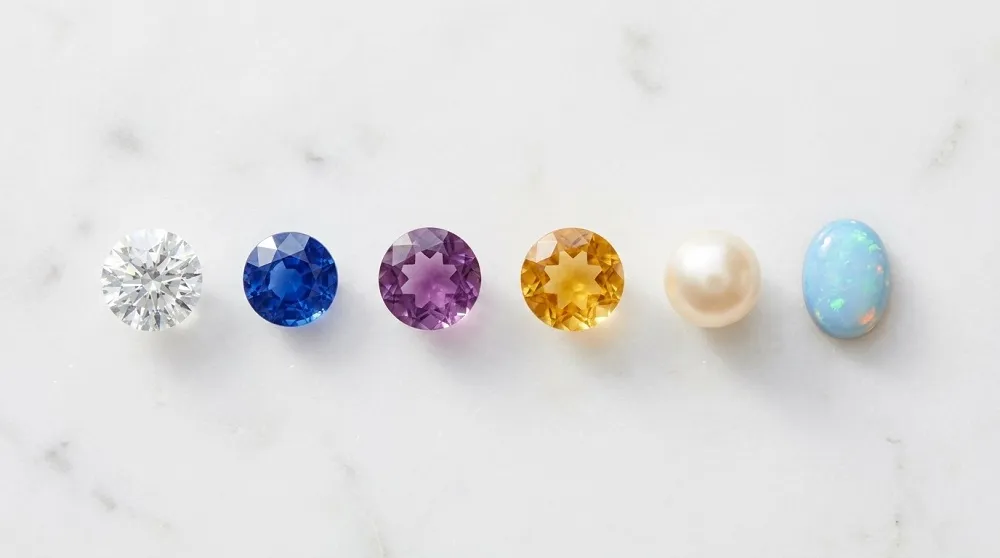
These stones rank near the top of the Mohs hardness scale, which measures how resistant a material is to scratching. Diamonds sit at 10, the highest possible rating. Sapphires and rubies sit at 9. These stones can physically handle water exposure without damage. The only issue is soap film building up on the surface, which dulls sparkle until it’s cleaned off.
Mid-Durability Stones (Topaz, Garnet, Amethyst, Citrine, Quartz Family)
These stones rank between 7 and 8 on the hardness scale. They can usually tolerate occasional water exposure without harm, though daily showers and soap buildup will eventually dull their shine.
Stones to Always Remove (Pearl, Opal, Turquoise, Lapis Lazuli, Malachite)
Pearls rank as low as 2.5 to 4.5 on the hardness scale, which is soft compared to most gemstones. They’re also organic, meaning they’re made from layers of a substance called nacre. Water, soap, and heat all break this down over time, leaving pearls dull and damaged. Opals, turquoise, lapis lazuli, and malachite are all porous, meaning they can actually absorb water and chemicals into the stone itself, which permanently changes their color and clarity. These should never go in the shower.
Dyed or Treated Gemstones: Why They’re Riskier
Many affordable gemstones are dyed or treated to enhance their color. Water and heat can cause this color to fade or bleed, especially with repeated exposure. If you’re not sure whether a stone is natural or treated, it’s safer to assume it needs extra protection.
A Simple Hardness Guide
Here’s a quick way to think about it. Anything rated 7 or higher on the Mohs scale generally handles water well. Anything below that, especially soft or porous stones like pearl, opal, and turquoise, should stay dry.
What About Jewellery Settings and Styles, Not Just Materials?
Studs vs. Hoops vs. Dangly Earrings
Simple stud earrings are easier to keep clean and less likely to snag on towels or hair. Hoops and dangly earrings have more surface area and moving parts, which means more places for soap residue to collect and more chances for them to catch on something while you wash.
Plain Bands vs. Stone-Set Rings
A plain metal band has nothing to lose except some shine. A ring with set stones has more risk, especially if the prongs holding the stone are even slightly loose. Soap can make fingers slippery, and a loose stone combined with a slippery shower floor is a bad combination.
Silicone Rings as a Shower-Safe Alternative for Wedding Bands
If you don’t want to take off your wedding ring every single day, a silicone ring is a practical backup option. These are inexpensive, fully water-safe, and designed for situations like the gym, swimming, or showering, where a metal ring isn’t ideal.
Can You Shower With a Watch On?
Understanding Water Resistance Ratings (3 ATM, 5 ATM, 10 ATM Explained)
Watches often list a water resistance rating in ATM, which stands for atmospheres. A 3 ATM watch can handle splashes but not full submersion, including showers. A 5 ATM watch can usually handle a quick shower but isn’t built for swimming. A 10 ATM watch or higher is generally safe for showers and light swimming. These ratings are based on testing in still water, not the moving, pressurized water from a showerhead, so it’s smart to stay a little conservative even with a higher-rated watch.
Screw-Down Crowns and Why Pressure Testing Matters
The crown is the small dial used to set the time, and on water resistant watches it often screws down to create a tight seal. If the crown isn’t fully screwed in, water can get inside even on a watch rated for high water resistance. Watches should also be pressure tested periodically, especially after a battery change, since the seals inside can wear out over time.
Can You Shower With Body Piercings?
This question gets asked constantly, yet it’s rarely answered anywhere. Here’s the real guidance.
New/Healing Piercings vs. Healed Piercings
Showering with a new piercing is actually fine and recommended, since clean water helps keep the area free of bacteria during healing. The bigger concern is using harsh shampoos or scented body washes directly on a fresh piercing, since these can irritate healing skin. Once a piercing is fully healed, normal shower exposure poses very little risk.
Cleaning Piercing Jewellery After a Shower
After showering, gently rinse piercing jewellery with clean water to remove any shampoo or soap residue, then pat the area dry with a clean towel. Avoid rotating or twisting new piercings while washing, since this can slow healing and introduce bacteria.
The Real Risk Isn’t Just Tarnish, It’s Losing Your Jewellery
Loose Stones, Soap, and Slippery Drains
Tarnish can be polished away. A diamond that slipped down the drain cannot. Soap makes fingers slippery, shower floors are wet, and small jewellery items are easy to drop without noticing right away. This is honestly one of the most overlooked risks of showering with jewellery on, more common than actual metal damage.
Special Precautions for Engagement Rings and Heirlooms
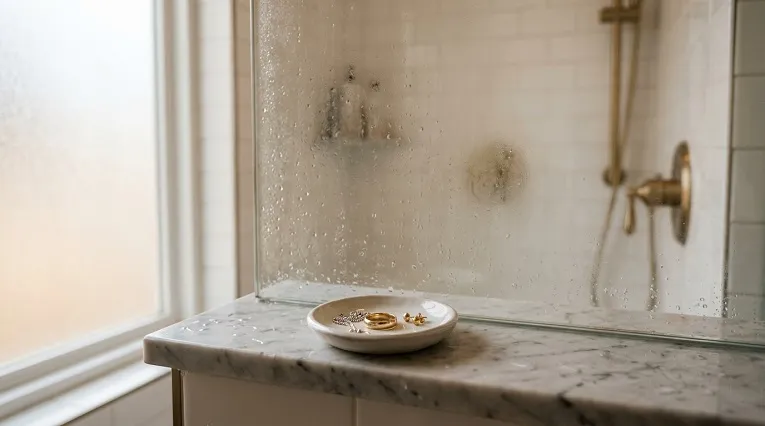
If a piece carries real sentimental or financial value, the safest habit is removing it before every shower, no exceptions. Keep a small dish near the sink specifically for this purpose, so the ring has a consistent home instead of getting set down randomly where it might get knocked into a drain or lost in a towel.
Is “Waterproof Jewellery” Actually Waterproof?
What “Water-Resistant” Really Means vs. Marketing Claims
Brands love the word waterproof because it sounds reassuring. In reality, almost no jewellery is truly waterproof in the way a diving watch is. Most “waterproof jewellery” really means water-resistant, built with materials and coatings that hold up better than average but still benefit from being rinsed and dried regularly.
Materials That Come Closest to True Waterproof
Solid gold, platinum, titanium, and quality 316L stainless steel come closest to living up to the waterproof promise. These materials don’t have a coating to wear off and don’t react meaningfully with water, which is why they’re the go-to choices for jewellery brands marketing pieces for swimming, sweating, and showering.
I Already Showered With My Jewellery, Now What?
How to Remove Soap Film and Residue
Rinse the piece under clean, room-temperature water, then gently dry it with a soft, lint-free cloth. For most metals and hard gemstones, this simple step restores most of the shine that soap buildup had dulled.
Reviving Tarnished Silver at Home
A mild solution of warm water and a small amount of gentle dish soap, applied with a soft cloth, can lift light tarnish from sterling silver. For deeper tarnish, a dedicated silver polishing cloth works well and is gentle enough for regular use without scratching the metal.
When to Take It to a Professional Jeweller
If a stone feels loose, if tarnish won’t lift after gentle cleaning, or if a piece has visible discoloration that looks like more than surface residue, it’s worth having a professional jeweller take a look. This is especially true for engagement rings or anything with sentimental value, where a small problem caught early is much cheaper to fix than a lost or damaged stone later.
A Simple Shower Jewellery Care Routine
Before You Shower
Get into the habit of removing rings, watches, and plated jewellery before you turn on the water. Keep a small dish or tray right by the sink so this becomes automatic rather than something you have to remember every time.
After You Shower
Rinse any shower-safe jewellery you did keep on with clean water, then dry it with a soft cloth before putting clothes on over it. This single habit prevents most of the dulling caused by soap and mineral buildup.
Long-Term Storage Tips
Store jewellery in a dry place, away from direct humidity like a bathroom shelf. Separate pieces so they don’t scratch each other, and consider anti-tarnish pouches for sterling silver pieces you don’t wear daily.
Best Jewellery Materials for Everyday Shower Wear
If you prefer to keep your jewellery on throughout the day, including during showers, choose materials known for their water resistance and durability.
Titanium, platinum, solid gold, and 316L stainless steel are among the best options because they resist corrosion, tarnish, and moisture damage. These materials are commonly used in high-quality jewellery designed for everyday wear.
When shopping for shower-safe jewellery, always check the material specifications rather than relying solely on marketing terms such as waterproof or tarnish-free.
Frequently Asked Questions
Can you wear gold-plated jewellery in the shower?
No. The thin gold layer wears off faster with regular water exposure, eventually showing the base metal underneath.
Is sterling silver safe in the shower?
It’s not ideal. Sterling silver tarnishes faster when regularly exposed to water and the chemicals in soap and shampoo.
Can you shower with stainless steel or titanium jewellery?
Yes. Both metals resist water damage and corrosion well, making them solid choices for daily wear.
Can you shower with diamond earrings or a diamond ring?
Yes, the diamond itself is fine, but check that the metal setting is also shower safe, and rinse soap residue off afterward.
Can you wear pearls in the shower?
No. Pearls are soft and porous, and water plus soap can damage their surface over time.
Is it safe to shower with platinum?
Yes. Platinum is highly resistant to corrosion and handles regular water exposure well.
Can you shower with a silicone wedding ring?
Yes. Silicone rings are made specifically to handle water, gym use, and other situations where a metal ring isn’t practical.
Does hard water damage jewellery?
It can leave mineral deposits that make jewellery look cloudy over time, though it won’t cause structural damage to durable metals.
Can you shower with body piercings?
Yes, especially healing piercings, since clean water actually supports the healing process. Just avoid harsh, scented products directly on a fresh piercing.
Is “waterproof” jewellery really safe for daily showering?
Mostly yes, if it’s made from solid gold, platinum, titanium, or 316L stainless steel. Always treat the word waterproof as water-resistant rather than completely indestructible.
Key Takeaways: What to Remove Before Every Shower
Take off anything gold-plated, gold-filled, sterling silver, or set with pearls, opals, turquoise, lapis lazuli, or malachite. If your jewellery is solid gold, platinum, titanium, or quality stainless steel, you can generally leave it on without much worry; just rinse and dry it afterward. And when it comes to engagement rings or anything you couldn’t bear to lose, the safest habit is simple: take it off every single time and give it a dedicated spot to live while you shower.